WHAT ALFRED HITCHCOCK SAID
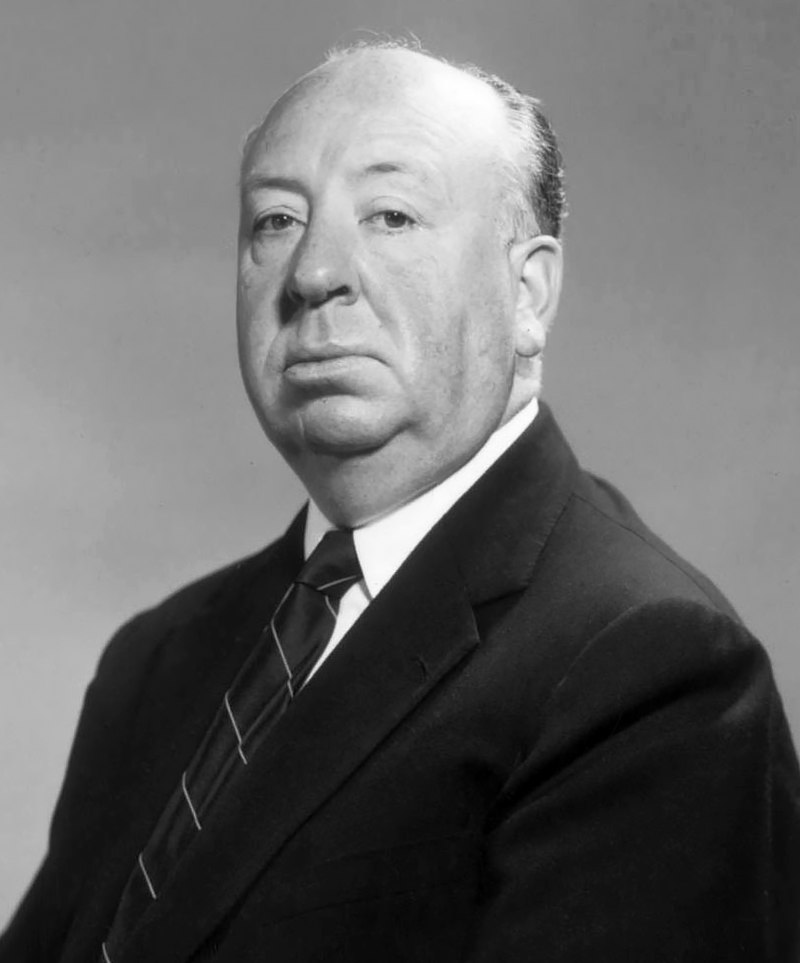
Selection, Organization and Editing: Marco Aurélio Lucchetti
I make films because it's what I know how to do best.
Many people think that a film director does all their work in the studio, manipulating the actors, making them follow their orders. That's absolutely not true, as far as my methods are concerned; and those are the only methods I can speak about. I like to have the film ready in my head before I start filming.
I only give the actors some directions; I don't direct them.
In a good film, the director's talent is worth 95%; the other 5% belong to the actors.
I never said that actors were cattle. I only said that they should be. treaties like cattle.
When I saw how bad Kim Novak was as an actress, I told her that I only wanted her beauty and I tried to make sure she spoke very little in A Body That Falls.
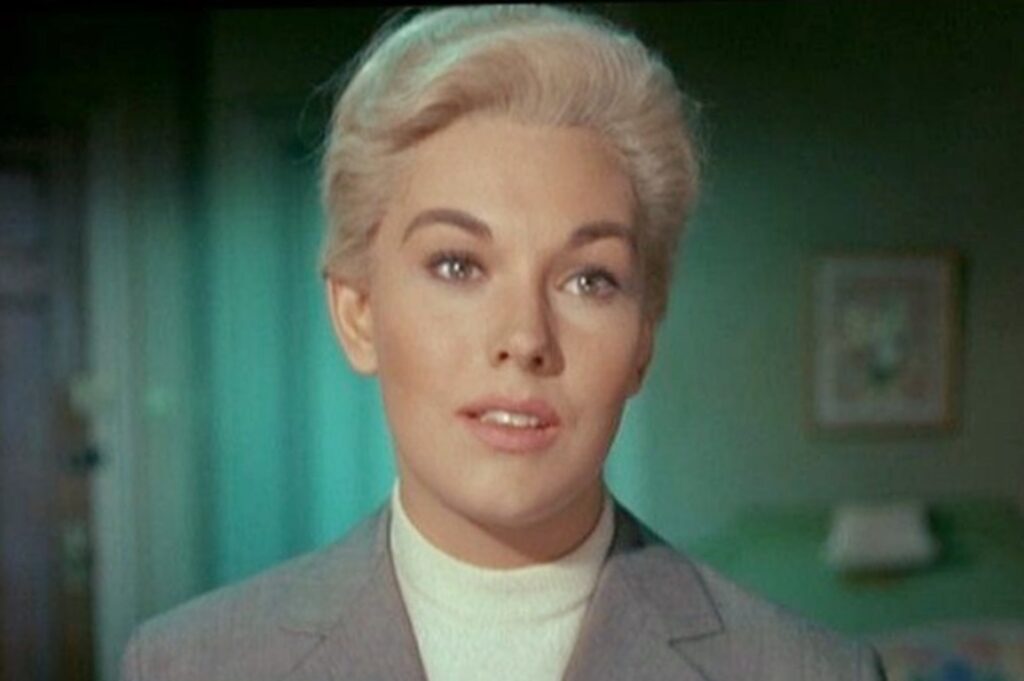
Kim Novak, playing the character Madeleine Elster, in A Body That Falls (Vertigo, 1958).
I believed that artistic success A Body That Falls She was dependent on Vera Miles. The costume fittings with her were brilliant. She looked wonderful… perfect. Then, she got pregnant well before starring in this film that would make her a superstar.
A star only achieves stardom because they have proven their worth and talent, on screen or on stage.
A film actress shouldn't be above average height. In fact, being petite is definitely a virtue. A petite actress not only photographs better than one who... “rises to imposing heights” – especially in scenes of close –, as it also pleases the audience, who like to see the heroine's curly head nestled against the hero's muscular chest. If she's taller, it can make him seem insignificant.
Nobody has a cast like Walt Disney. When he doesn't like an actor, he simply cuts them out.
When you start working on a project and it doesn't work, the wisdom lies in simply abandoning it.
The ideas we find brilliant in the middle of the night often turn out to be regrettable the following morning.
I've always been afraid of improvising in the studio because, at that moment, while you might find time to generate ideas, you don't find time to examine the quality of those ideas.
I'm very scared.
I'm terrified of the police. That's why I never got a driver's license.
Fear has influenced my life and my career.
I'm going to tell you a story. It happened in London when I was five or six years old. It was Sunday, the only day my parents didn't work. That night, they put me to bed and went for a walk in Hyde Park to get some fresh air. They were sure I would sleep until they returned, or all night. Unfortunately, I woke up and called them. No one answered. All around me, everything was dark. Groping my way up, I got up. Then, wandering through the empty house, plunged in darkness, I reached the kitchen, where I found a piece of cold meat, which I ate, wetting it with my tears. This left me with a definite horror of cold meat, as well as a terrible horror of darkness and Sunday nights.
I do everything I can to avoid all kinds of difficulties and complications. I like everything around me to be clear, cloudless, perfectly calm. A well-organized work desk gives me inner peace. When I take a shower, I put everything back in its place in the bathroom after use. I leave no trace of my presence. This feeling of order comes together in me with a clear aversion to all complication.
I've never had erotic dreams!
My films are waking dreams.
I conceive my films the way Shakespeare conceived his plays – for an audience.
I don't film snippets of life, but slices of cake.
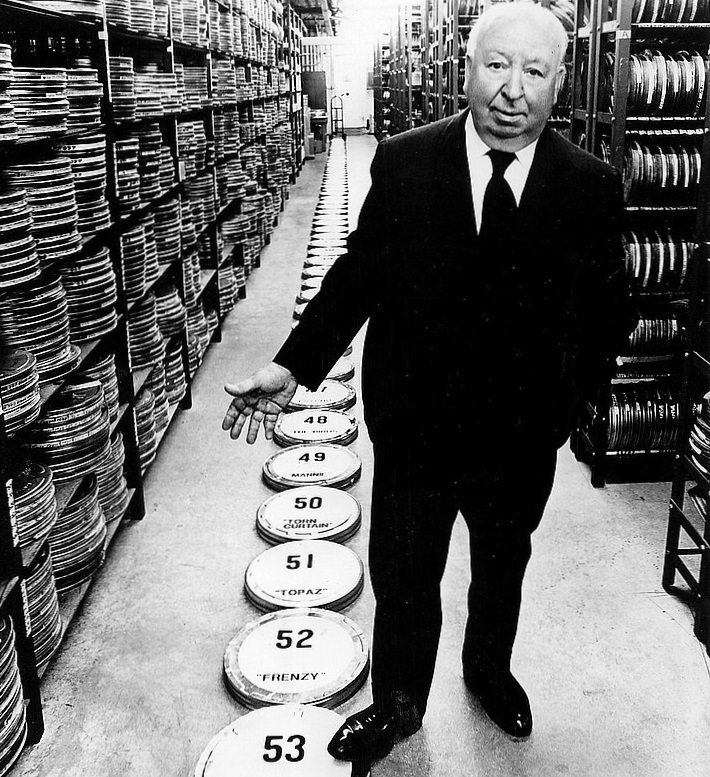
Throughout his career as a filmmaker, sir Alfred Hitchcock (1899-1980) directed fifty-three feature films.
In the United States, we're easily and permanently labeled. I need to make thriller films, otherwise people will be disappointed.
If I were to film Cinderella, The audience would think there was a corpse in the carriage.
In England, crime often seems to have a particularly fascinating aura.
In my films, I show how difficult and awkward it is to kill a person.
If you want to show a man cornered in a place where he will be killed, how do you usually proceed? You show a dark alley at night. The victim waits under a balcony. The sidewalk is wet from recent rain. A close-up of a black cat running along a wall. The slow approach of a car, etc. Then I asked myself: “"What would the opposite of this sequence be like?"” A deserted field, in the sunlight, without black cats.
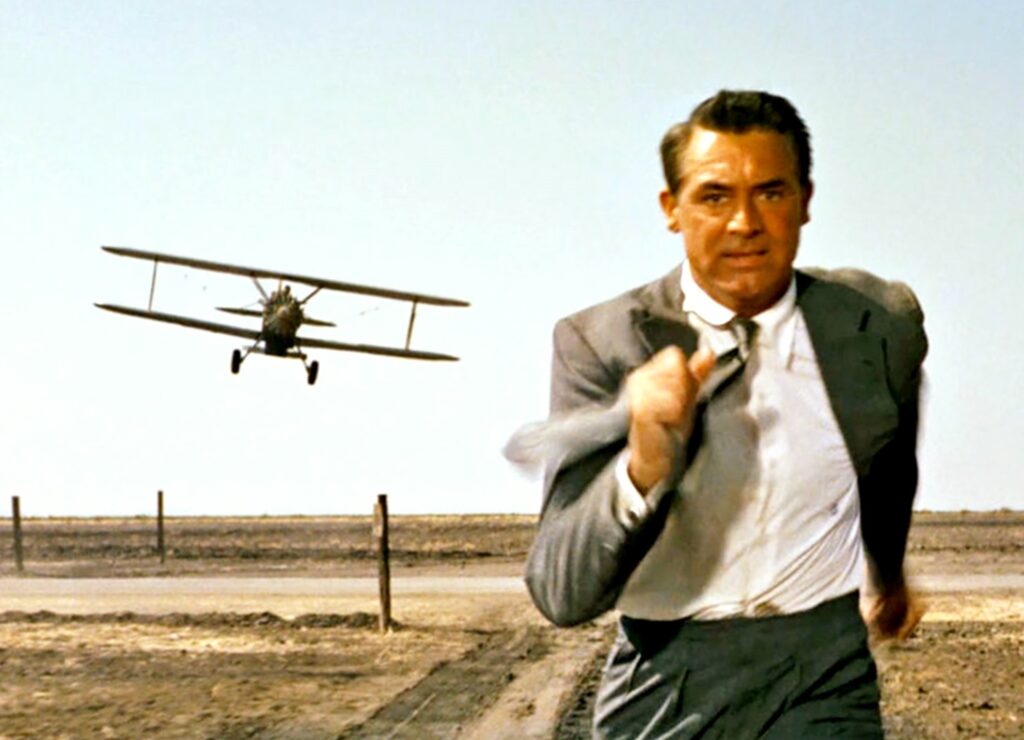
The photo above, showing Roger Thornhill (Cary Grant) being chased by an airplane that wants to kill him, was taken from one of the unforgettable sequences of... International Intrigue (North by Northwest, 1959), one of Hitchcock's memorable films.
Crime can be far more fascinating and delightful, even for the victim, if it occurs in a pleasant environment and if the people involved are ladies and gentlemen.
Laughter, tears, and fear are the three most dignified human reactions.
The word love is fraught with suspicion.
When I address the issues of sex on screen, I don't forget that, there too, suspense is everything. If the sex is too blatant and obvious, there's no more suspense.
Nowadays, everyone's talking about cinematic eroticism. Naturally, eroticism is one thing and pornography is another, the latter being mature enough to support its own production and distribution scheme. For me, eroticism is commonplace, and I've always included it in my films. It's just that the audience never seems willing to grasp my subtlety. For example, I like to show kisses that many people have said are too long. And they are, indeed. After all, I was showing eroticism in my films through simple goodbye kisses.
Humor is necessary for suspense. It helps the audience catch their breath. A pure suspense film is unbearable for more than twenty-four minutes. Humor is both the sugary pill that serves to introduce the characters and the indispensable comedic element for the audience. If we exaggerate the suspense without leaving room for humor, viewers will laugh anyway, but at the wrong time.
The most important thing is to pause at the end of a suspenseful sequence so that the audience can catch their breath.
There is an important difference between mystery and suspense. Mystery consists of withholding information from the viewer and inviting them to solve a riddle. In suspense, it is the character who is deprived of information, but the viewer knows everything and is anxious because they can guess what will happen to the character. So, it is up to me to surprise the audience.
Mystery speaks to reason. Suspense, to emotion.
There is no comparison between real-life suspense and cinematic suspense. When the audience is watching a film, they may, at a certain point, grip the armrest of their seat and say: “"That's not true."” If I do my part well, the audience will forget that the chair has an armrest.
When I realized Under the Sign of Capricorn, which is above all a tragedy, critics wrote: “"We were forced to wait one hundred and four minutes, until we were finally able to get some suspense."”
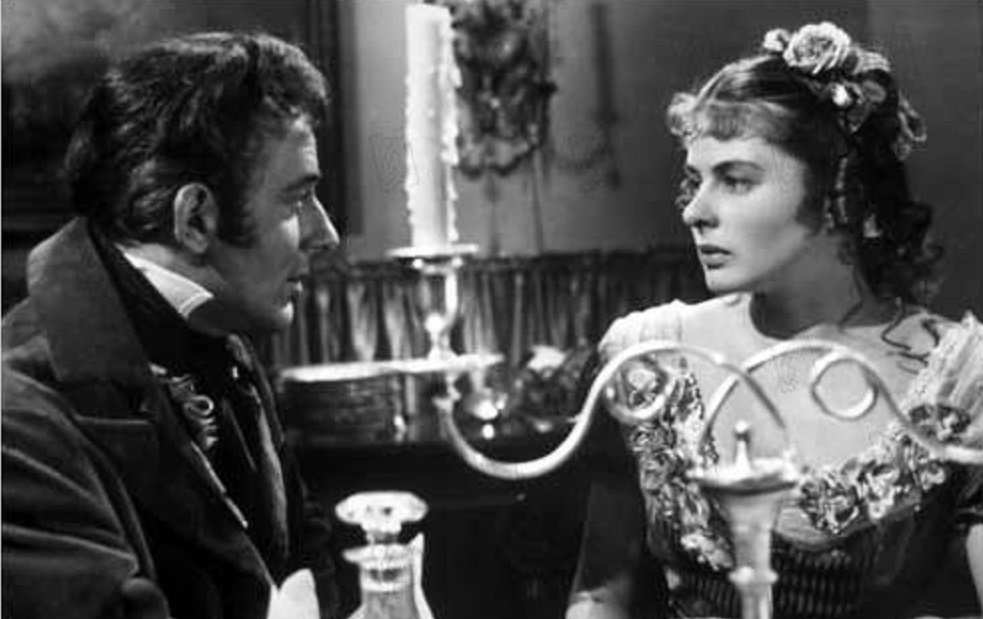
Michael Wilding (1912-1979) and Ingrid Bergman (1915-1982), in a scene from Under the Sign of Capricorn (Under Capricorn, 1949).
Ingrid Bergman worked on three of my films: When the Heart Speaks, Interlude e Under the Sign of Capricorn. Grace Kelly was another actress who starred in three of my films: Dial M for Murder, Rear Window e Gentleman Thief. I confess that after them I never found blondes for my [girlfriends] again. “"feminine trilogies"”. Tippi Hedren was a great find, but unfortunately, only for two films in a row: The Birds e Marnie, Confessions of a Thief.
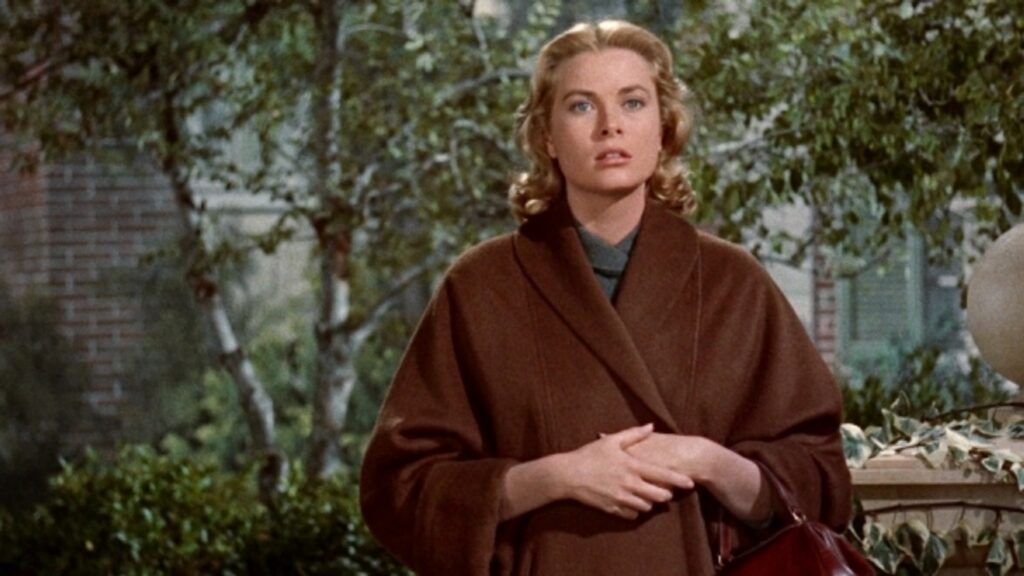
Grace Kelly (1929-1982), one of the great Hitchcockian actresses, in Dial M for Murder (Dial M for Murder, 1954).
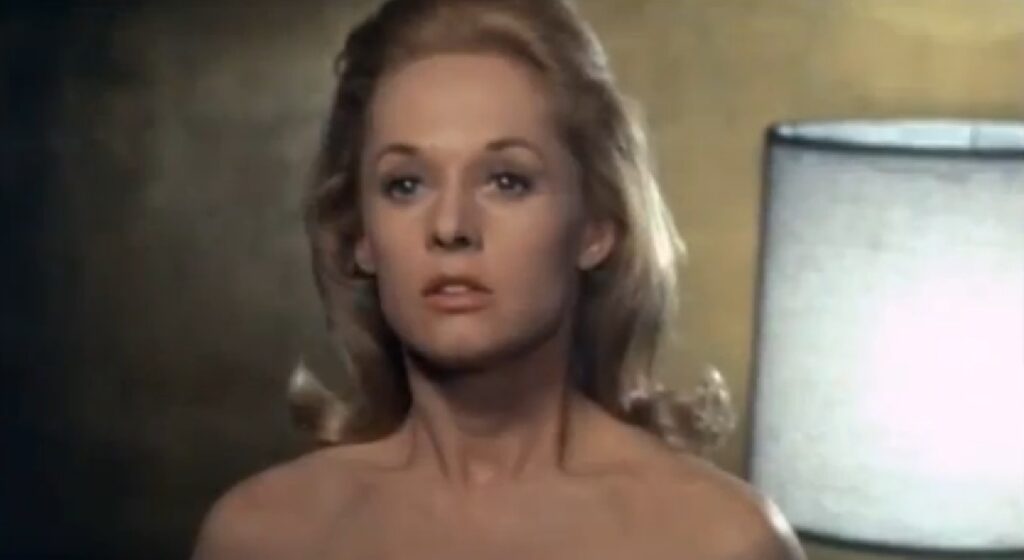
Tippi Hedren (born Nathalie Kay Hedren), playing a thief who uses all her cunning and wit in the heists she pulls off, in Marnie, Confessions of a Thief (Marnie, 1964), a film based on a novel by the English writer Winston Graham (1908-2003).
I've always loved this story: a man walks down the street, reading the newspaper. Further ahead, there's a sewer hole. The onlookers look and wonder: “"Will he fall into the hole?"” Distracted by his reading, the man ends up falling. Everyone finds it funny and bursts out laughing. The camera zooms in and shows the man lying inside. Blood is running from his head. An ambulance arrives and takes the man to the hospital. His wife and children appear. The man dies. It's a tragedy, starting from a comedic point. The audience, who laughed before, is now embarrassed. I told this story because I don't see a real dividing line between tragedy and comedy.
I believe the easiest way to worry viewers is to turn the tables on them, that is, to make the most innocent member of the cast the murderer; to make the closest neighbor a dangerous spy. To keep the characters stepping out of their roles and into the skin of others.
I've always believed that you should do the bare minimum on screen to get the most out of the audience. I believe the audience has to work for it. Sometimes it's necessary to resort to elements of violence, but I only do that if there's a good reason.
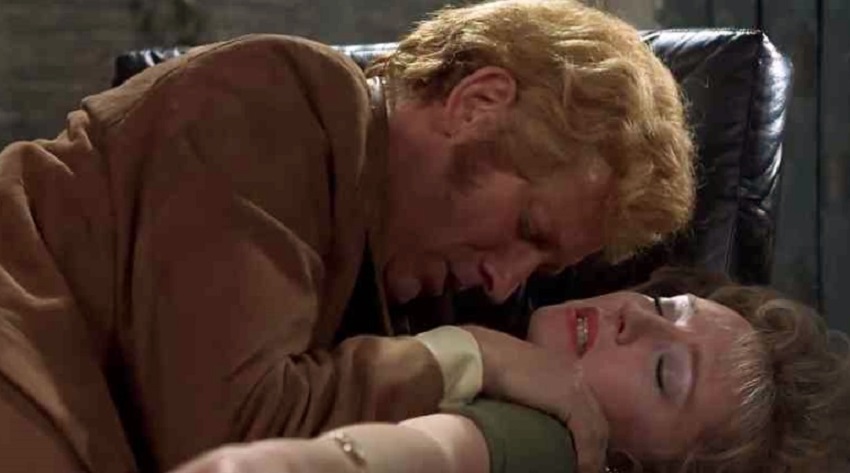
In the photo above, Barry Foster and Barbara Leigh-Hunt, playing Bob Rusk and Brenda Blaney respectively, are pictured in one of the most violent sequences of... Frenzy (Frenzy, 1972), the penultimate film directed by Hitchcock.
For me, making films is simply about telling a story. And that story can be ordinary, but it can't be banal.
I'm less interested in the story itself than in the way it's told.
A film has to be visually interesting; and, above all, it's the image that matters. I try to tell the story through images, and always in such a way that, if the cinema's sound system breaks down, the audience won't be alarmed or uneasy, because the pictorial action will continue to hold their attention.
In Psychosis, The subject mattered little to me, the characters mattered little to me; what mattered to me was that the combination of film clips, the cinematography, the soundtrack, and everything that is purely technical could make the audience roar. I believe it is a great satisfaction for us to use the art of filmmaking to create a mass emotion. And, with Psychosis, We accomplished that. It wasn't a message that intrigued the audience. It wasn't a great performance that disturbed the audience. It wasn't a much-loved romance that captivated the audience. What moved the audience was the pure film.
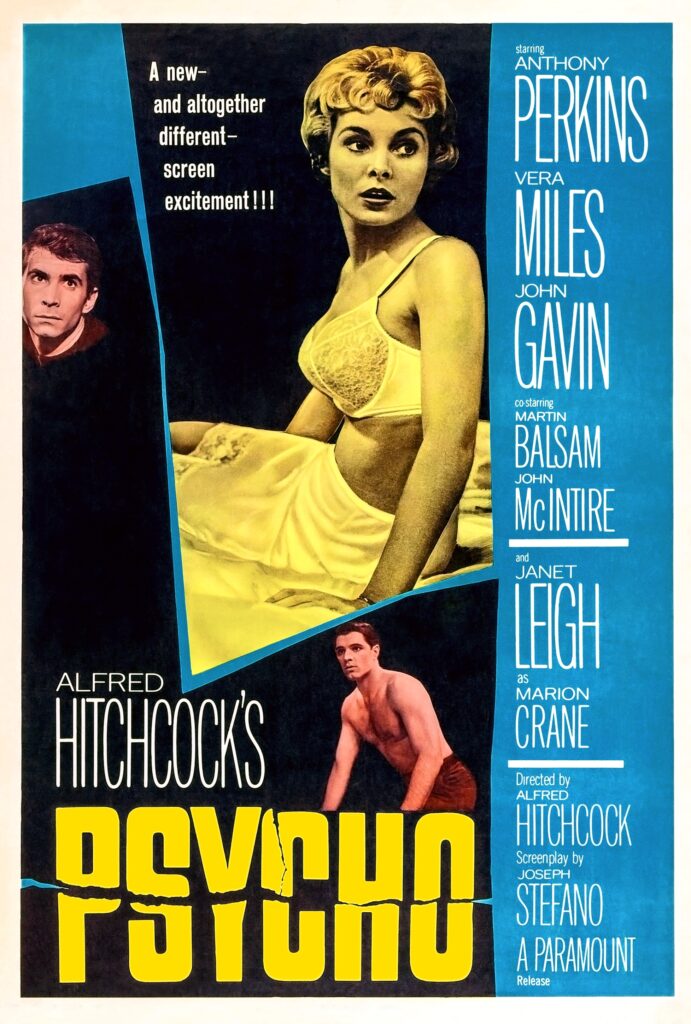
Original (American) poster of Psychosis (Psycho, 1960), a film based on the novel of the same name by Robert Bloch (1917-1994).
In cinema, when telling a story, one shouldn't resort to dialogue unless it's impossible to do otherwise. I've always strived to first seek the cinematic way of telling a story through the succession of shots and fragments of the film itself.
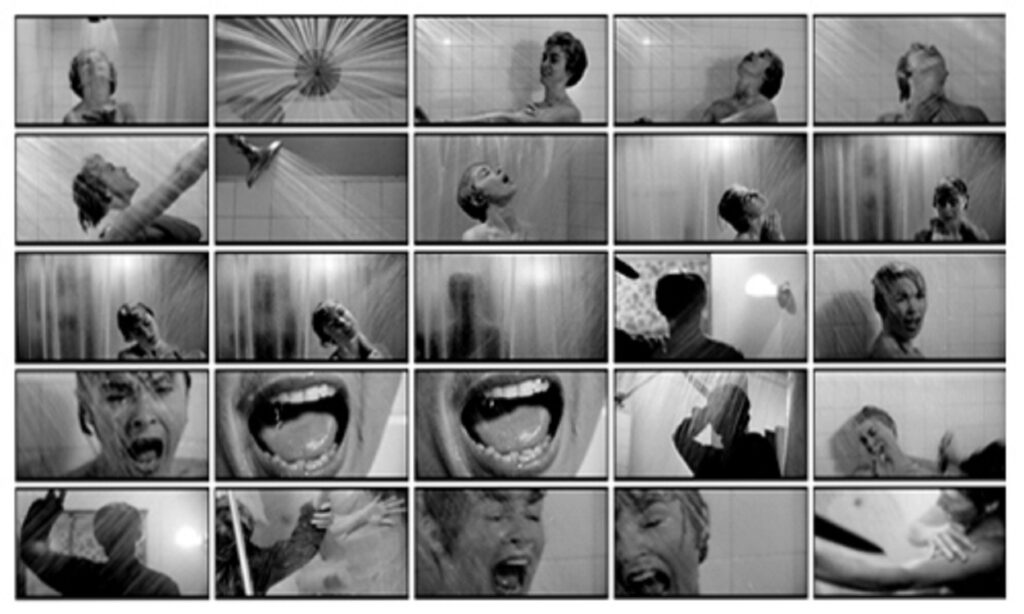
Some of the seventy shots from the shower scene in which Marion Crane (Janet Leigh) is murdered in Psychosis. The sequence, which lasts forty-five seconds, is pure cinema.
Once, in Los Angeles, a little boy, who must have been about nine years old, approached me and asked; “"Mr. Hitchcock, at the murder scene in Psychosis, "So, what did you use as blood? Chicken blood?"” I replied: “"No. I used chocolate syrup."” “"Ah, good..." OK. Thanks."”, "Yes," replied the little boy, walking away.
Often, talking pictures only served to introduce theater into the studios.
Has theatre ever successfully adapted anything from film?
In theater, the actor's performance compels the audience to engage with them. Dialogue and ideas are sufficient. In film, it's not like that. The broader structural elements of the story need to be enhanced on screen by atmosphere and characterization…
Diabolical Feast It's probably the most thought-provoking film I've ever directed. Some critics have said it's the film with the... “"The most revolutionary technique ever seen in Hollywood"”.
Each sequence of Diabolical Feast It is, in fact, a ten-minute reel, filmed without interruption, but with countless camera movements to obtain the various angles. In truth, it wasn't very cinematic. It was more of an extension of the theatre. It was like giving binoculars to the audience, to all the spectators, so that they could follow the characters wherever they went.
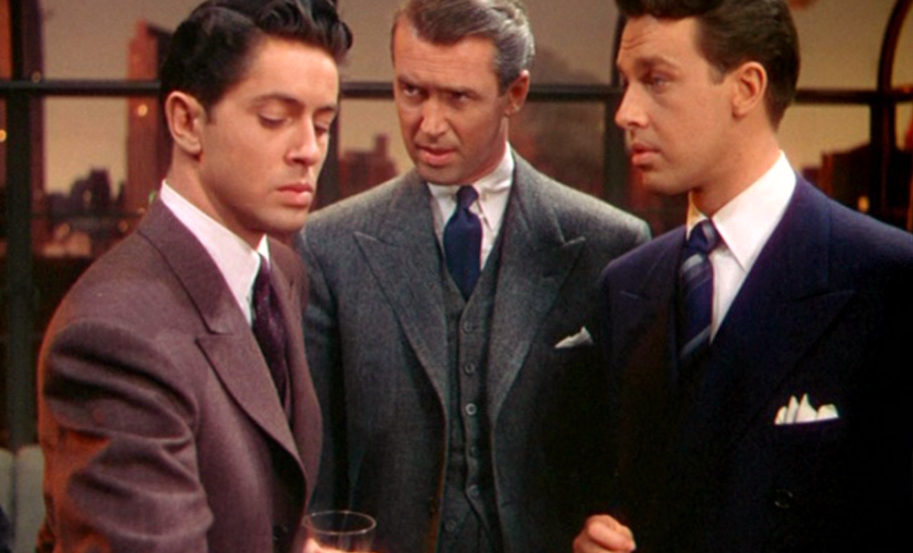
Farley Granger (1925-2011), James Stewart (1908-1997) and John Dall (1920-1971), in a scene from Diabolical Feast (Rope, 1948).
Television has nothing to do with art. It is merely a means of communication.
What is art? An experience.
Remembering is sometimes fun – and sometimes humiliating. It's not something I generally enjoy doing. I prefer to look ahead. I'm more interested in the near future than the past.
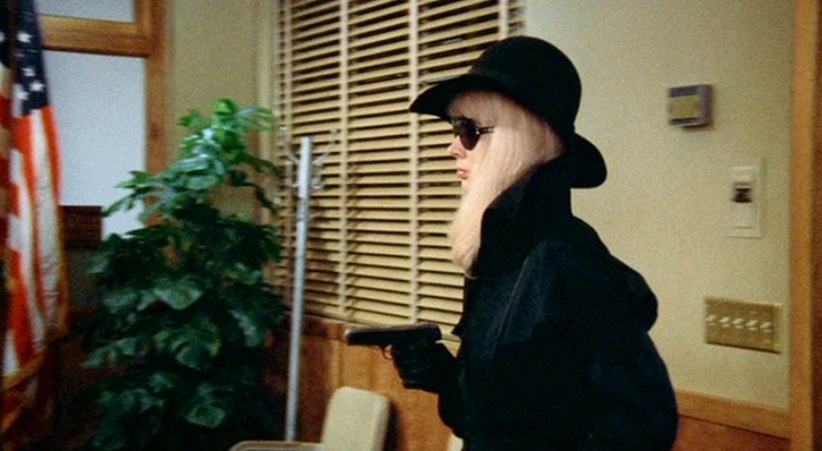
Karen Black, in Macabre Plot (Family Plot, 1976), the last film directed by Hitchcock.
Retire? I don't even know what to say. What do they expect me to do then? Sprawl out on the floor like a dead dog? Age makes no difference to me.
Marco Aurélio Lucchetti is a university professor and researcher of Cinema, Comics and popular books.
 Portuguese
  English
  Spanish
  French