THE DAY LANA DEL REY BECAME A GIANT
Marco Aurélio Lucchetti & RF Lucchetti
EEdition: Marco Aurélio Lucchetti
The video begins..
It is broad daylight..
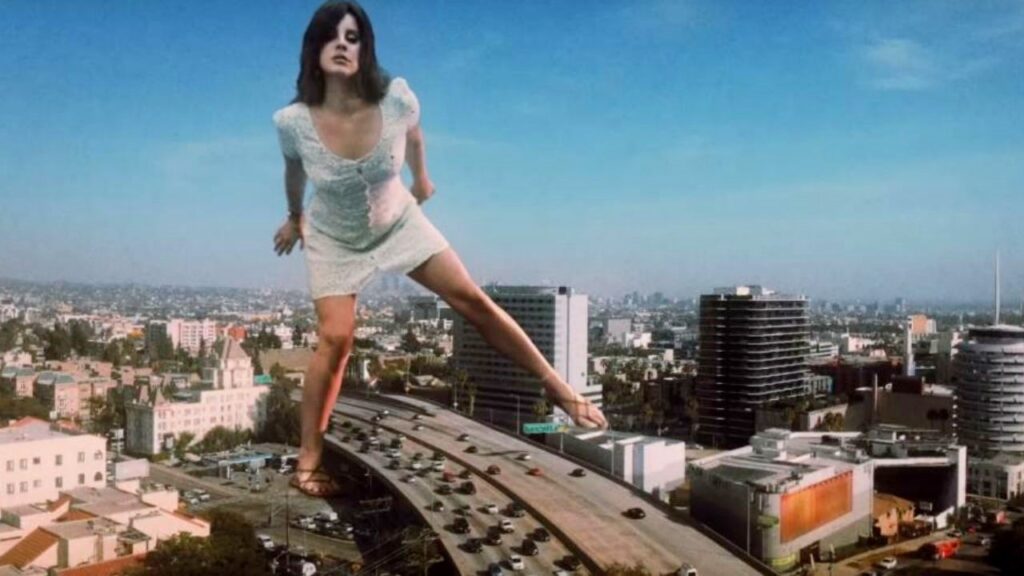
In a seemingly desolate place, a giant woman, wearing sandals and a light, short summer dress, awakens. Feeling hot, she fans herself with one hand and slowly rises to her feet.
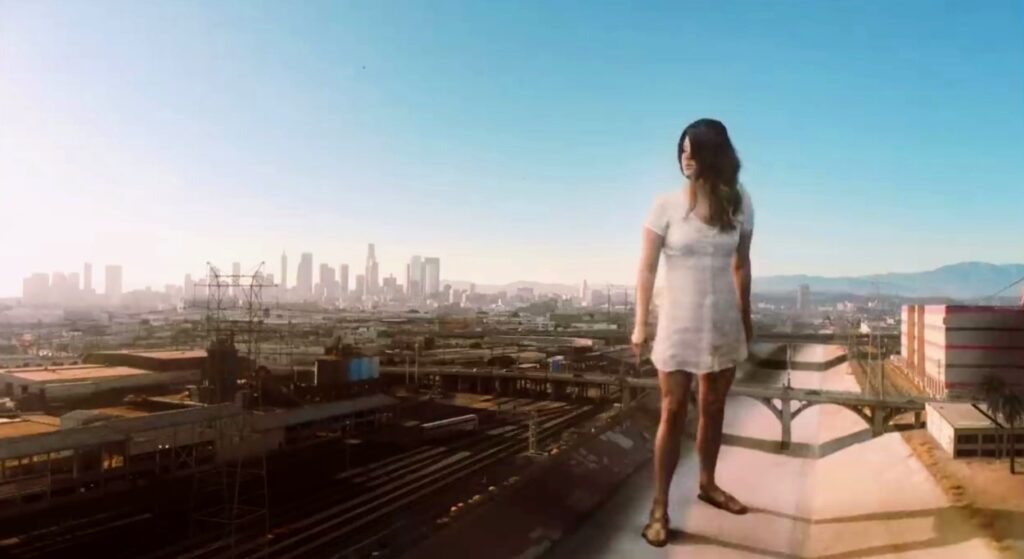
At that moment, the skyscrapers of a city can be seen in the distance.

A giantess uproots a palm tree and fans herself with it. Then, she walks through the city streets, attracting the attention of drivers. In the middle of an intersection, she drops the palm tree and continues her walk. She stops in front of a building, rips out the building's water tank and drinks the liquid. She continues her stroll. She admires her reflection in the windows of a skyscraper. She fans herself again with one hand. She crosses an overpass, taking care not to step on the cars, so small, below. She continues on her way. There is a banner tied across the street. The giant woman's body obscures some of the letters written on the banner. But the visible letters (VEN E) allow us to identify the location as Venice, in the Los Angeles metropolitan area. The giantess reaches the beach, bends down and plays with the sea water.
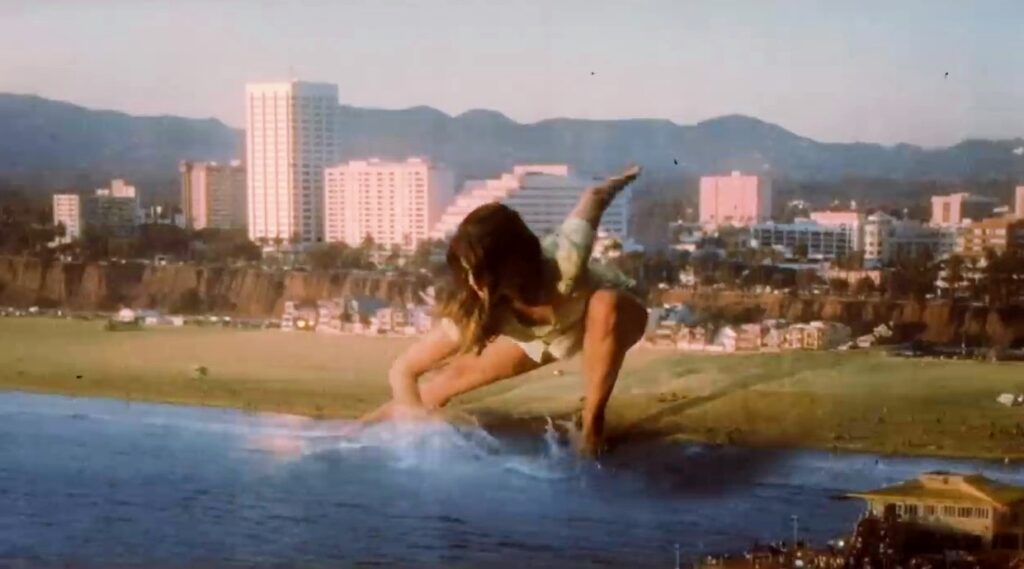
At this point, it becomes clear that everything shown so far is what is being projected on a movie screen. drive-in, where there are several cars (all old, from the 1950s) parked and some people walking or talking outside the vehicles..
A young man and his girlfriend, a blonde woman drinking soda and holding a bag of popcorn, are seen leaning against one of the cars..
The girlfriend finishes her soda and asks the guy to go buy another one. He walks away to fulfill her request. She stays watching the movie.

After ordering a soda from a kiosk employee, the boyfriend notices a young woman looking at him and smiling. He then leaves the scene, no longer caring about the drink..
Meanwhile, the giant woman cools off in the sea..
Tired of waiting for her boyfriend, the blonde goes looking for him. She talks to a friend, and the two go looking for the boy. They find him. He and the young woman are kissing inside a car. The two women leave..
Cut to screen.
The giantess is resting, lying on the beach. She begins to play with the sand. She gets up and starts what could be considered a dance. A strong gust of wind comes out of the screen, carrying away a lot of sand..
Feeling the wind and sand, the audience tries to protect themselves as best they can. Then, the giant woman leaves the world of fiction and enters the real world.
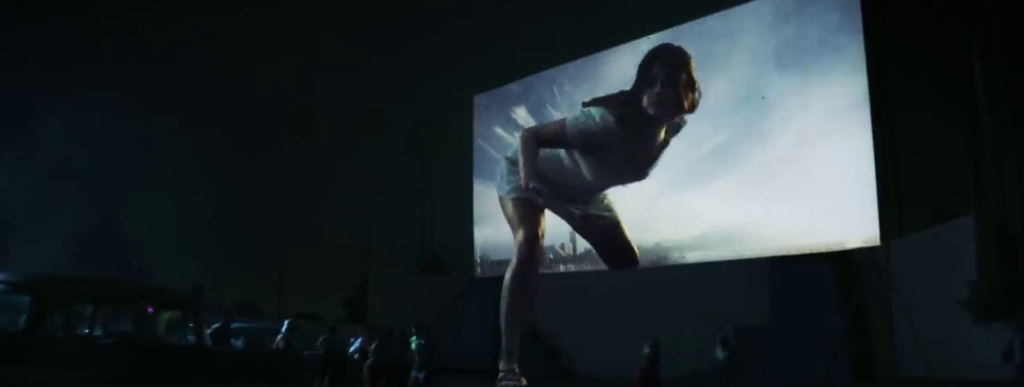
Frightened, the people who find themselves in drive-in they flee.
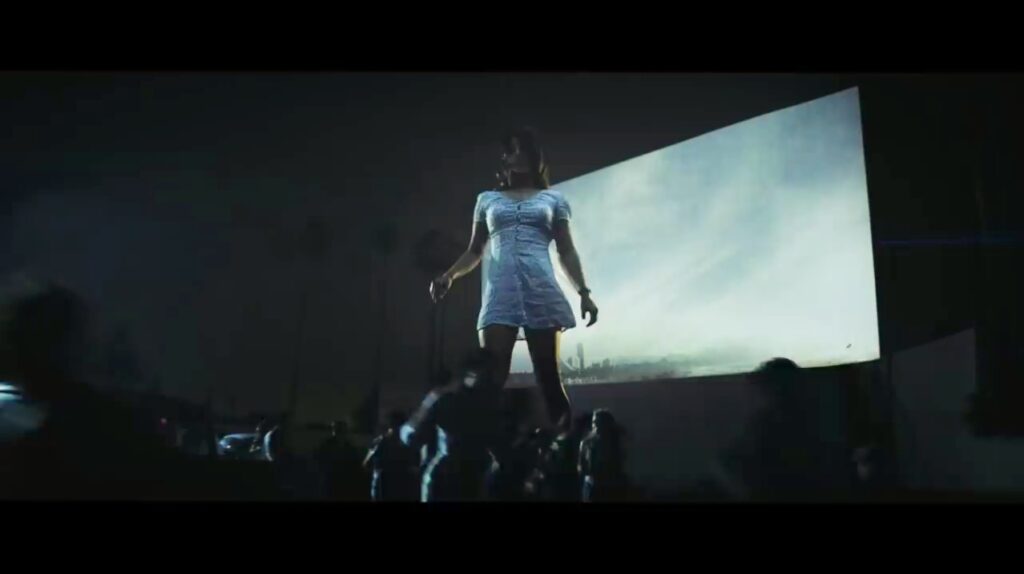
Noticing the movement, the couple inside the car stop kissing. The giantess gets into the vehicle, rocks it for a few moments, and lets go. Then, she exchanges knowing glances with the blonde. The blonde then runs away, and the giant woman returns to her world, where she calmly continues her wanderings through the city..
The last image shows, in the foreground, the drive-in and, in the background, the screen, with the words “THE END” written at the height of the giantess's thighs.
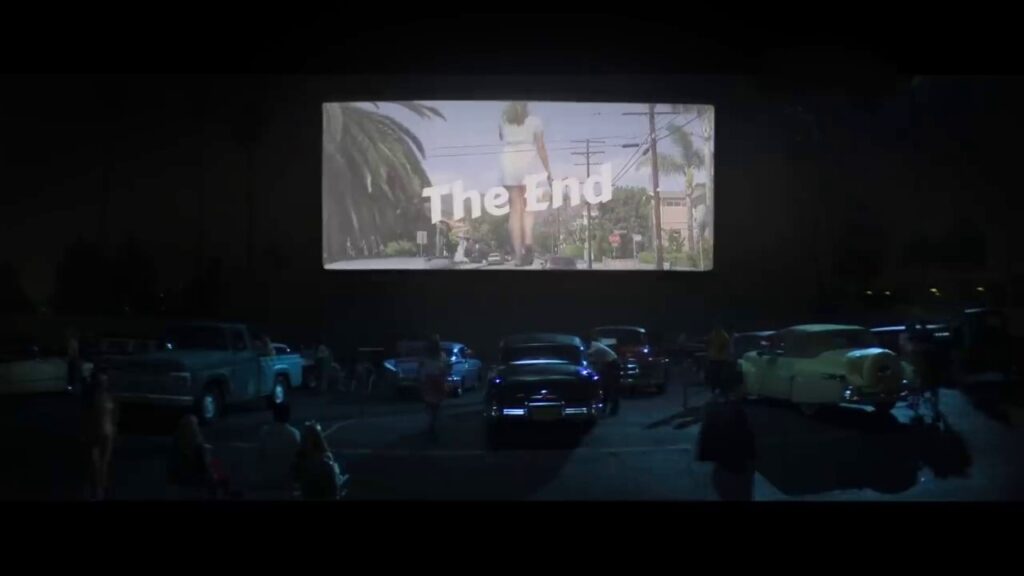
This is the story told in "Doin' Time," a music video starring American singer-songwriter Lana Del Rey, the stage name of Elizabeth Woolridge Grant..
Of Norwegian, Scottish, and English descent, Elizabeth was born on June 21, 1985, in New York City..
When Elizabeth was one year old, she and her parents, Robert Grant Jr. and Patricia Hill Grant, moved to the small town of Lake Placid, founded in the early 19th century and located in upstate New York..
It was in Lake Placid that Elizabeth's sister and brother were born: Caroline “Chuck” Grant, who would become a professional photographer; and Charlie Grant, who is a photographer and musical artist..
Raised as a Roman Catholic, Elizabeth attended Saint Agnes School in Lake Placid during elementary school and began singing in the church choir.

Lana Del Rey, dressed as a fairy, as a child.
Even at a young age, Elizabeth was preoccupied with death and its consequences..
(Open a parenthesis).
In January 2012, in an interview with British music journalist Neil McCormick, Lana Del Rey said the following about this event:
“I was quite shaken by the fact that my mother, my father, and everyone I knew would die someday. And me too. I had a kind of existential crisis. I couldn't believe that we were mortal. For some reason, this knowledge disturbed my life. I was unhappy for a while. It was a difficult period in my life.”
It was perhaps this knowledge that we are all mortal that motivated Elizabeth to have trouble making friends during most of her adolescence and early adulthood..
Close the parenthesis.
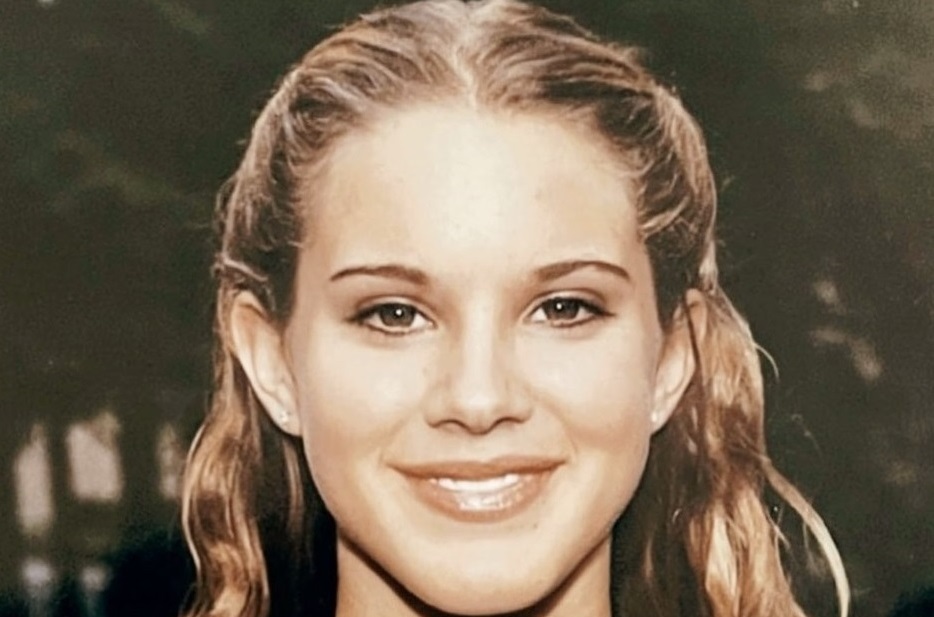
Lana Del Rey, in a photo taken in 1998.
At nineteen years old, Elizabeth enrolled in the Philosophy course (with an emphasis on Metaphysics) at Fordham University in the Bronx, New York City. She chose this course because she believed that studying the subject would fulfill her passion. “"the gap between God and Science"”, since I was interested “"In God and in how technology could help us discover where we came from and the reason for our existence." here".
It was while she was still at Fordham University that Elizabeth began singing professionally..
Open a new parenthesis.
Lana Del Rey once revealed what motivated her to become a professional singer:
“I wanted to be part of the music scene. Since I didn’t have many friends, I hoped to meet people and start a community around me, as used to happen in the 1960s.”
Close this new parenthesis..
Elizabeth graduated in 2008. And, two years later, she released her first album, adopting the pseudonym Lana Del Ray..
On January 31, 2012, the singer's second album was released worldwide., Born to Die.
With a duration of approximately fifty minutes, Born to Die It reached first place in eleven countries and divided critics..
Some critics praised the album's complexity and originality. Others accused the singer of being a... “"manufactured artist"”. Some critics pointed to “"The album's unevenness, featuring some bland tracks and arrangements that unsuccessfully strive for grandeur."”. However, other criticisms highlighted “"Lana's ability to create a strong persona and a unique aesthetic, with lyrics that explore themes such as love, relationships, and wildlife"”. For Lindsay Zoladz, Culture critic Pop from the newspaper The New York Times, “"The album's impressively exuberant atmosphere may be the only factor that unites its detractors and apologists."”. According to Lindsay, “"The album's point of view – if you can call it that – seems strange and outdated."”.
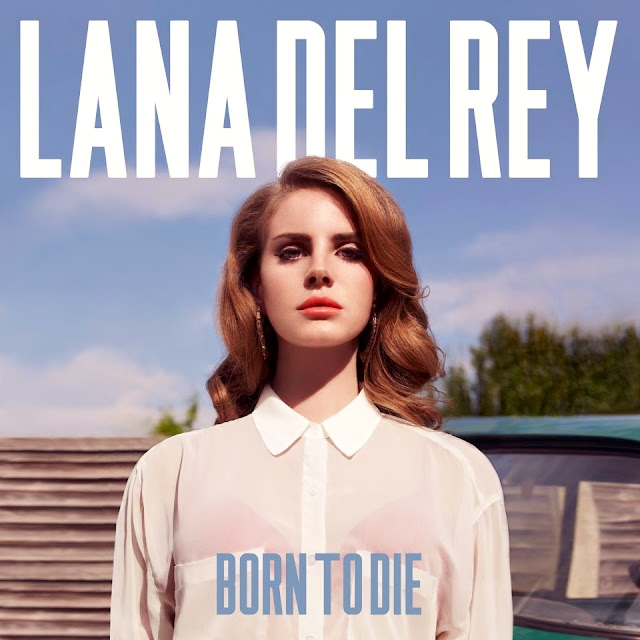
Album cover Born to Die
It was from Born to Die Elizabeth changed Ray to Rey and became known definitively as Lana Del Rey..
Open another parenthesis.
The pseudonym Lana Del Rey is a combination of the actress's name, Lana Turner (stage name of Julia Jean Turner, 1921-1995), and the name of the Del Rey, a Ford sedan.
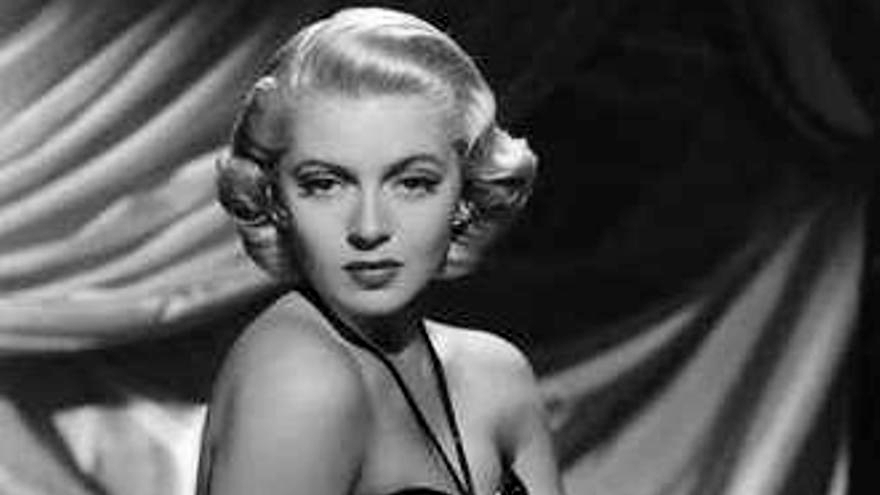
Born in Wallace, Idaho, Lana Turner rose to fame as a model. pin-up And for more than forty years, she was a movie star.
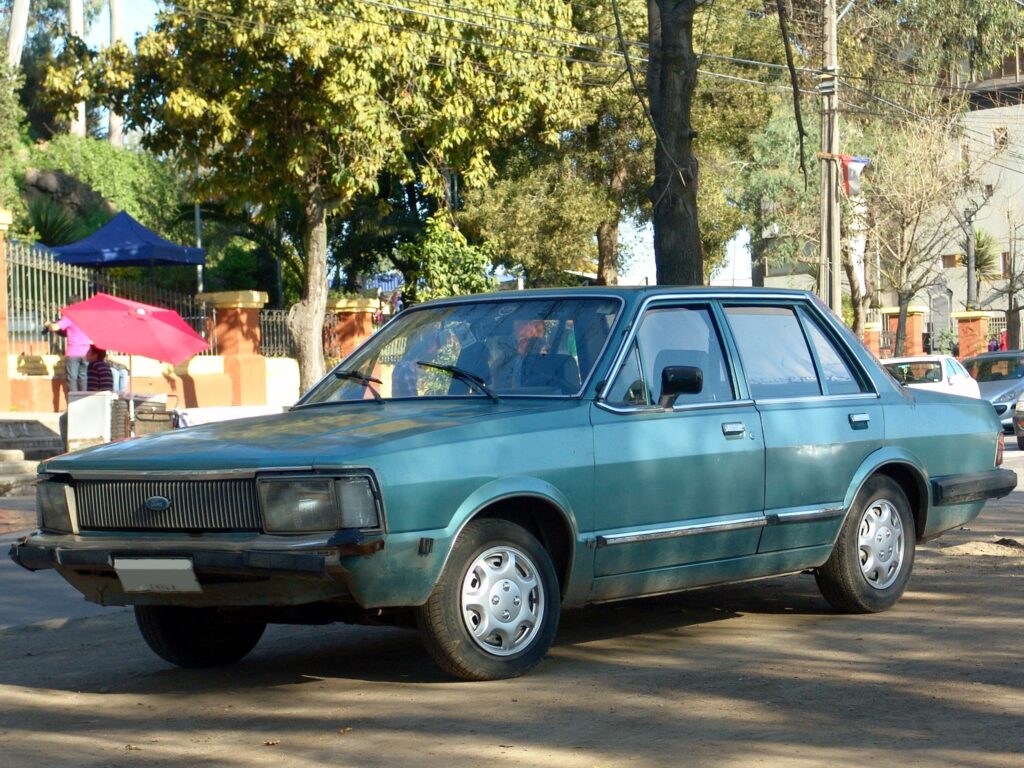
Launched in the early 1980s, the Ford Del Rey ceased production ten years later.
Close that parenthesis..
A self-confessed admirer of Lauren Bacall (born Betty Joan Perske, 1924–2014), the lead actress in On the Edge of Abyss (The Big Sleep, 1946), one of the most iconic films Noir Since the 1940s, Lana Del Rey has often cited a large number of singers (Billie Holiday, Joan Baez, Julie London, Britney Spears, Julee Cruise, Elvis Presley, Frank Sinatra, Bobby Vinton, Bob Dylan, and Bruce Springsteen, among others) as inspirations for her work. She also habitually states that she is equally influenced by the poets Walt Whitman (1819-1892) and Allen Ginsberg (Irwin Allen Ginsberg, 1926-1997), the filmmakers Federico Fellini (1920-1993) and David Lynch (David Keith Lynch, 1946-2025), and the painters Pablo Picasso (Pablo Ruiz Picasso, 1881-1973) and Mark Ryden.
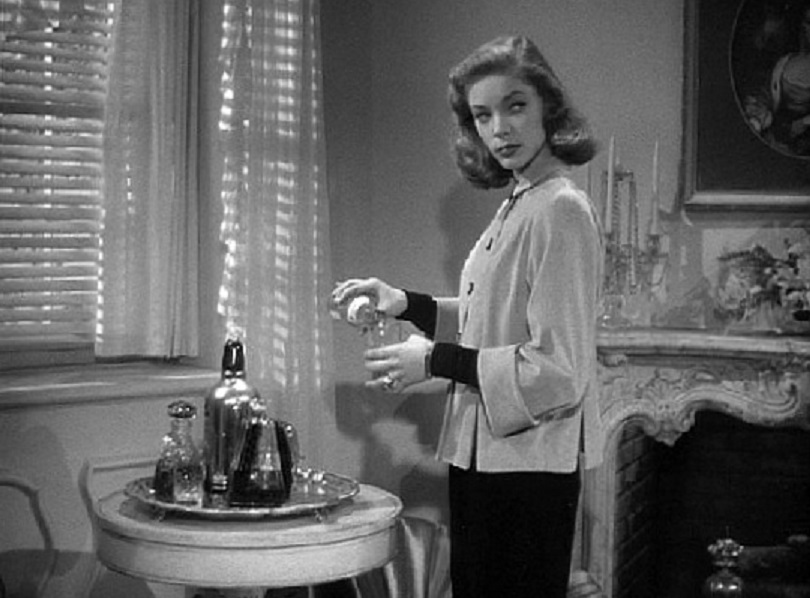
Lauren Bacall, in a scene from On the Edge of the Abyss.
Mixing tragic romance, glamour, melancholy and saturated with references to Jazz, Girl groups, money, power, glory, excess, and loss—Lana Del Rey's songs and music videos reference American culture from the 1950s and 1960s. An example of this is "Doin' Time," in which Lana plays two roles: that of the giant woman and that of the blonde girlfriend..
Directed by Rich Lee and released on August 29, 2019, the music video has a retro feel..
It should be noted that, while the scenes in drive-in Although the scenes are set in the 1950s, they take place in our time. Therefore, it can be deduced that the film the audience is watching is a science fiction film..
When we watch “Doin' Time’, we immediately realize that it is a tribute to the film. The 15-Meter Woman (Attack of the 50 Foot Woman, (1958), which was directed by Nathan Juran and starred the exuberant Allison Hayes. But, unlike what happens in the film, the giantess played by Lana does not die. She will remain. “"alive"” forever.
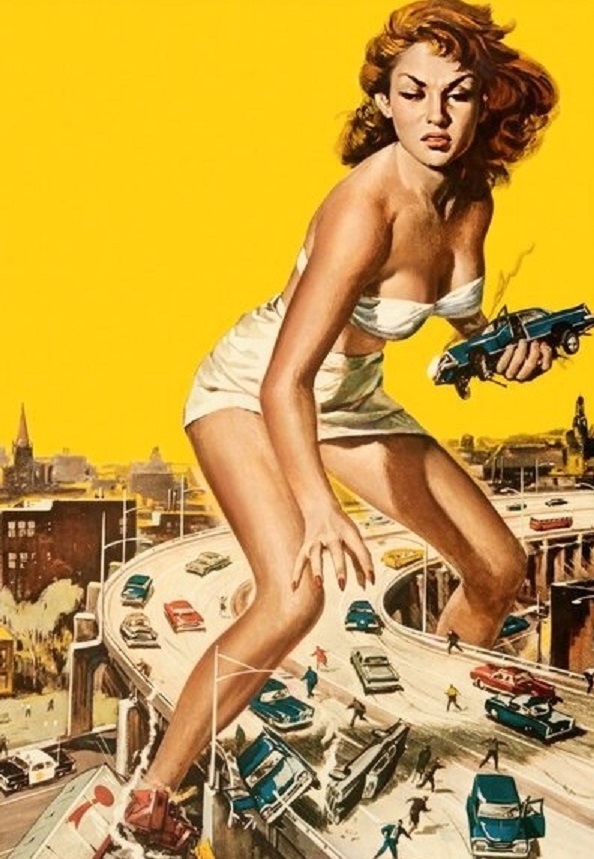
Illustration created for the original (American) movie poster. The 15-Meter Woman.
Marco Aurélio Lucchetti is a university professor and researcher of Cinema, Comics and popular books.
R. F. Lucchetti (Rubens Francisco Lucchetti, 1930-2024) was a fiction writer and screenwriter for Cinema & Comics.
 Portuguese
  English
  Spanish
  French