THE SCARLET SCORPION: FROM SCRIPT TO SCREEN – PART ONE
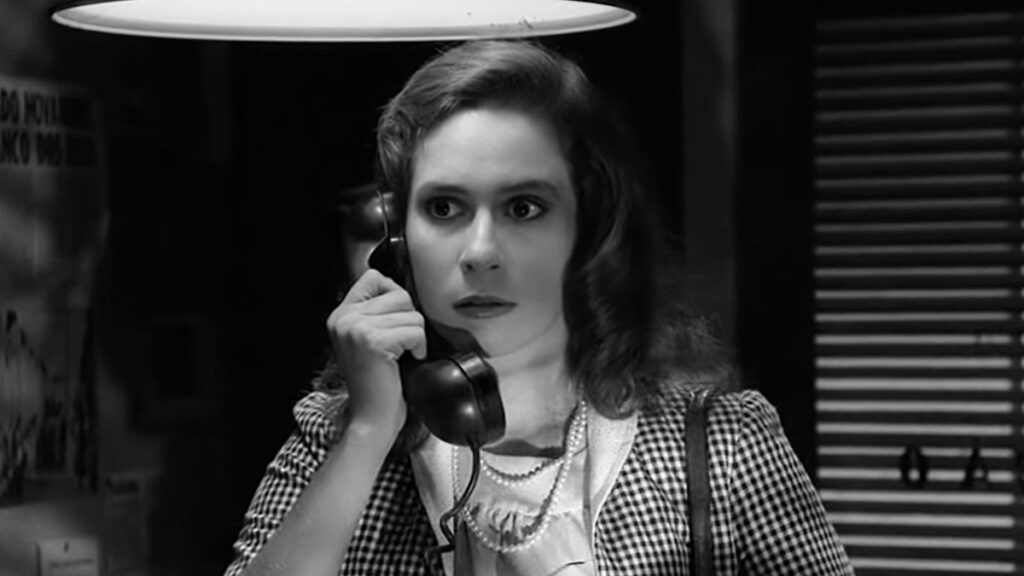
Josette Monzani
EEdition: Marco Aurélio Lucchetti
To Luiz,
that made me
to understand
the universe
of Terror and
of Suspense…
Rubens Francisco Lucchetti (deceased on April 4, 2024, he was better known as RF Lucchetti), until he arrived at the writing of the script for...’The Scarlet Scorpion1, had a long and very personal career: from short stories to comics, including film scripts and scripts from television programs – in partnership with José Mojica Marins, among others – and from the novel and radio series, facts already known to his readers and admirers.2.
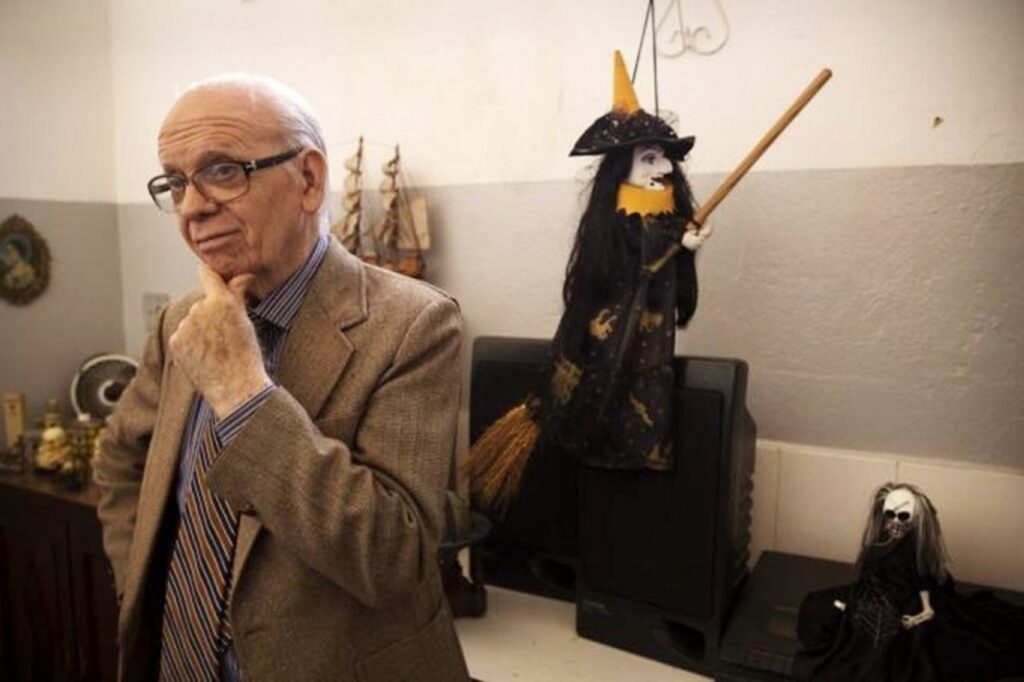
Rubens Francisco Lucchetti, in his office, at his residence, in Jardinópolis, one of the cities in the greater Ribeirão Preto region (SP).
FPhoto taken in 2013 by Gabriel “"Billy"” Castilho.
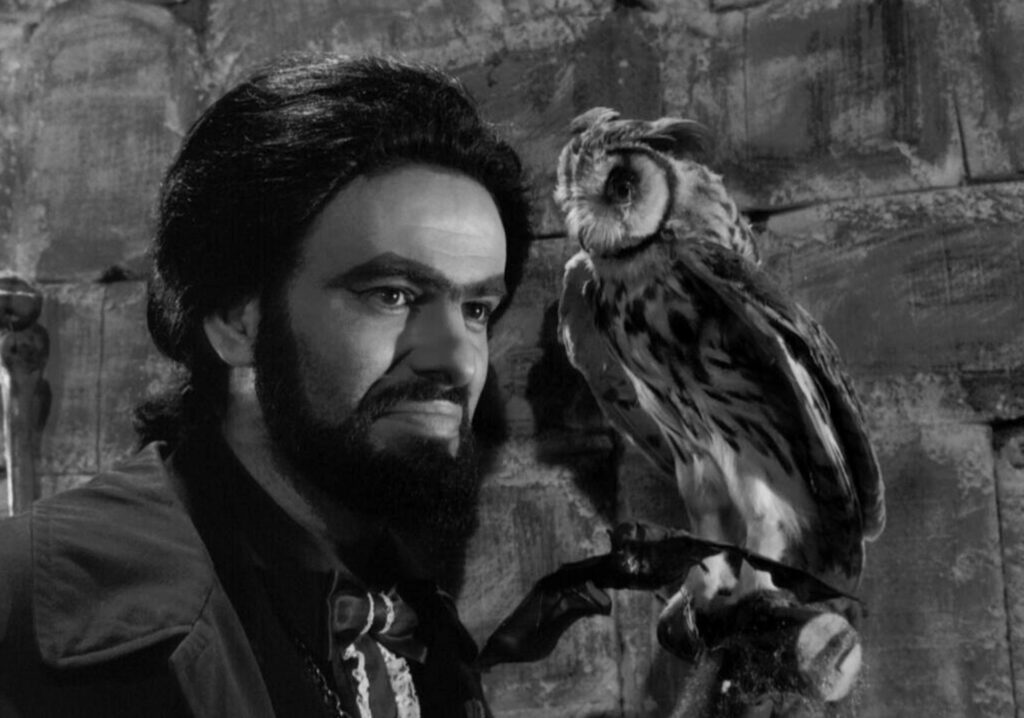
In the photo above, José Mojica Marins (1936-2020) is portraying Professor Oaxiac Odez in a scene from "Ideology," the third episode of... The Strange World of Coffin Joe.
Released in 1968, The Strange World of Coffin Joe, The script for the film, written in the early months of 1967, marked the beginning of the partnership between Rubens Francisco Lucchetti and José Mojica Marins. This partnership would last until mid-1969.
The Scarlet Scorpion It therefore bears the marks of the journey undertaken, perceptible in its reading: “To enter the house where (the objects) are located is to know the emotional adventures of its inhabitants.”3.
Some traces of Lucchettian work:
– Illustrator, poet; but above all, fiction writer (he didn't like to be called a writer. He used to say: “"I'm not a writer. I'm a fiction writer. I create fiction."”);
– According to himself, his short story “The Only Witness” was “"Written under the influence of reading 'The Tell-Tale Heart' and 'The Black Cat' by Poe"‘4, one of his great influences, as is known;
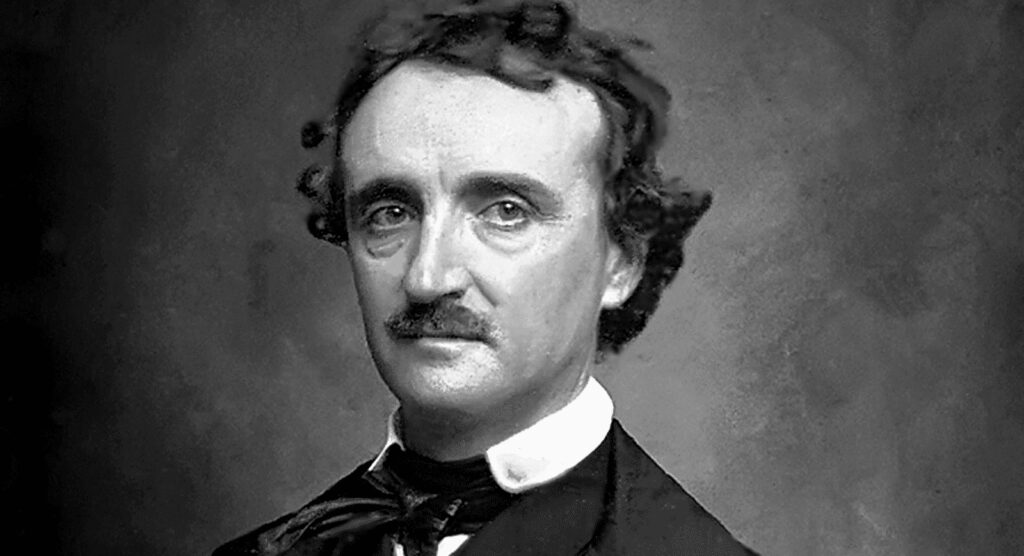
The American writer, editor, and critic Edgar Allan Poe (1809-1849), who greatly influenced the texts of Rubens Francisco Lucchetti.
– Madame Ming, inspired by Madame Dragon from the comics, in the original script by’The Scarlet Scorpion, She always carries a black cat in her lap, indicating the animal's connection to evil forces, quite common in horror, an effect reinforced by the red dress and the cat's name.5, Satan;
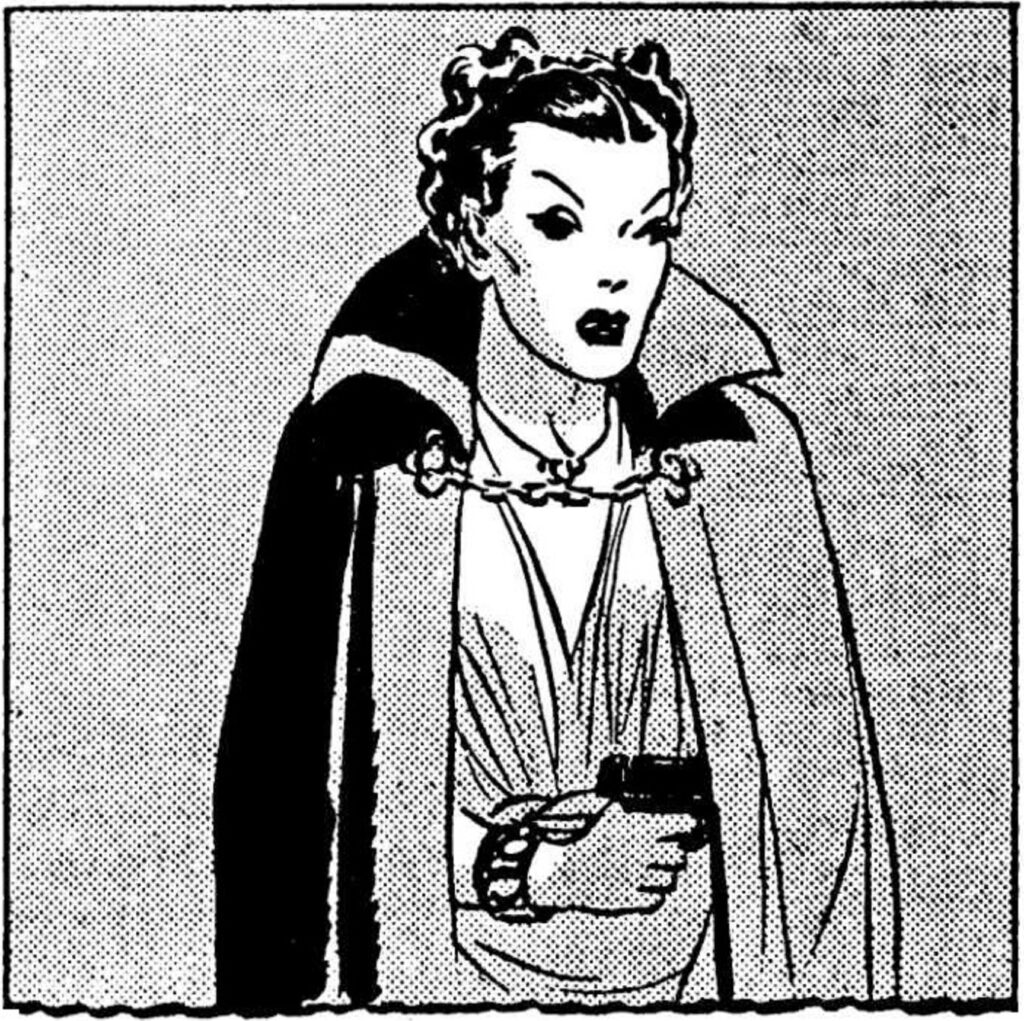
The villainous Madame Dragon (Dragon Lady in the original), a creation of the American cartoonist Milton Caniff (Milton Arthur Paul Caniff, 1907-1988), is one of the main female characters in the daily (black and white) strips and colored Sunday pages of the comic strip. Terry and the Pirates (Terry and the Pirates).
O The image above is from a strip dated September 25, 1936.
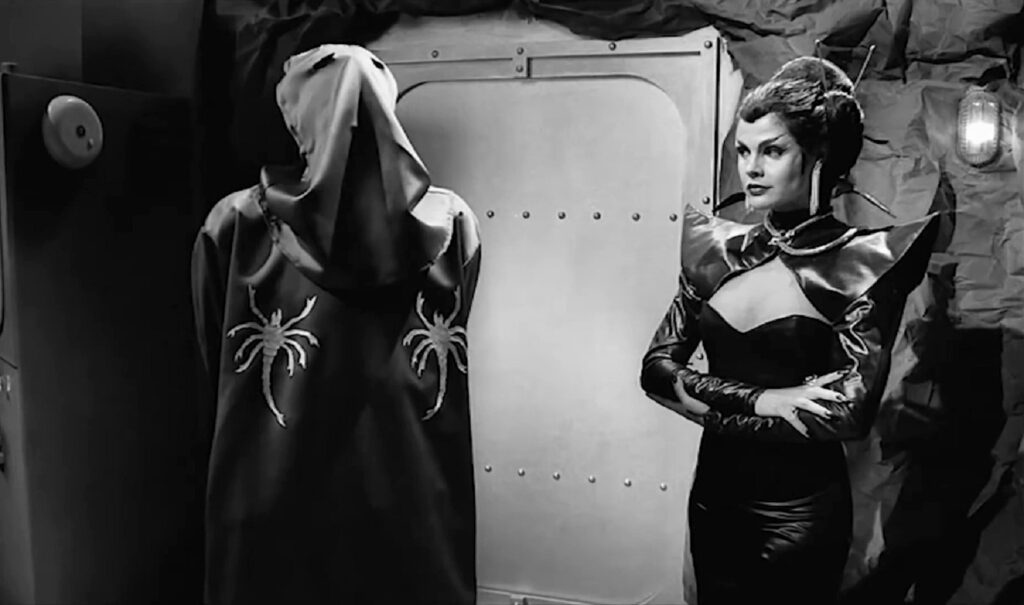
The sadistic Madame Ming, played by Rio de Janeiro-born model and mannequin Monique Evans (stage name of Monique Rezende Nery da Fonseca), listens attentively to what her boss, the Scarlet Scorpion, is saying in a scene from the film. The Scarlet Scorpion.
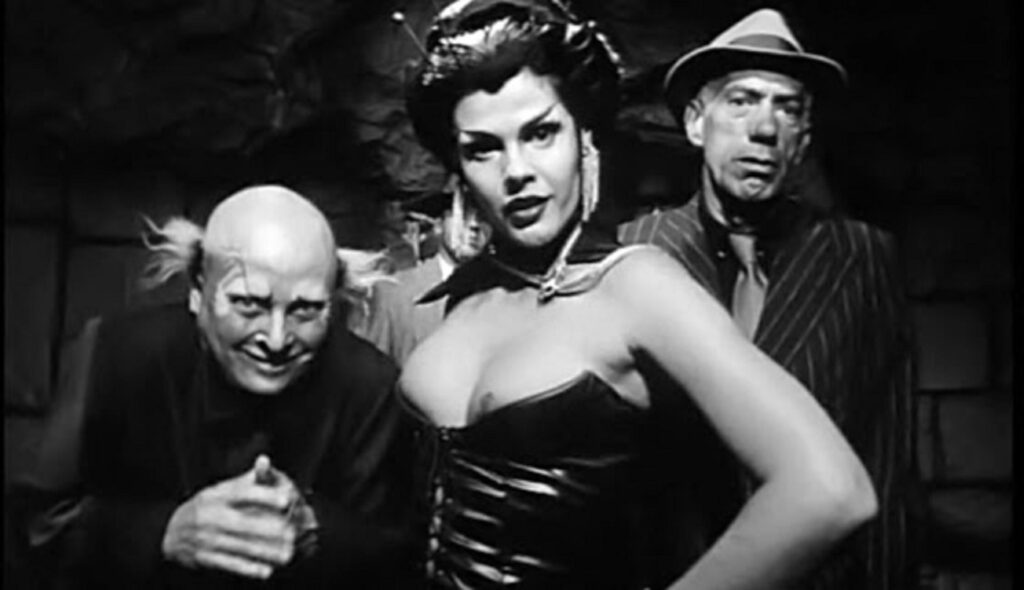
In this photo, taken from a frame of The Scarlet Scorpion, three hardened criminals: Hop-Frog (Felipe Falcão), Madame Ming and Caveira (Sandro Solviatti).
– One of Scorpion's henchmen is, in the script, Hop-Frog, the name of a Poe story;
– He created the character The Bat in the original script of The Scarlet Scorpion, in homage to O Sombra (from the magazines) Pulp, (radio serials, film serials and comic books) and masked heroes, also frequent in Mystery and Suspense.6;
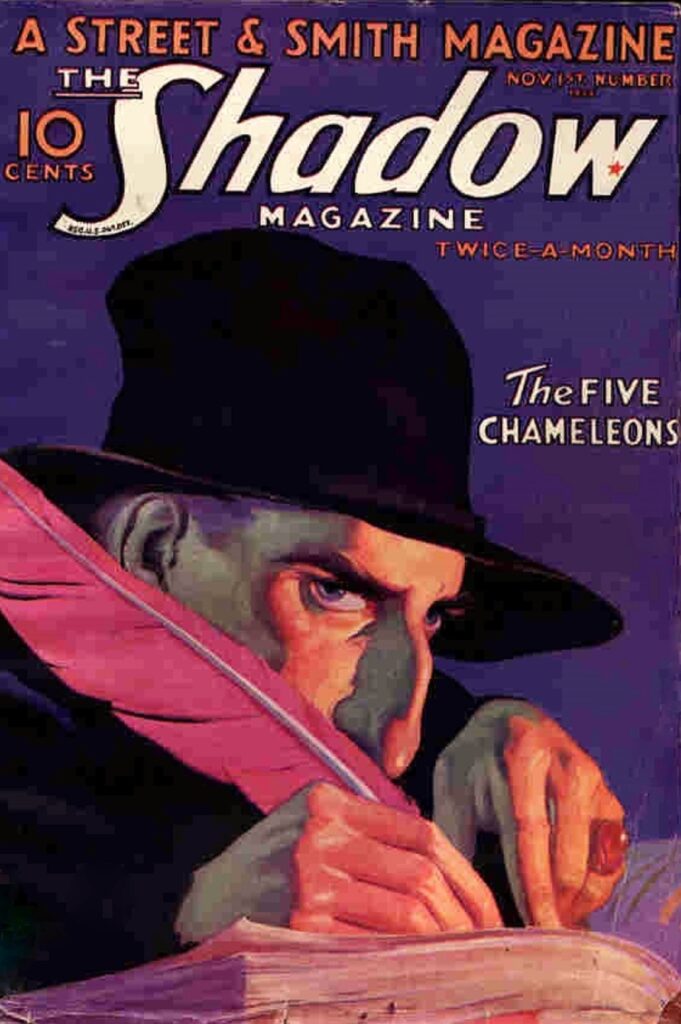
Cover of an issue (the one dated November 1, 1932) of The Shadow Magazine, the magazine Pulp where the text stories of The Shadow were published. Some of these stories appeared in our country in Mysteries (the title was originally written like that, without the accent mark) “"and"”), Stories Magazine e Police Review.
Dand owned by Street & Smith Publications of New York, and published mostly every two weeks, The Shadow Magazine It circulated from 1931 to 1949. In total, three hundred and twenty-five issues were published.
DIt should be noted that the stories in The Shadow were mostly written by Walter Brown Gibson (1897-1885), who signed them with a pseudonym he created, but which belonged to Street & Smith: Maxwell Grant.
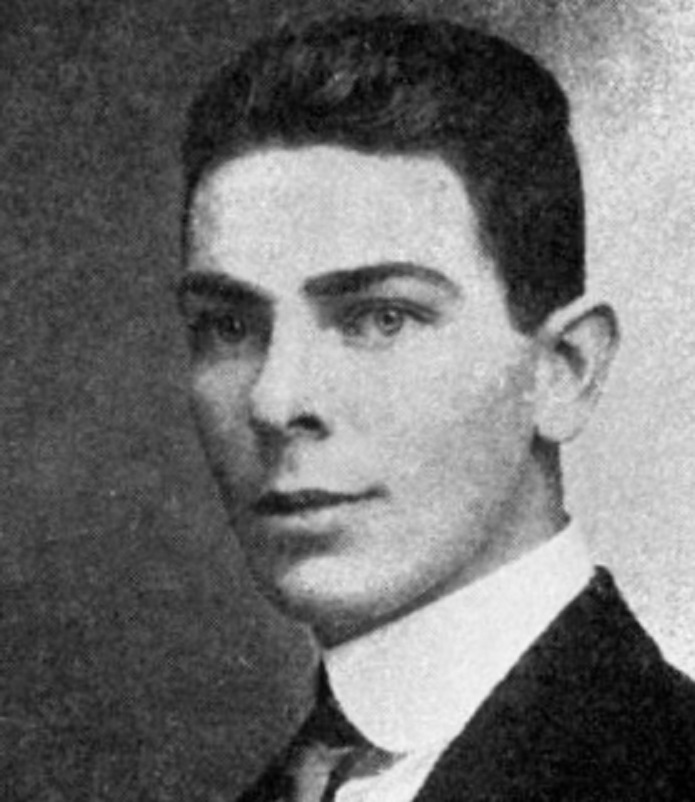
Walter Brown Gibson, as a young man.
– He also consciously paid homage to other entities and characters in the first version of the script, several of which were omitted by the film's director;
Finally, Lucchetti knows and masters very well the universe populated by mummies, ghosts, vampires, monsters, carnivorous plants, megalomaniacal geniuses, esoteric creatures, mutant beings, instruments of torture, castles, swamps, basements, and mysterious caves.7. The supernatural and the fantastic are familiar to him in all their particularities.8.
In carrying out’The Scarlet Scorpion, The screenwriter teamed up with Rio de Janeiro filmmaker Ivan Cardoso (Ivan do Espírito Santo Cardoso Filho).
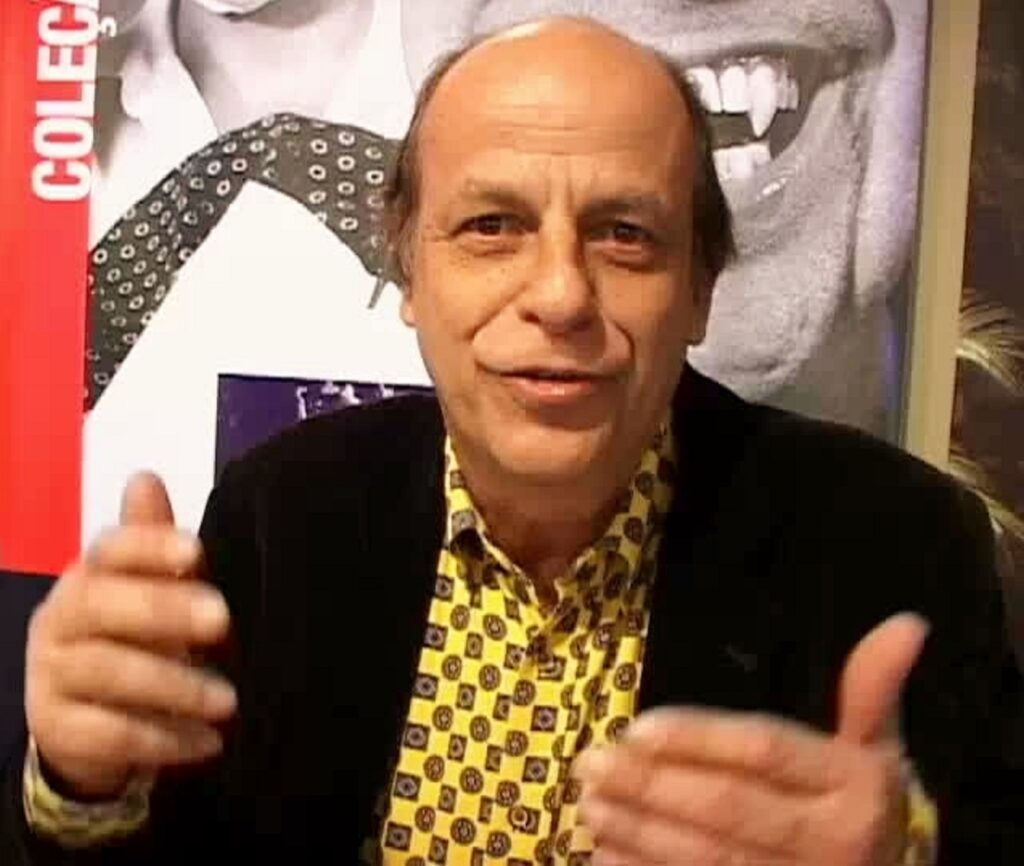
Ivan Cardoso, in a photo taken on August 20, 2009, during a book signing session. Ivan Cardoso, the Master of Terrir.
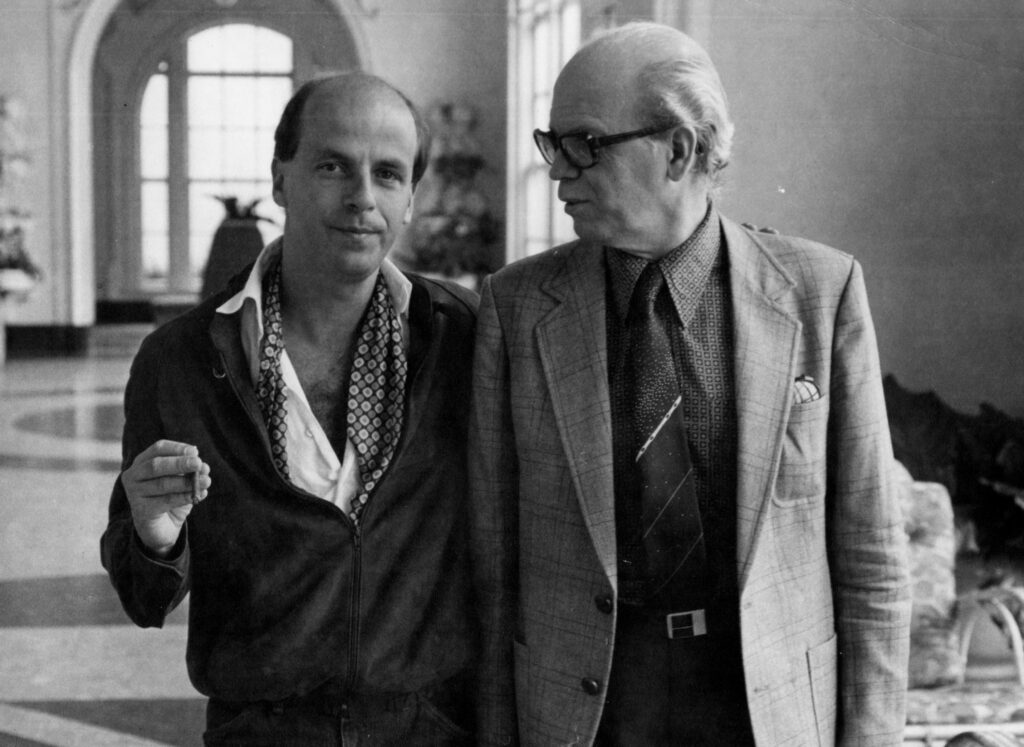
Ivan Cardoso and Rubens Francisco Lucchetti at the Quitandinha Hotel in 1984, during the filming of The Seven Vampires.
FoPhoto taken by Sergio Pagano.
Ivan's journey:
Photographer and filmmaker, a man of “"images"”, therefore;
– He belongs to a generation (immediately following Lucchetti's) that attended matinees at the cinema and, later, had the opportunity to discuss issues related to film language and production, through the proliferation of film clubs, film archives, etc., and the controversies generated by the filmmakers of Cinema Novo;
– He was a regular listener of the radio series broadcast on Rádio Nacional, in Rio de Janeiro: The Knight of the Night (written by Aloísio de Oliveira), The Adventures of the Angel (created by Péricles do Amaral) and Jerônimo, The Hero of the Sertão (created by Moysés Weltman);
– As a teenager, I watched TV series Dangerman, The Bengal Lancers, Naked City, Beyond Imagination, The Fugitive, Maverick, 77 Sunset Street, Ivanhoe, Bat Masterson, The Invaders, Impact, The Adventures of Rin Tin Tin, Bonanza, Star Trek, You Monsters, The Untouchables e Highway Patrolman;
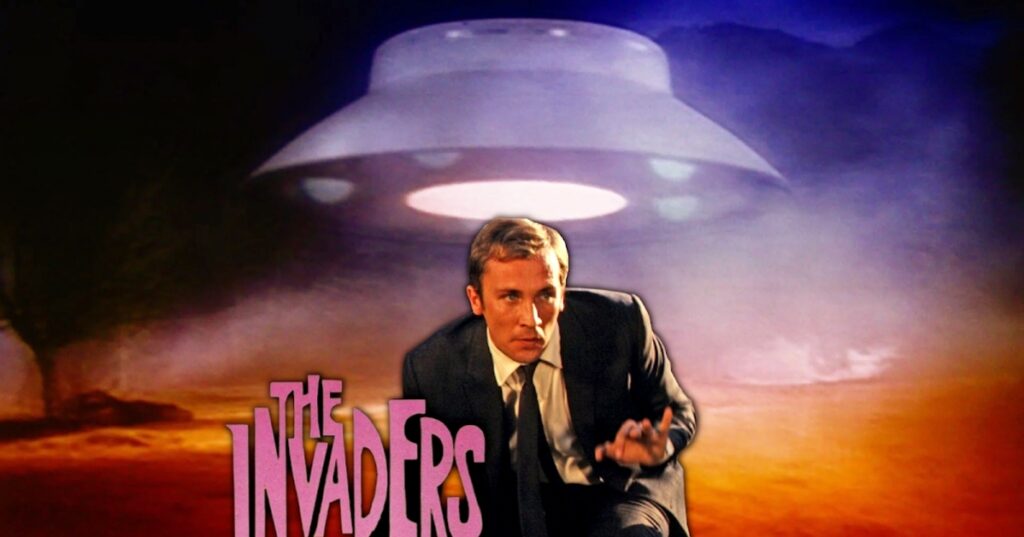
In the photo, in the foreground, Roy Thinnes, playing David Vincent, the protagonist of The Invaders (The Invaders, 1967-1968), one of the series watched by Ivan Cardoso, for whom television was a vehicle for education and information.
– In cinema, it began via Super 8 (within the movement called “udigrúdi”, (a potential rival of the Cinema Novo filmmakers), “"Around 1971, leaving behind some anthological examples." [Nosferatu in Brazil, God's sentence, Love & Tara, Hello Hello Cinédia, History of the South Seas, Rain of Sprouts – multiple parodies of Julio Bressane's metaparodies9], moving on to short films in 16/35 mm of the highest caliber (The Universe of Mojica Marins, Dr. Dyonélio, HO, The Story of an EyeAmong those Super 8s, one cannot forget The Mummy Strikes Back, embryo of the current Mummy of Mu”10;
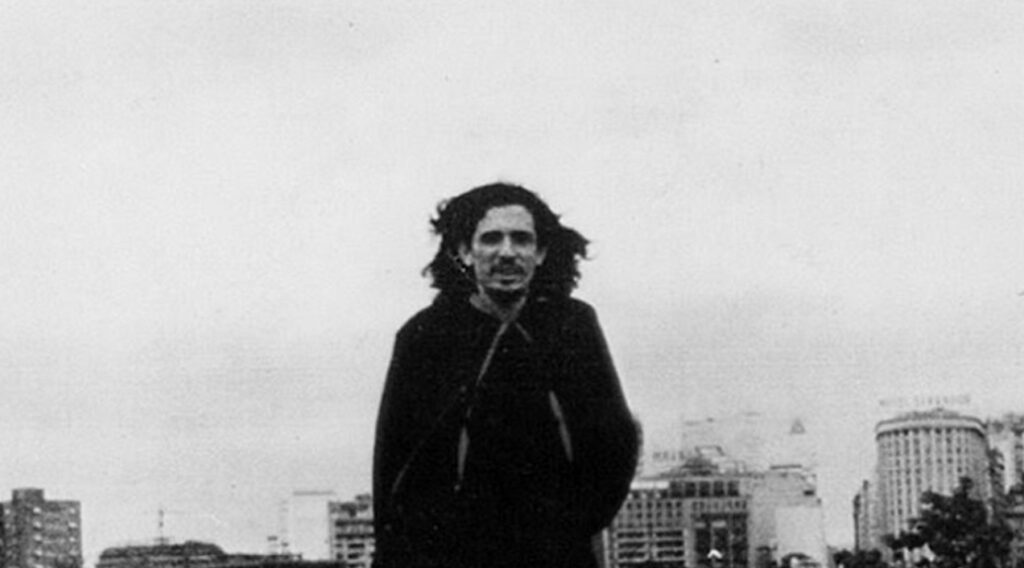
The poet, journalist, and popular music lyricist Torquato Neto (Torquato Pereira de Araújo Neto, 1944-1972), in a scene from Nosferatu in Brazil.
Direct heir of “"cinema of invention"” by Rogério Sganzerla11, close to the vanguard – accomplished HO(1979), with and about the work of the Rio de Janeiro visual artist Hélio Oiticica, with poetic text by Haroldo de Campos and narration by Décio Pignatari;
– Experience the golden years (with your cool rock“) and Rio de Janeiro full of glamour…
Something I can't forget to mention: Lucchetti and Ivan were heavily influenced by American film serials from the 1930s and 1940s. However, while Lucchetti saw them in cinemas in São Paulo and Ribeirão Preto, Ivan saw them on television.
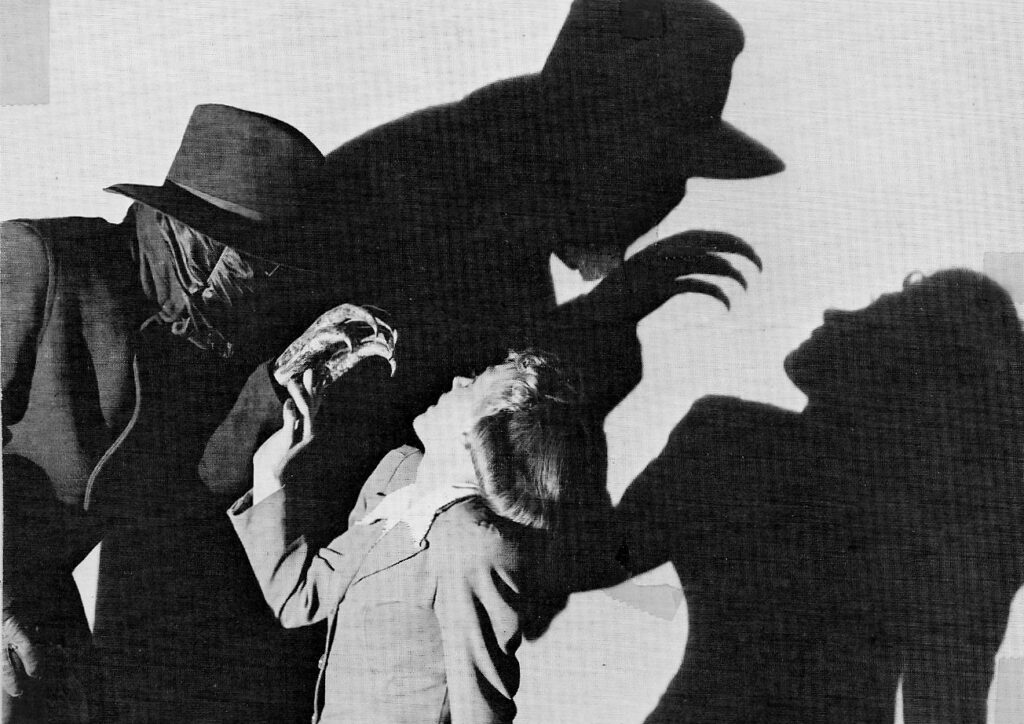
A scene from a movie serial by Rubens Francisco Lucchetti and Ivan Cardoso must have watched it: The Iron Claw (The Iron Claw, 1941).
NOTES:
1The first version of the script was sent to Ivan in 1987, according to Lucchetti's testimony to the author. It is this version, the screenwriter's preferred one (information provided to us by Lucchetti on March 29, 1994, in a letter), that we are using in the comparative analysis with the final product, the film. The first version features The Bat as the main character, a concept Lucchetti began developing in 1944, inspired by The Shadow (according to his testimony in another letter, dated April 27, 1994). The second and third versions of the script were written in 1988, according to their author. The fourth version, used in filming, is also from 1988.
An addendum: the first version of the script was published in 2015 by Editora Laços, from São Paulo, in The Scarlet Scorpion Original Screenplay by RF Lucchetti, a book organized by Marco Aurélio Lucchetti, son of Rubens.
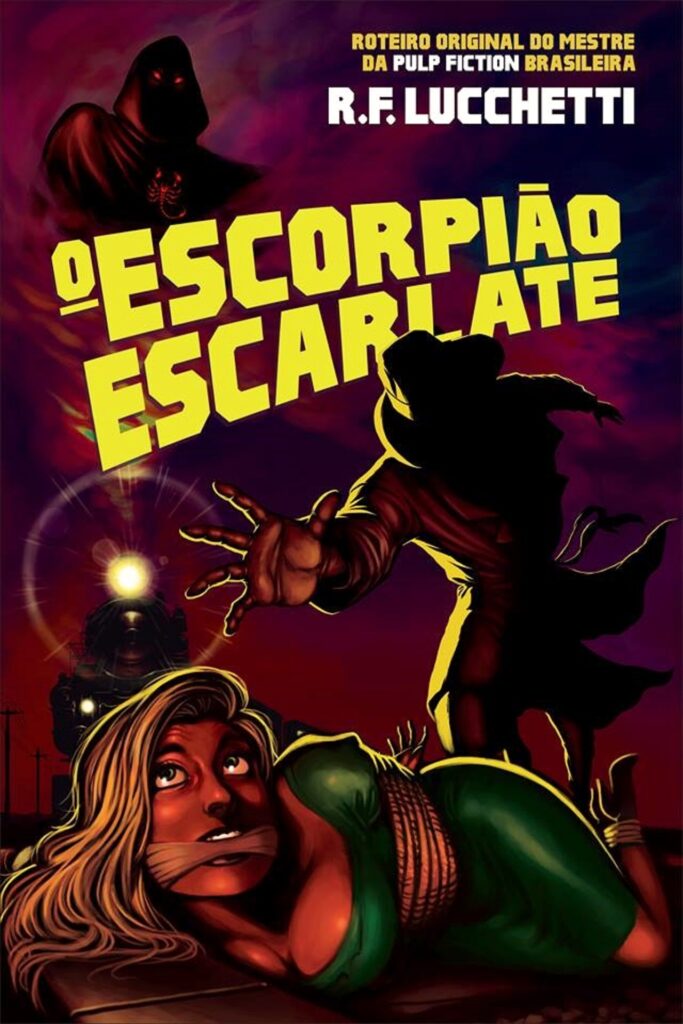
Book cover The Scarlet Scorpion Original Screenplay by RF Lucchetti.
The cover was created by Graphicinema Estúdio, from Franca (SP).
Design by Fernando Ferreira Garróz & Marcos Spineli.
2October 31, 1942, publication of the first short story, "The Only Witness," in a São Paulo newspaper. The Lapian. This same story was also the first to be adapted into a comic strip, in 1964, and published in the second issue of the magazine. The Raven. Lucchetti also wrote for several magazines. Pulp (Police Review, X-9, Mystery Stories, Emotion, (among others), produced all the content of the magazine entirely. Black Series (He then used several pseudonyms to give the reader the impression that there were many authors), he wrote the scripts for approximately three hundred comic book stories, and is the author of a large number of books (most of these books were published in paperback format and released by the publishers Outubro, Cedibra, and Fittipaldi).
In 2014, Editorial Corvo, from Rio de Janeiro, began... RF Lucchetti Collection, This project is intended to publish part of the work of Rubens Francisco Lucchetti. To date (September 2025), sixteen volumes have already been released, all in 13 x 18 cm format. According to Marco Aurélio, the editor of the collection, only one volume remains to be published, whose title will be... Daydreams.
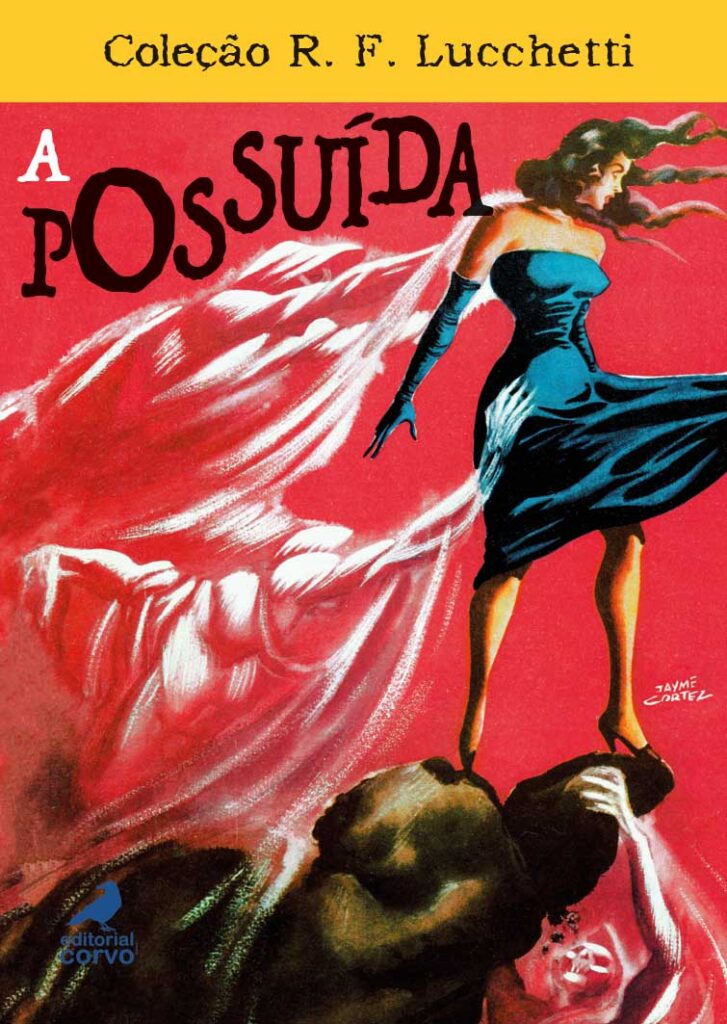
Cover of one of the volumes, volume 12, released in 2019, of RF Lucchetti Collection.
The cover illustration is by a master of drawing: the Portuguese-Brazilian Jayme Cortez (born Jaime Cortez Martins, 1926-1987).
3Bosi, E. Memory and Society, Memories of the Elderly, São Paulo, Companhia das Letras, 1994, p. 441.
4Information given to the author in a letter written in 1994.
5See, for example,
script sequence 13: “Madame Ming has oriental features and wears a tight, lustrous dress with a slit on one side. The dark dress and the black of her hair accentuate the whiteness of her complexion, making her a sensual sight. With her long fingers, she caresses a black cat close to her lap.”;
Sequence 48: “"Madame Ming, wearing a very tight dress (preferably bright red), strokes the cat close to her lap.". (…) MING – First, I'll have to give Satan some milk.”;
and sequence 128: “"While petting the cat in her lap, Madame Ming watches, through a screen, the Scarlet Scorpion conversing with Maggie."”.
6Lucchetti says to the author on April 7, 1991: “My idea (when creating The Bat) was to pay homage, all at once: to the masked heroes that have been around since the serials of the last century, the radio serials (not the soap operas, which were something else; the radio serial was practically the Cinema transplanted into sound), the film serials and the comic books.”
7Cosme Alves Netto (1937-1996), who for more than two decades was the director of the Cinematheque at the MAM (Museum of Modern Art) in Rio de Janeiro (while at the head of the Cinematheque at the MAM in Rio, Cosme made possible not only the preservation of many visual works, but also the recovery of films considered lost), once referred to Lucchetti in the following way: “"A delirious re-creator and updater of an entire mythology of Horror (mummies, vampires, etc.)."”
8In addition to producing exhaustively, Rubens Francisco Lucchetti read, watched, and collected books, comics, and films (on film, Super 8 mm, etc.)., VHS, DVD e Blu-ray) on this subject, in a monumental Babylonian archive kept in his house.
Currently, this collection belongs to and is preserved by Marco Aurélio, who holds a doctorate in Arts – Cinema from ECA (School of Communications and Arts) at USP (University of São Paulo).
9Pay attention to Ivan's production with Bressane – Hello Hello Cinédia (1973), History of the South Seas (1975) and The Story of an Eye (1986) – related to Chanchada and parody. And also, The Good Times Are Back (episode: “Hot Saturday”), from 1984: a parody of American teen musicals from the Jovem Guarda era.
10Ferreira, J. Cinema of Invention, São Paulo, Max Limonad/Embrafilme, 1986, p. 245 (bold ours, highlighting his productions already close to horror). Ivan made After Midnight, based on Mojica, in 1972, and, in 1978, a color documentary, The Universe of Mojica Marins. It was in 1977, through Mojica, that Ivan met Lucchetti.
11See: Ferreira, J. Op. cit., p. 241. Ivan worked with Sganzerla in No way, Spider!, in 1970, at the beginning of his career. Still, like Sganzerla, Ivan “"enjoy"” The fears, the nightmares, and the heroes of the bourgeoisie. “"Whoever has one shoe will not be left behind."”, of The Red Light Bandit (1968), it also applies well to Ivan.
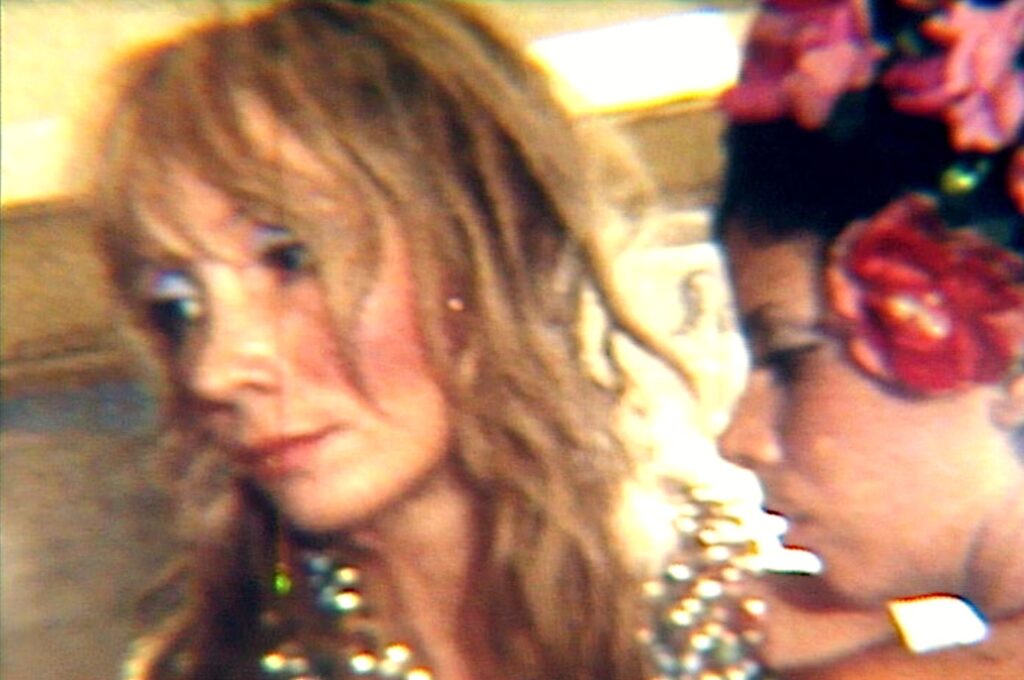
Helena Ignez and Maria Gladys, in a scene from No way, Spider!.
In No way, Spider!, Ivan Cardoso was an assistant to Rogério Sganzerla (1946-2004).
Josette Monzani holds a doctorate from the Pontifical Catholic University (PUC) of São Paulo and is a professor of Screenwriting and Film Language in the Bachelor's Degree in Image and Sound at the Federal University of São Carlos (UFSCar). She is a scholar of Brazilian cinema (primarily studying the films of Rogério Sganzerla, Julio Bressane, Ivan Cardoso, and Glauber Rocha). She has been dedicated to researching the work of Rubens Francisco Lucchetti since the 1980s. She has published numerous articles in newspapers, scientific journals, and books.
 Portuguese
  English
  Spanish
  French