ASYLUM OF SINISTER, A CLASSIC OF HORROR – PART ONE
RF Lucchetti
Edited by: Marco Aurélio Lucchetti
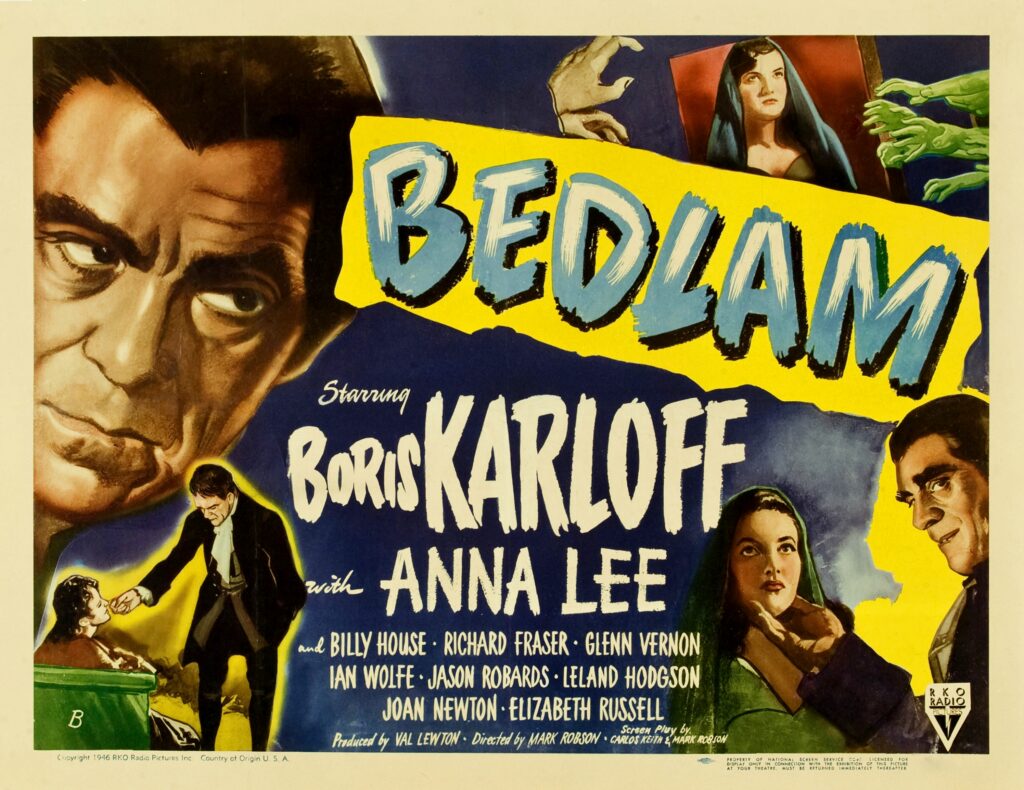
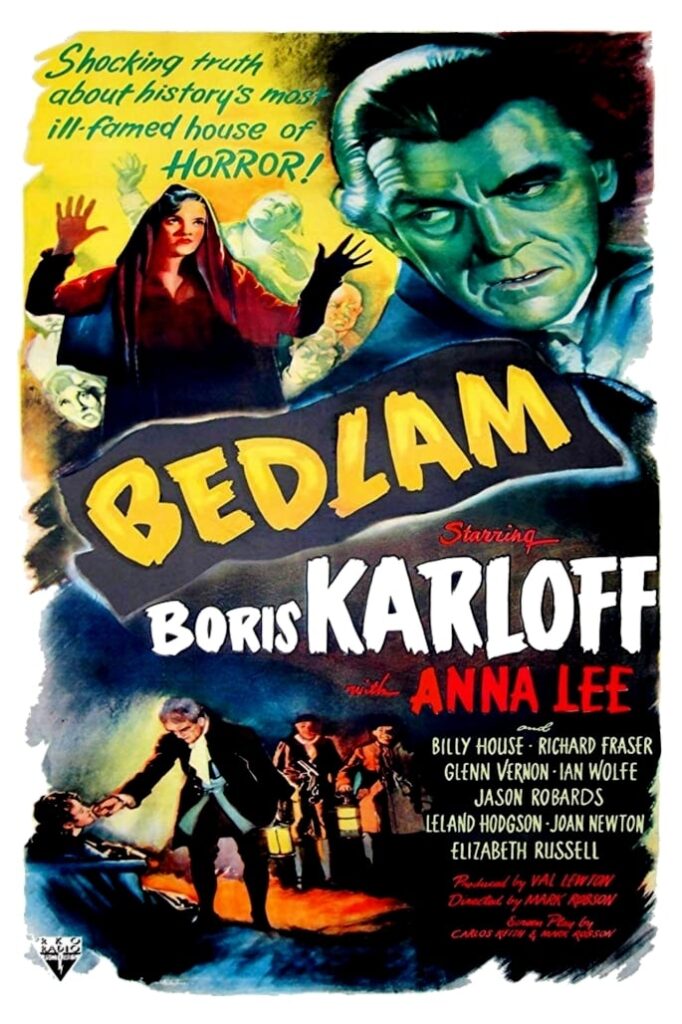
Original (American) movie poster Sinister Asylum.
In 1942, Charles Koerner, recently appointed head of production at RKO Radio Pictures, decided that the studio should follow Universal's example and produce horror films. He then hired Val Lewton, who had worked for about eight years as a script editor at the studios of producer David O. Selznick (David Oliver Selznick, 1902-1965), and tasked him with producing a series of low-budget horror films. Each film would be approximately seventy-five minutes long and intended for double features in American cinemas.
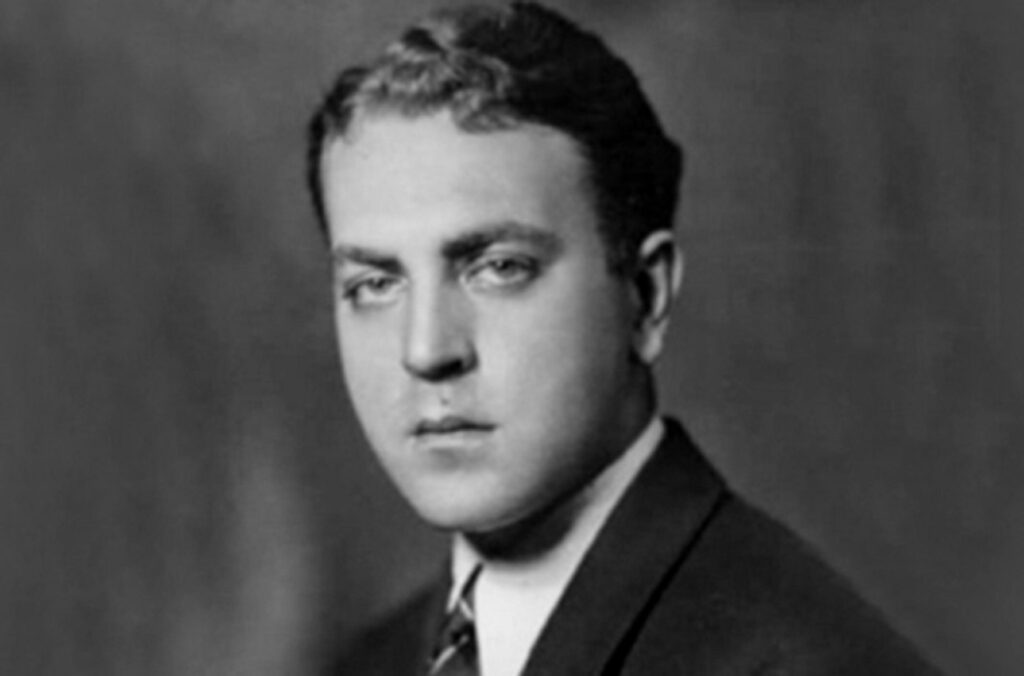
Val Lewton.
Immediately, Val Lewton said to himself: “They might think I’m going to make the usual kind of horror film, the kind that makes an immediate profit, gets laughs from the audience, and is quickly forgotten. But they’re wrong. I’m going to make the kind of thriller that I enjoy.” Instead of the usual stories of vampires, werewolves, and monsters created by scientists wanting to be God, Val Lewton chose to bring to the cinema screen narratives related to some universal fear or superstition, always seeking to obtain the cinematic expression of horror through suggestion and the dramatic use of sounds, silences, and echoes. And the nine horror films he produced at RKO form, as critic Carlos Fonseca (Carlos do Amaral Fonseca, 1930-2006) stated, “"The most extraordinary horror collection in the history of cinema.".
Earning two hundred and fifty dollars a week, Val Lewton oversaw every detail of the production. He demanded that the set designers, costume managers, makeup artists… in short, all the professionals involved in making his films give their best. And the extreme care he dedicated to the production of the films can be seen by watching, for example, the last horror film he produced at RKO: Sinister Asylum (Bedlam), whose filming took place between July 18 and August 17, 1945, and which premiered in United States cinemas in 1946 [in his book Val Lewton – The Reality of Terror (London, Secker & Warburg/British Film Institute, 1972, pp. 81 and 160), university professor and researcher Joel E. Siegel (1940-2004) states that Sinister Asylum It premiered in US cinemas in April 1946..
The script of Sinister Asylum It was written by Val Lewton (he signed it with the pseudonym Carlos Keith) & Mark Robson.
(Open a parenthesis).
Mark Robson (1913-1978) was part of the production team for seven of the nine horror films that Val Lewton produced at RKO. In three [Panther Blood (Cat People, 1942, directed by Jacques Tourneur), The Living Dead (I Walked with a Zombie, 1943, directed by Jacques Tourneur) and The Leopard Man (The Leopard Man, 1943, directed by Jacques Tourneur), as editor; and, in four [The Seventh Victim (The Seventh Victim, 1943), The Ghost of the Seas (The Ghost Ship, 1943), The Island of the Dead (Isle of the Dead, 1945) and Sinister Asylum], as director.
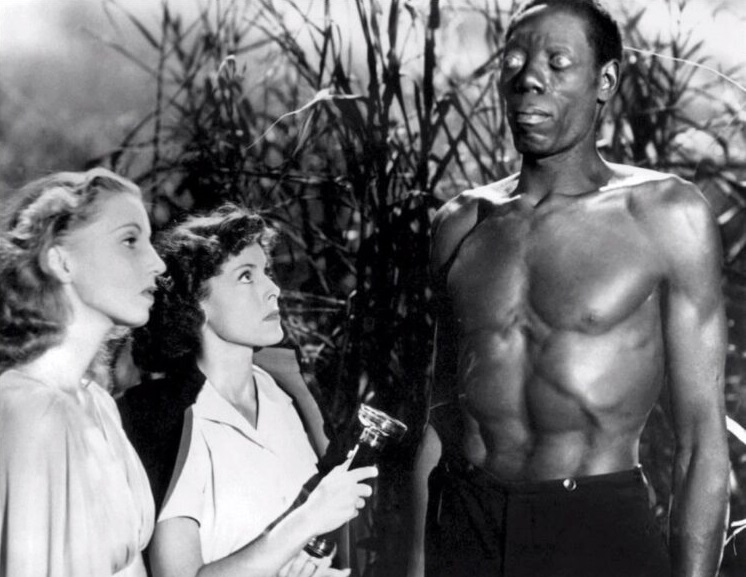
Christine Gordon, Frances Dee and Darby Jones, in a scene from The Living Dead, one of the films that Val Lewton produced and Mark Robson directed.
Close the parenthesis.
And, to write the screenplay, Lewton & Robson drew inspiration from "The Madhouse," an engraving by the English painter, engraver, and illustrator William Hogarth (1697-1764).
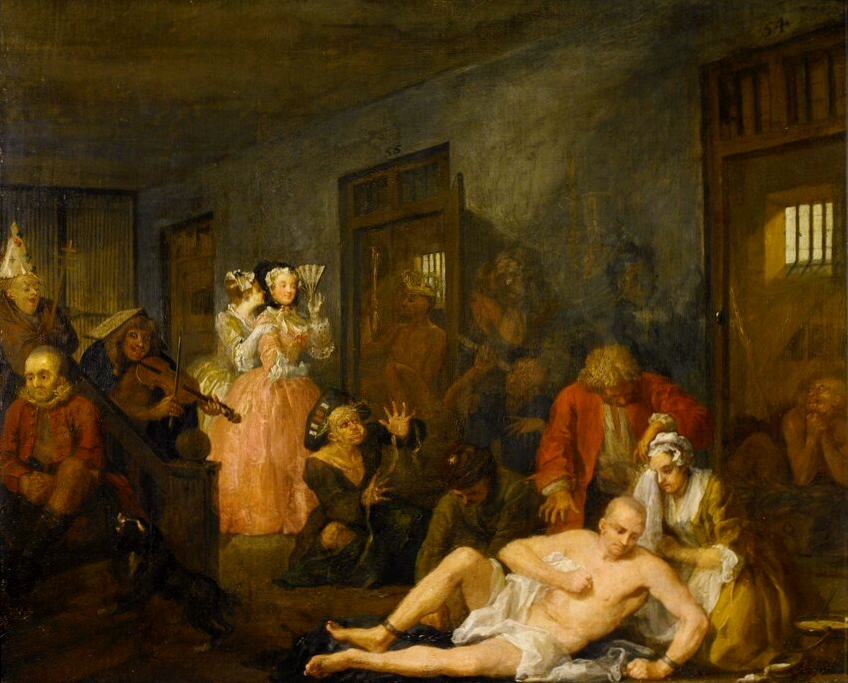
“The Madhouse” (oil on canvas, 62.2 x 74.9 cm).
EThis engraving, the eighth in a series of eight entitled A Rake's Progress, It was made between 1733 and 1734 and currently belongs to the collection of Sir John Soane's Museum in London.
ASinister silo Set in London, the film depicts how the insane were treated in the gloomy St. Mary's of Bethlehem Asylum in the early years of the second half of the 18th century. At that time, madness was considered a divine scourge; and those who suffered from this affliction were despised, ridiculed, mistreated, tortured, and thrown into filthy and dark asylums. It is in this suffocating environment that, alongside the figure of the asylum supervisor, the sadistic and ambitious Master Sims [magnificently portrayed by Boris Karloff (stage name of William Henry Pratt, 1887-1969), who a year earlier, in The Empty Tomb (The Body Snatcher, [Directed by Robert Wise), a film also produced by Val Lewton and based on a story by the Scottish writer Robert Louis Stevenson (1850-1894), who had superbly embodied a cruel and cynical grave robber, appear: the rich and obese lord Mortimer (Billy House), a simple-minded and hypocritical man who thinks money can buy everything; Nell Bowen (Anna Lee), a young and beautiful actress who ends up being committed to St. Mary's for confronting Master Sims and publicly humiliating him. lord Mortimer (until then, he was his protector and patron) and having suggested that the insane receive less inhumane treatment in the asylum; and the Quaker William Hannay (Richard Fraser), one of the few people willing to help Nell escape the asylum. The entire plot of the film unfolds through these four characters, in an increasingly tense and dark atmosphere.
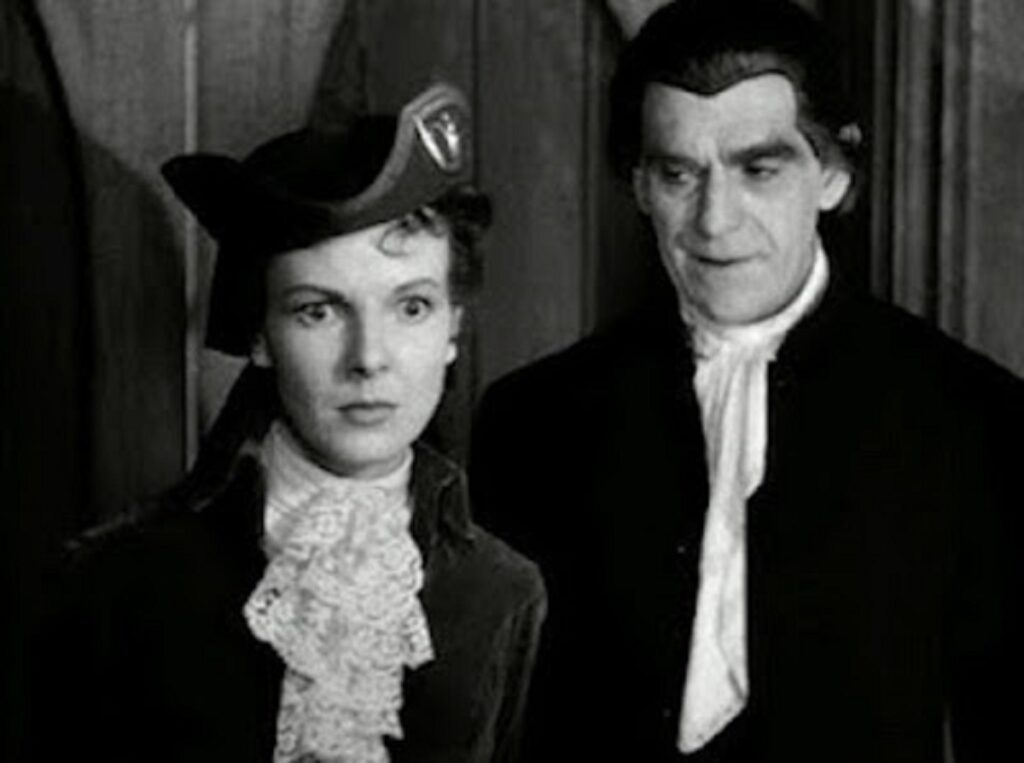
Anna Lee (born Joan Boniface Winnifrith, 1913–2004) and Boris Karloff, in a scene from Sinister Asylum.
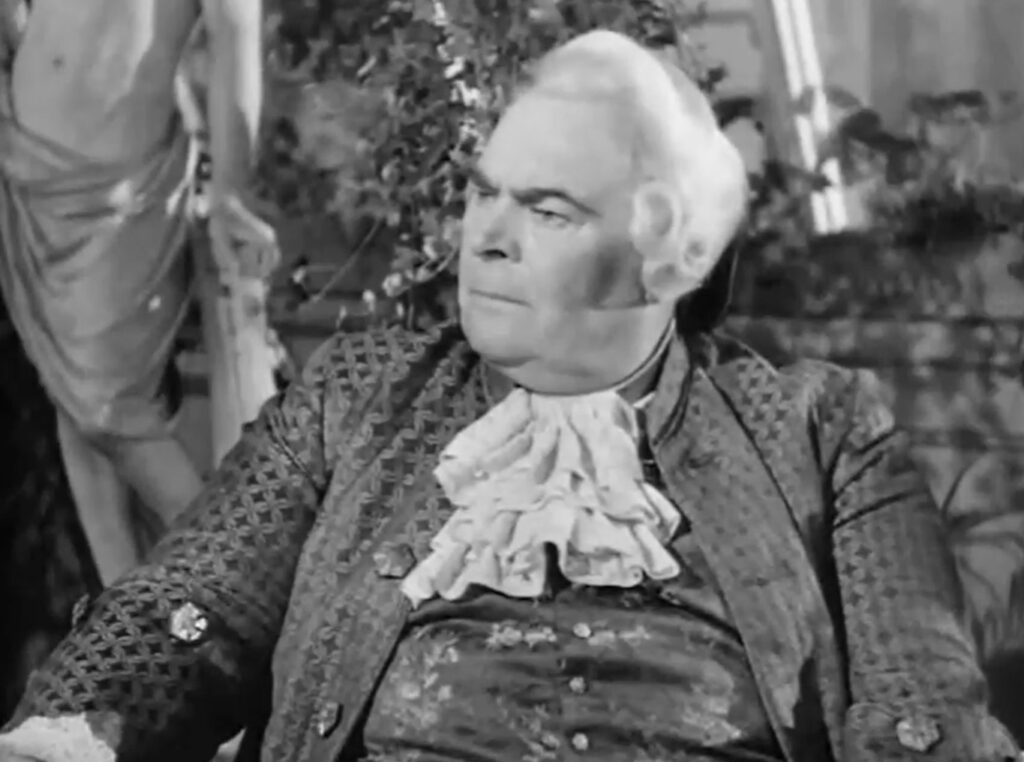
Lord Mortimer (Billy House).
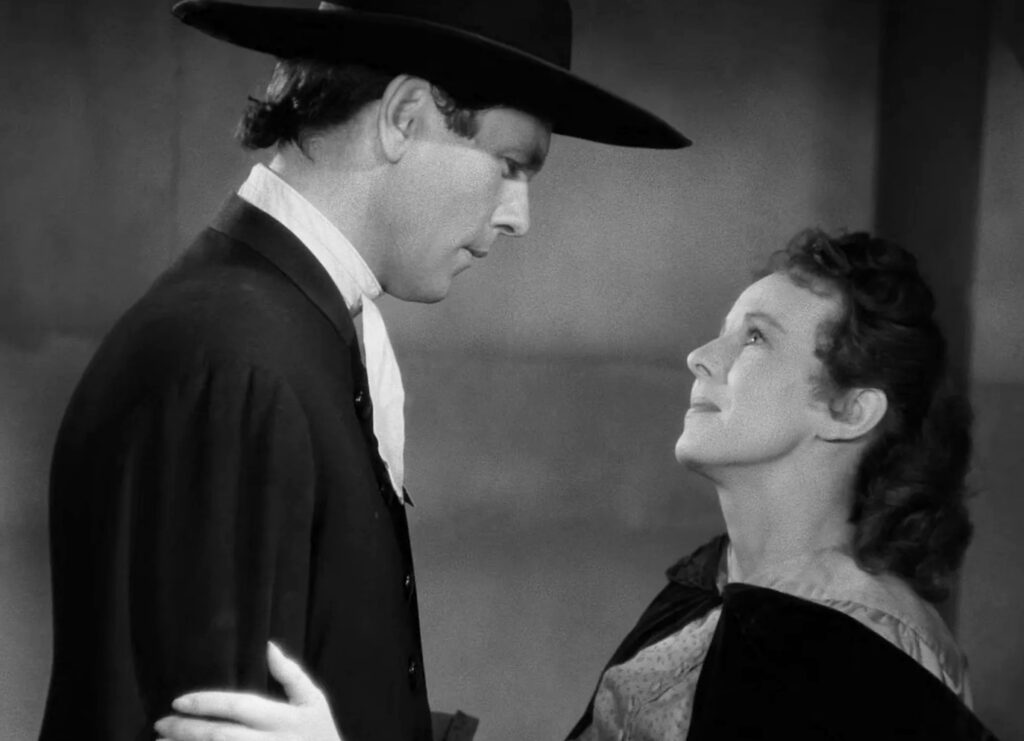
Richard Fraser (1913-1972) and Anna Lee, in a scene from Asylum.
Sinister Asylum It impresses with its extremely refined cinematic language. Each of its scenes resembles a painting. It's a film of images..
Open a new parenthesis.
In my opinion, the images are the most important thing in a film, because they are what the viewer retains in their mind after the movie ends..
I never tire of repeating: Cinema is the art of expression through images. Cinema is essentially the art of creating beautiful images. However, not all filmmakers have understood or understand this..
Once (I believe it happened in 1987), remembering the tape... Alexander Nevski (1938, directed by Sergei Eisenstein), whose scenes resemble paintings, I said to a would-be director: “"A true filmmaker should create each scene of their film as if they were producing a painting."” The man then looked at me in astonishment, as if I had just uttered something outrageous. I couldn't have expected a different reaction, since he was, and certainly still is, a fanatic for films starring actors with blank expressions and diction resembling that of a mechanical being.
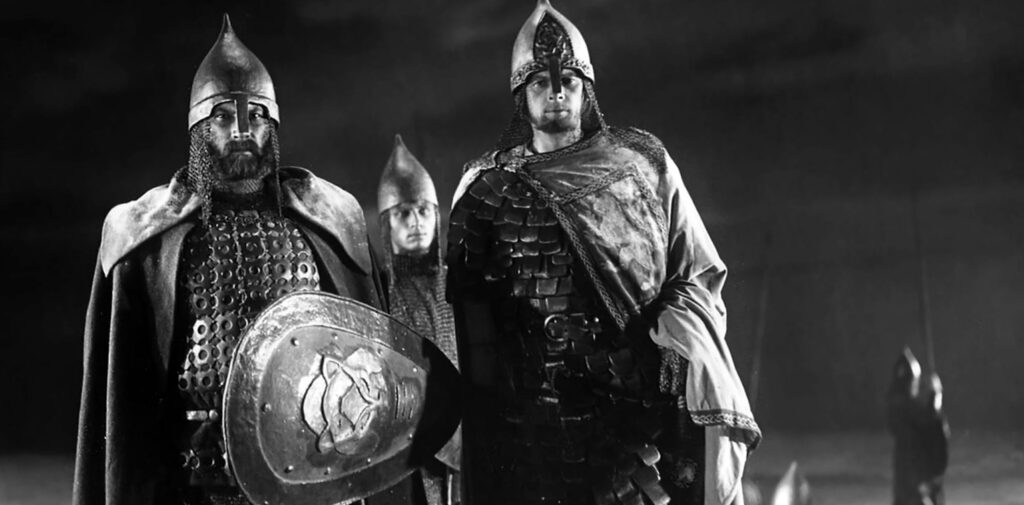
A scene from Alexander Nevski.
Now, to complete my thought: in cinema, what matters most isn't what is being told, but rather how it is being told. In other words, form shapes content..
Close this new parenthesis..
And before concluding the first part of this text, I want to say a few words about Val Lewton..
Born in Yalta, Crimea (a peninsula in Ukraine currently occupied by Russia), on May 7, 1904, Val Lewton (born Volodymyr Ivanovich Leventon) emigrated with his family to the United States in 1909..
He was the nephew of one of the great stars of American silent cinema: Alla Nazimova (born Mariam Edez Adelaida Leventon, 1879-1945), who acted on the theatrical stage and was a film producer and screenwriter.
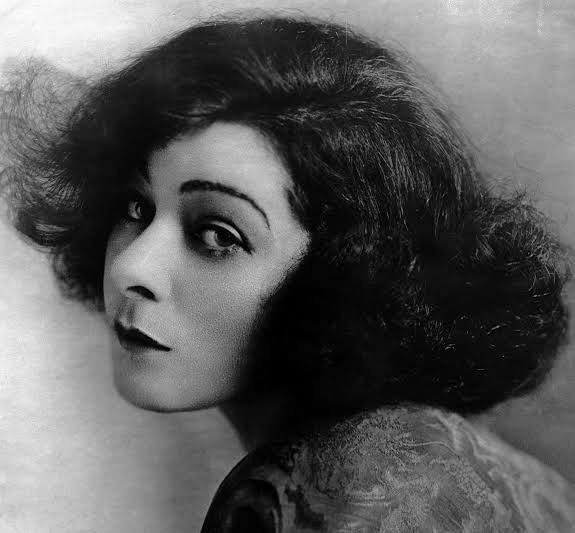
Alla Nazimova.
In addition to being a screenwriter and producer, Val Lewton was also a writer. He wrote nine novels: The Improved Road (1924), Rape of Glory (1931), The Fateful Star Murder (1931, published under the pseudonym Herbert Kerkow), Where the Cobra Sings (1932, published under the pseudonym Cosmo Forbes), No Bed of Her Own (1932), Four Wives (1933, published under the pseudonym Carlos Keith), Yearly Lease (1933), A Laughing Woman (1933, published under the pseudonym Carlos Keith) and This Fool Passion (1933, published under the pseudonym Carlos Keith).
I believe that of all the novels written by Val Lewton, the one that achieved the greatest success was... No Bed of Her Own. It has been translated into several languages, including Portuguese. Here in our country, it appeared under the title of Without a Bed of Their Own, in an edition probably published in 1933 or 1934 by the Civilização Brasileira publishing house in Rio de Janeiro. The translation was done by Edgard M. Lobato. And, on the back cover of Without a Bed of Their Own, The following is a description of the story told in the book:
“NO OWN BED, Val Lewton's novel, a major success in North America, will show readers the bravery and resilience of a modern-day young woman forced to beg for work, endure the rudeness of fleeting suitors, and live homeless, searching for bread..
ROSE MAHONEY, the heroine of WITHOUT A BED OF HER OWN, sold herself to deliver a bottle of medicine to a dying child..
She wasn't just hungry for love and devotion: she was hungry for bread to eat.”
I have in my library a promotional brochure from Civilização Brasileira. It's a four-page brochure announcing the publisher's new releases. One of those releases is precisely... Without a Bed of One's Own.
I don't know how the leaflet in question came into my possession. But I think it's appropriate and interesting to transcribe part of the comment made about it. Without a Bed of Their Own:
“"This book was a resounding success in North America. It describes the painful adventures of a modern woman, forced to earn a living and constantly suffering… from having to sleep in other people's beds. New American customs are revealed here. New York, its pleasures and its miseries! The downfall of so many inexperienced and hungry young women… It is a book that cannot fall into innocent hands, but should be read by all women who like to educate themselves, because…" Without Own Bed "It's a formidable lesson."”
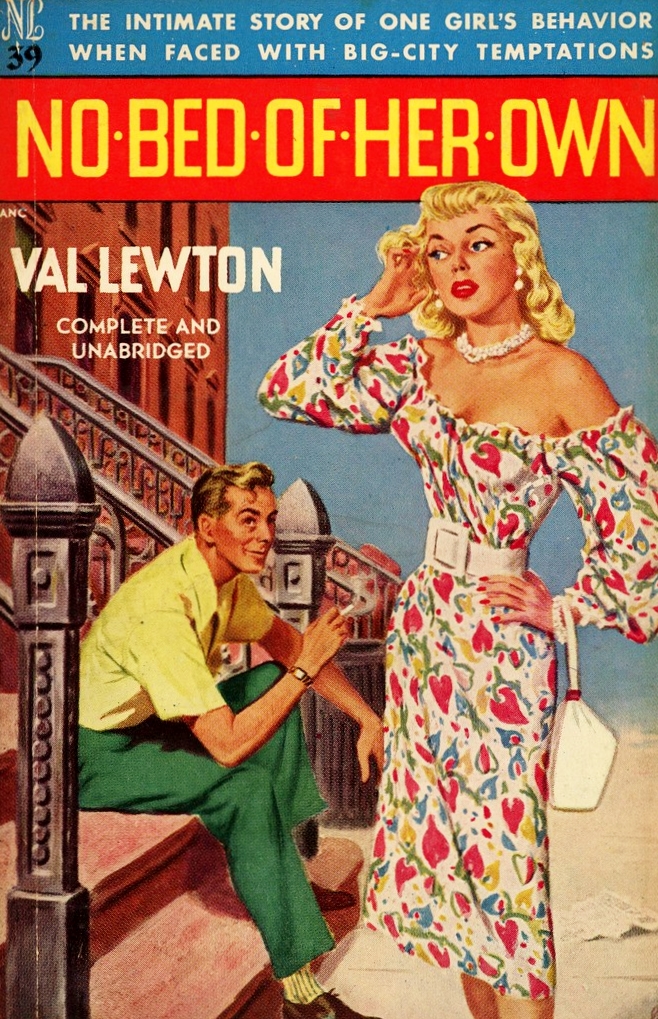
Cover of a (pocket-sized) edition of No Bed of Her Own. This edition was published in 1950 by Novel Publications of Chicago.
Val Lewon died in Hollywood on May 14, 1951, as a result of a heart attack.
RF Lucchetti (Rubens Francisco Lucchetti, 1930-2024) was a fiction writer and screenwriter for Cinema & Comics.
 Portuguese
  English
  Spanish
  French