DH LAWRENCE AND ONLY A WOMAN, A MASTERPIECE OF LITERATURE AND CINEMA

Marco Aurélio Luchetti & RF Lucchetti
EEdition: Marco Aurélio Lucchetti
“Just a Woman It's a really good and interesting movie..
CIt begins hesitantly and slowly, establishing, like a layer of concrete, the character of two girls and the relationship between them..
O The rhythm and quality of the colors, soft and artificial, with many scenes photographed in shadows of various kinds, convey a melancholic feeling that something is not right with everyone..
O The screenplay, written by Lewis John Carlino and Howard Koch, is intelligent.”
RRenata Adler, in the February 8, 1968 edition of The New York Times
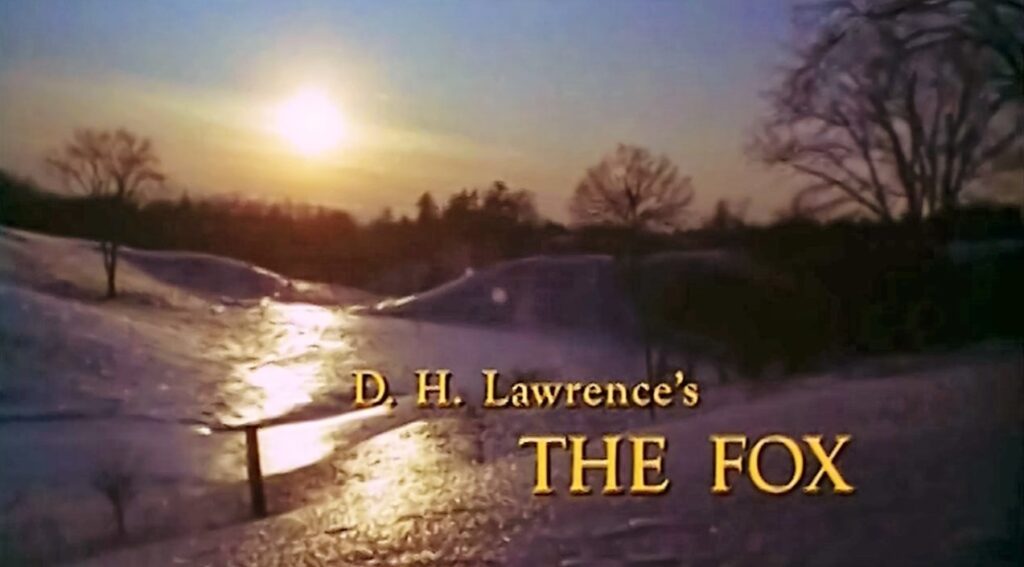
“"The two young women were better known by their surnames, Banford and March. They rented the farm, intending to run it themselves – they were going to raise chickens, make a living from poultry farming; and they also planned to buy a cow to breed. Unfortunately, the plan didn't work out.".
Banford was a frail and delicate little thing, and she wore glasses; but she was the main partner, because March had almost no money. Banford's father, a merchant in Islington, gave his daughter the initial help, thinking of her health, and because he liked her, and because it seemed she wasn't going to get married. March was more robust. She had learned carpentry and joinery in an evening course in Islington, and would be the man of the house. In the early days they had the company of Banford's grandfather, a retired farmer. But, after a year on the farm, the old man died, and the two girls were left alone..
Neither of them was very young – they were approaching thirty, which proves they weren't old either. They started the job with great courage.”
These are the first paragraphs of Just a Woman (The Fox, (in the original), a novel written by the English poet, novelist, and critic D.H. Lawrence.
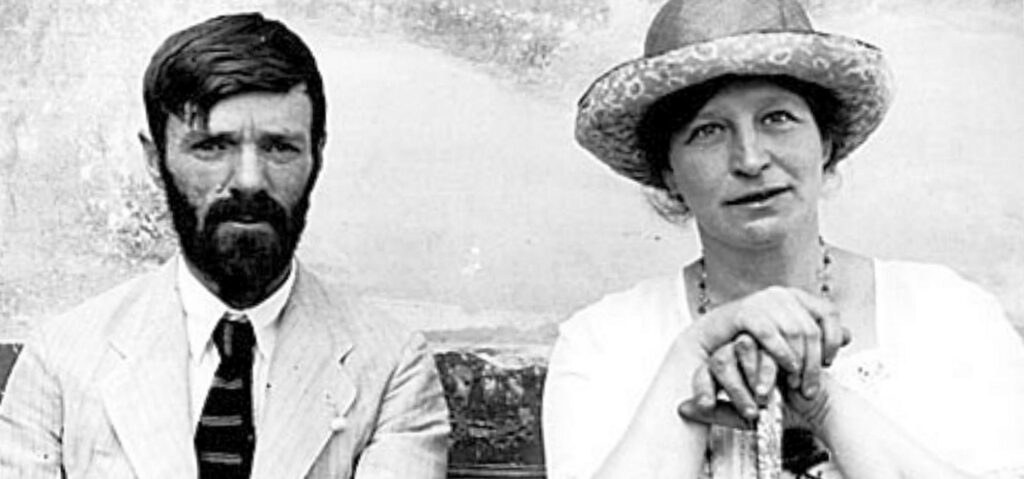
DH Lawrence (David Herbert Lawrence, 1885-1930) and his wife, Frieda Lawrence (born Emma Maria Frieda Johanna Freiin von Richthofen, 1879-1956), in a photo taken in the year they married, 1914.
DH Lawrence was born in Eastwood, which is described as such in the second volume of The Immortals of World Literature (São Paulo, Abril Cultural, 1972, p. 150):
“Eastwood, near Nottingham, looks more like a village than a city. A city where coal has been extracted for centuries. However, the mines are almost an accident in a landscape embellished by brightly colored sandstone, the oak trees of the legendary Robin Hood forest, and the austere limestone hills of the Derbyshire province..
One day, in the second half of the 19th century, capitalists and railroads arrived. And the landscape gradually changed. The miners' small huts were replaced by brick houses. The archaic process of mineral extraction modernized. Large coal mines were built. And railroad tracks were laid across farmland, hills, and woods. Yet, even so, the landscape is still beautiful.”

The house where D.H. Lawrence was born, number 8 Victoria Street in Eastwood, is currently the D.H. Lawrence Birthplace Museum, which houses some original objects from the writer's family.
The fourth child of Arthur John Lawrence, a nearly illiterate miner (one of those alcoholic and rude miners) who had the habit of eating with a switchblade and drinking tea from a saucer, and Lydia Lawrence (née Lydia Beardsall), a former teacher with refined manners, D.H. Lawrence was one of the British authors whose writings most provoked controversy and differing opinions. His work, despite being considered groundbreaking in the aesthetics of 20th-century English literature, is still misunderstood by many readers, who consider it vulgar and indecent. There are even readers – those who are hypocritical (who outwardly defend a puritanism they themselves do not follow at all) and/or lacking in brainpower (we believe they arrived late to the brainwashing) – who consider it pornographic..
After finishing high school, DH Lawrence worked as a clerk. But three months later, due to severe pneumonia, he had to quit his job..
As soon as he recovered from pneumonia, he became a schoolteacher and, for three years, taught the miners' children..
During this time, encouraged by Jessie Chambers, a young woman he had met while recovering from pneumonia, D.H. Lawrence learned to play the piano and to paint..
(Open a parenthesis).
Some of the writer's earliest watercolors are on display at the D.H. Lawrence Birthplace Museum..
Close the parenthesis.
Also encouraged by Jessie, D.H. Lawrence honed his literary knowledge by reading the novels of Emily Brontë, George Eliot, and Thomas Hardy. Later, he would discover the poets John Keats and Percy Byshe Shelley, as well as the plays of Shakespeare.
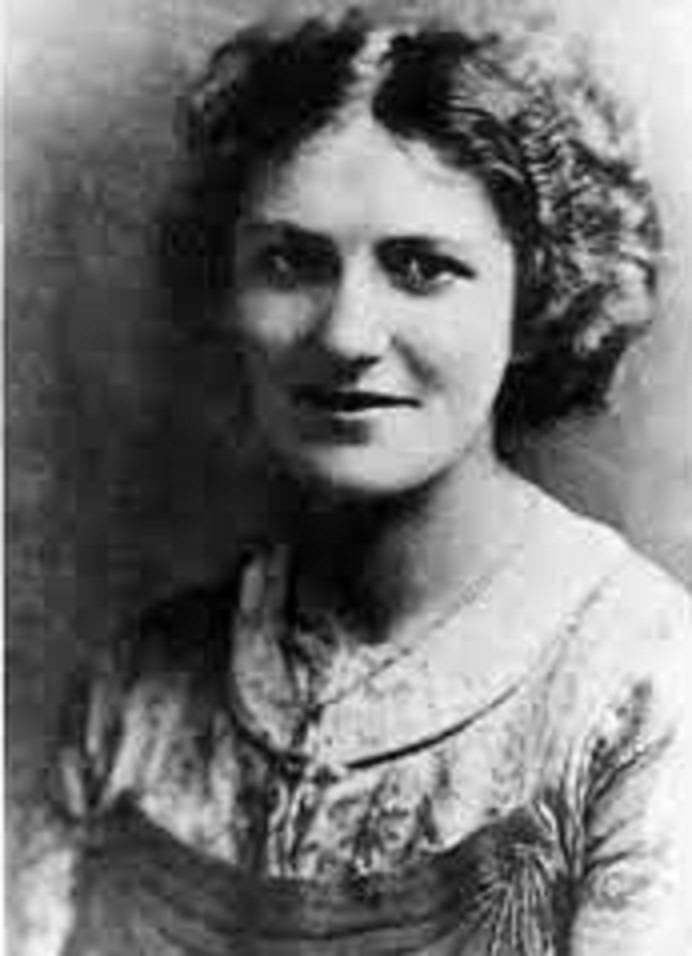
In the photo above, Jessie Chambers.
COnce, D.H. Lawrence said about Jessie Chambers: “"The girl launched me, so easily, into my literary career, like a princess cutting a ribbon, launching a ship."”
In 1906, D.H. Lawrence enrolled at the University of Nottingham and began writing his first novel., The White Peacock (The White Peacock), published, without major repercussions, in 1911.
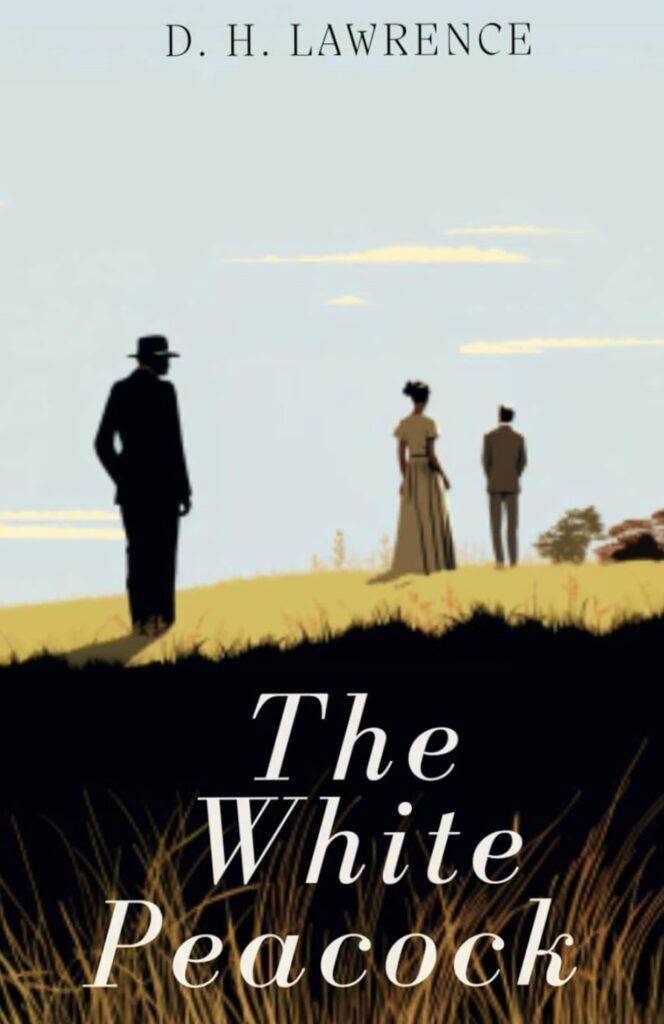
Cover of a recent edition of D.H. Lawrence's debut novel.
It was with the publication, in 1913, of Sons and Lovers (Children and Lovers), a practically autobiographical novel, which made D.H. Lawrence a well-known figure in English literary circles and led to his recognition as an important writer..
Children and Lovers It describes the domestic environment of a mining family. Its main characters are Mrs. Morel and her son Paul, a weak boy with an artistic temperament..
In the eighth volume of his monumental and indispensable History of Western Literature (It is, without a doubt, the greatest and best history of Literature known in any language and throughout the world), the Austrian-Brazilian critic and essayist Otto Maria Carpeaux referred to Children and Lovers with these words:
“"DH Lawrence's first major revelation of talent,", Children and Lovers It is a psychoanalytic novel, written before psychoanalysis became fashionable and before the author was familiar with it. From the relationship between mother and son, psychoanalysts intend to deduce Lawrence's entire literary work and elucidate the writer's psychology.”
And, in a text dated 1943, the Portuguese essayist, writer, memoirist, and literary critic João Gaspar Simões wrote the following about Children and Lovers:
“"It is D.H. Lawrence's strongest novel. It is one of the most extraordinary novels ever written. The problem debated in this book is psychological. Not scientifically, as happens in certain modern novels, but by transposing into art a complex so directly experienced that one might say we are witnessing the resurrection of Greek tragedy. The painful and strange drama of Oedipus emerges in this book. In fact, some in England (Middleton Murry) claimed that Lawrence's art was the fruit of this psychoanalytic complex.". Children and Lovers "It is, in fact, the most autobiographical novel by this writer, and in it is depicted the anguish of a son thwarted in his loves by a kind of secret passion: passion for his own mother. Thus, throughout this exciting novel, in which we witness the failure of all of Paul Morel's loves, the figure that dominates the scene and absorbs all of life around it is that of the mother. This is why, when her slow, agonizing, and pathetic suffering ends, we feel, as indeed the son himself feels, that any tyranny has ended, that a new life is about to begin. Lawrence's work itself is like a sublimation of this impossible love."”
Well, if Children and Lovers é “"DH Lawrence's most powerful novel"”, the writer's strongest novel is, undoubtedly, The Fox (The Fox, (in a literal translation), about which, in a review published in the December 5, 2002 edition of The New York Review of Books, The British writer Doris Lessing stated:
“The atmosphere of The Fox It is so powerful that we can easily forget how firmly it is fixed in its time and place. The First World War has just ended, and the soldiers are returning home. It must be 1919, because the great flu epidemic has claimed victims in the nearby village. The small farm where two young women, March and Banford, are trying to achieve independence is overshadowed by the war. They are failing; they don't know how to farm. Emotionally, they are not doing very well either: there is desolation and fear for the future. Despondency finds an easy entry point, and they have a visible enemy, a fox that steals their precious chickens. It is decided that this thief must be killed, but he is too clever for them. This animal obsesses March, the stronger of the two women. From the beginning, this beast is more than herself.”
Originally published in 1922 in the American literary magazine The Dial, The Fox It is a dark and tragic novel. As tragic as any tragedy written by Sophocles or Euripides..
We dare say that The Fox It's a modern fable, written succinctly (it's only eighty-seven pages) and precisely (D.H. Lawrence didn't waste words, he didn't detail anything beyond what was necessary) in a poetic tone, in which we are slowly drawn into the difficult daily lives of two young women who live practically apart from the world. It's an extraordinary and moving study of deep and violent feelings, when a triangle forms with the appearance, first of a fox and then of a young man, Henry Grenfel, in the lives of the two women, Jill Banford and Ellen March, who live together on a small farm..
Anyway, The Fox It's perfect. It's no coincidence that it was chosen as one of the 1001 Books to Read Before You Die (occupies position 724).
We have taken note of the text of The Fox in 1977, through the Portuguese translation by José Veiga and published in a book released in format paperback (approximately 10.5 x 18 cm), by Edibolso, from São Paulo.
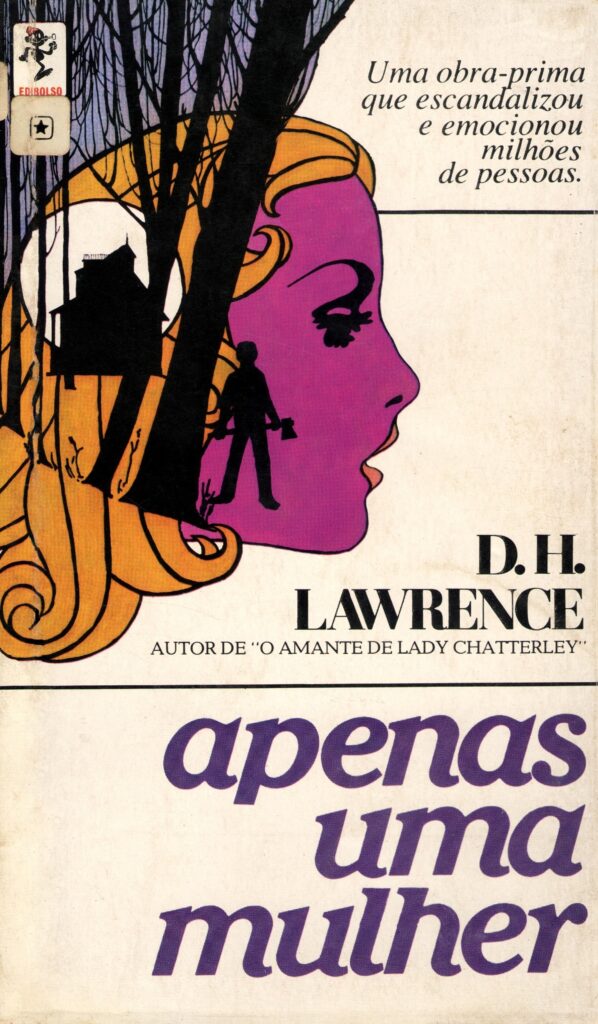
Book cover from Edibolso with the Portuguese text of the novel. The Fox.
This edition by Edibolso was authorized by Distribuidora Record de Serviços de Imprensa SA, from Rio de Janeiro, which at the time held the rights to the translation done by José Veiga.
Interestingly, or rather, coincidentally, around the same time (we just don't remember if it was shortly before or shortly after we acquired the volume published by Edibolso), we witnessed... Gala Session, from TV Globo, to the film adaptation of Just a Woman.
Also titled Just a Woman, The film, a Canadian production directed by Mark Rydell, premiered in Canadian cinemas on December 13, 1967. It starred American actress Sandy Dennis as Jill Banford and English actress Anne Heywood as Ellen March.
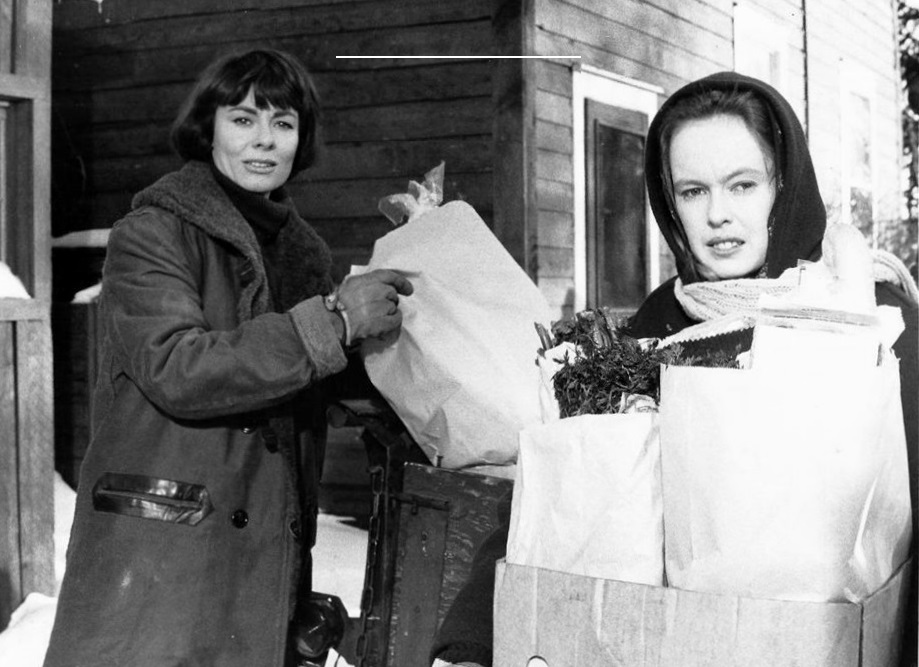
Anne Heywood (born Violet Joan Pretty, 1931–2023) and Sandy Dennis (Sandra Dale Dennis, 1937–1992), playing Ellen March and Jill Banford respectively, in a scene from Just a Woman.
In the United States, the film premiered in February 1968..
In Brazil, it would only debut in 1969, after winning the Golden Globe Best Foreign Language Film in English.
Open another parenthesis.
Just a Woman competed in three other categories Golden GlobeBest Director, Best Screenplay, and Best Actress in a Drama Film. Unfortunately, it didn't win in any of them..
Close that parenthesis.
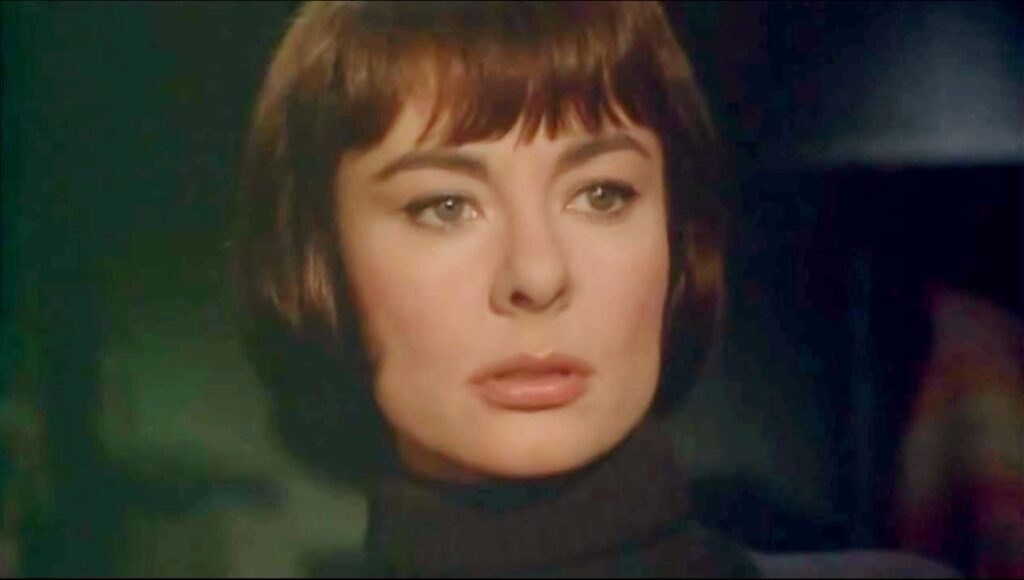
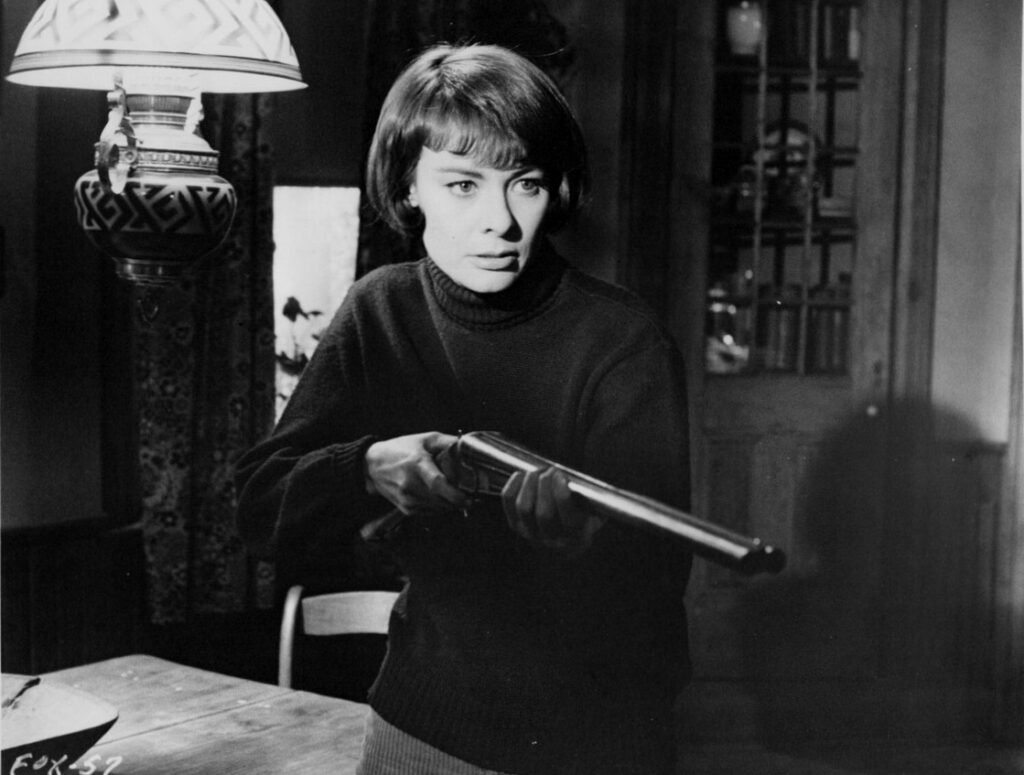
For his performance in Just a Woman, Anne Heywood was nominated for Golden Globe For Best Actress in a Film – Drama. She didn't win the award, but she should have.
In 1968, almost simultaneously with the release of Just a Woman In the United States, the London-based publisher Sphere Books released it in that format. paperback, a book containing the text of D.H. Lawrence's novel. The book had several consecutive editions, and the cover of one of these editions reproduces one of the most striking and powerful scenes from the film.
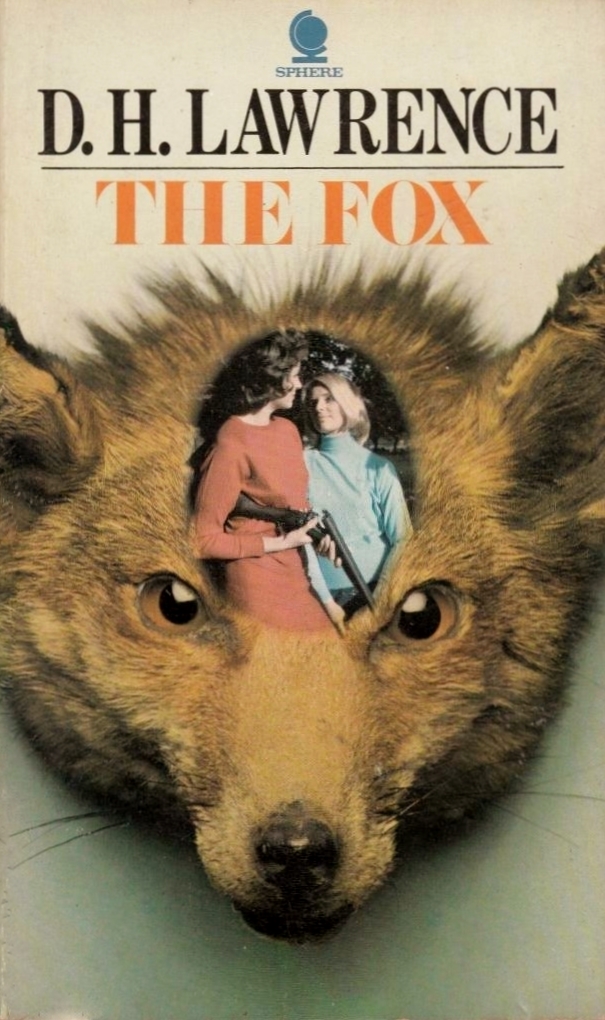
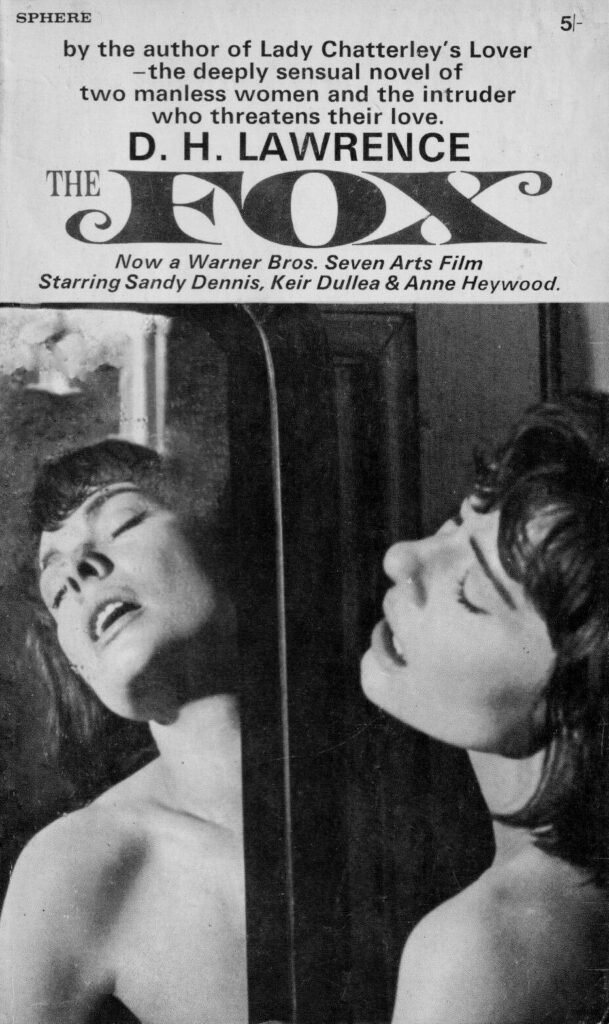
The film, quite faithful to the novel (one of the few modifications: while in the novel the action takes place in England in 1918; in the film, it unfolds in Canada in the 1960s), tells the story of Jill Banford and Ellen March, two not-so-young friends – both under thirty years old – and of a certain beauty, who raise chickens on a farm to support themselves. The location of the farm is isolated, cold, and surrounded by woods. The submissive Jill (the one with lighter hair) takes care of the household chores (she cooks, for example) and manages the finances, while the self-sufficient and strong Ellen (the one with darker hair) takes care of the heavier work, such as chopping wood and repairing fences. Despite being isolated from the rest of the world, having only each other, Jill and Ellen feel happy. Because they chose that place to live. They also chose that way of life.
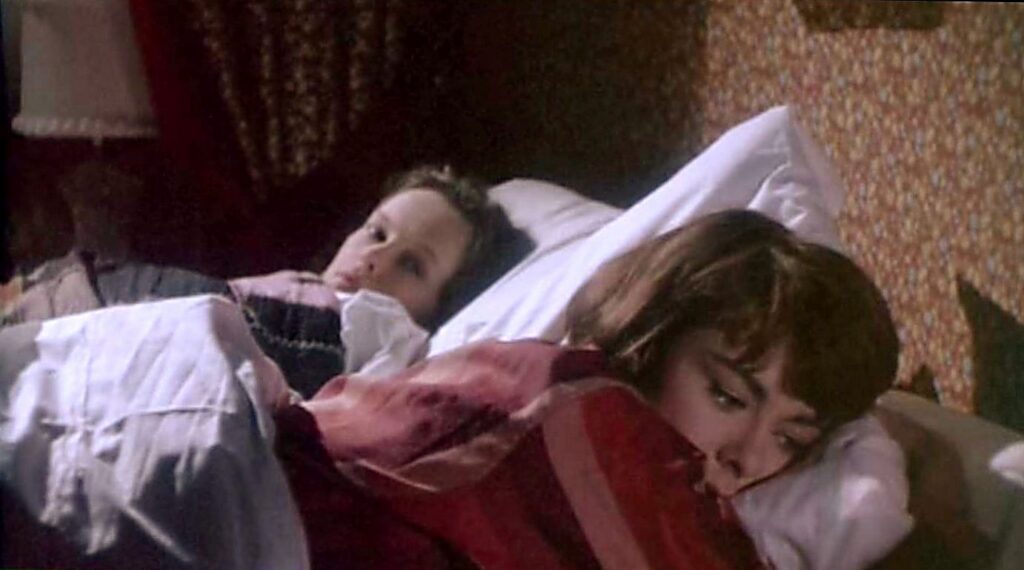
At night, Jill and Ellen share the same bed.
Hmm… It's not quite like that. It seems that the one who chose to live in that godforsaken place is the more talkative and cheerful of the two women: Jill. She fears for the future and knows they won't get rich raising chickens. She's always complaining about their financial situation and doing calculations. At the same time, however, according to her own words, “"She had never felt so safe, so at home"”…without anyone ordering her around. And Miss Banford does everything to please her companion, the taciturn and sometimes rather cruel Ellen, who, although she doesn't confess it to her friend, feels unhappy living in such a desolate place. Furthermore, she is consumed by sexual desires..
Ah, Miss March's sexual desires!
Ellen has no other choice but to console herself alone in the bathroom..
We must remember that Just a Woman This film is intended for an adult audience and was made at a time when taboos were being broken. Therefore, it contains strong scenes. One of them is when Ellen, completely naked, masturbates in the bathroom. It's not a crude or exploitative scene. It's part of a context. Furthermore, all the erotic charge is concentrated in the character's moans and expressions, whose image is reflected in the room's mirrors. And we'll say more: in this scene we don't see an actress playing a character who indulges in solitary pleasure. We see, rather, a needy woman who is forced to resort to masturbation in order to satisfy her desires. It is in moments like these that we realize how great an actress or actor is/was. We don't see the performer before us, but only the character.
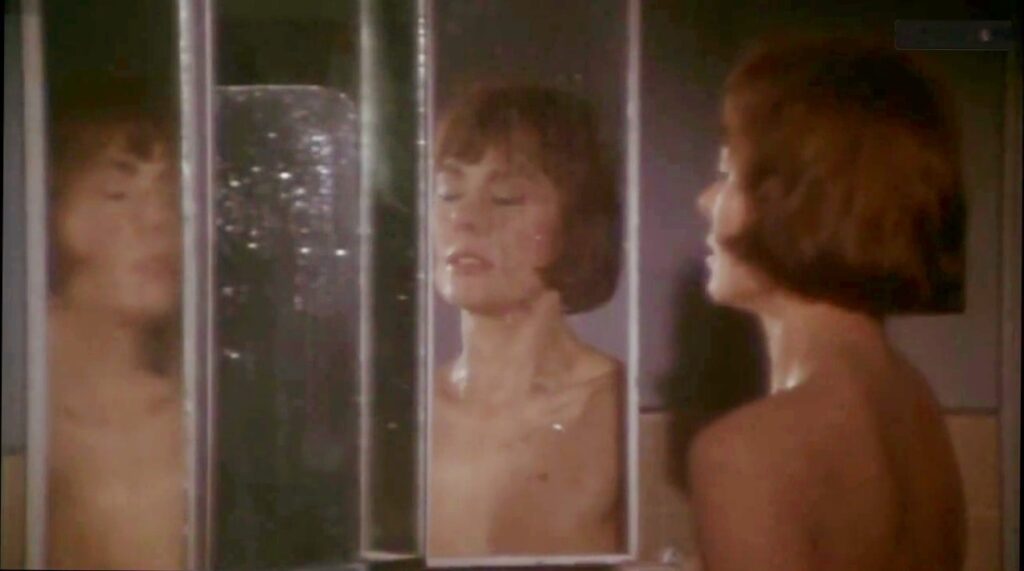
A beautiful image of Just a Woman, showing the character Ellen March.
But, getting back to the main point: everything is going smoothly, until… until one day, the first element appears that will destabilize the daily lives of the two women: a fox, which begins to frighten, attack, and kill the chickens, much to Jill's despair..
Ellen tries, unsuccessfully, to hunt and kill the animal with a shot from her double-barreled shotgun..
On another occasion, Miss March and the fox come face to face..
It's a memorable sequence that reveals the talent of the two screenwriters, the talent of the cinematographer, William Fraker, and the talent of the editor, Thomas Stanford.

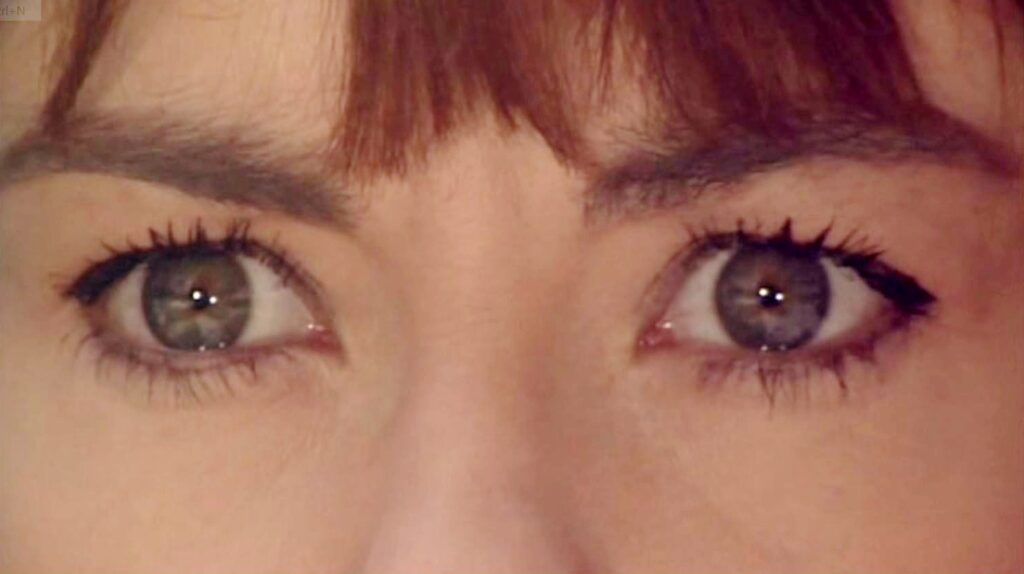
The sequence begins with Miss March enraptured, contemplating her reflection in the water of the stream that runs near the farm. Then, she removes her woolen gloves and aviator hat, unconcerned by the cold. She shakes her hair in a very feminine gesture and touches her breasts over her thick coat. She feels like a woman. Suddenly, turning around, she sees, a few meters away, the fox staring intently at her. The animal seems to feel no fear of Ellen. On the contrary, it is confident and has a challenging look, as if it were saying to the creature before it: “So, what are you going to do?” Miss March, for her part, is perfectly capable of shooting the fox, since she has the rifle. However, she doesn't fire a single shot. She doesn't even point the weapon at the animal. She seems mesmerized by it. Finally, the fox flees, disappearing into the woods. All of this is told/shown in a rapid succession of various shots: medium shot of Miss March, extreme close-up of the fox, close-up of Miss March, extreme close-up of Miss March, close-up of Miss March's eyes, extreme close-up of the fox, extreme close-up of Miss March, close-up of the fox's eyes, close-up of Miss March's eyes, extreme close-up of the fox, medium shot of Miss March, medium shot of the fox, and close-up of the fox's eyes. There is an almost imperceptible cut, and then the fox is shown in full, running in the snow and disappearing among the trees. Another cut. Close-up of Miss March. March. Then, travelling from advance, until closing in on a very close-up of Ms. March.
Cut to the next sequence..
It's dinnertime..
Jill and Ellen are sitting at the dinner table, talking..
The final part of the conversation deserves to be transcribed here:
Ellen: I saw the fox today. It was very close. I had the gun, but I didn't shoot..
Jill: Why didn't he shoot?
Ellen: I don't know. She looked at me. And I looked at her. She wasn't afraid. She just looked at me..
Jill: This makes absolutely no sense..
Ellen: I know. I've been thinking about it ever since I got back..
Jill: Did he have the weapon with him?.
Ellen: I already said yes..
Jill (annoyed): If he had the gun, why didn't he shoot?.
Ellen: I don't know. I… was caught off guard. She was looking at me. Into me. She just stood there..
Jill: Wasn't she scared?
Ellen: No.
Jill: Oh, March… March, it doesn't make sense..
Ellen: That's what happened..
Jill: This is ridiculous!.
Ellen: Yes, that's right. But... what happened was different. And... very strange.
A curious fact: Jill is always saying her friend's name, or rather, her last name. However, Ellen rarely pronounces Jill's first or last name..
Speaking of names....
Jill and Ellen have a cow. Her name is Eurydice, which is the same name as one of the nymphs in Greek mythology..
According to legend, one day, while strolling with some of her companions (according to another version, the event occurred when she was fleeing from the shepherd Aristaeus, who was trying to rape her), Eurydice was bitten by a snake and died. Desperate at the death of his beloved wife, Orpheus, distinguished by his gifts as a musician and poet, descended to the Underworld, the realm of the dead. Then, Orpheus began to sing in homage to his beloved. Moved by the melodious song, Hades, the god of the Underworld, brought Eurydice back to life and consented to Orpheus leaving with her. But with one condition: Orpheus could not, under any circumstances, look at Eurydice until they had crossed the boundaries of the Underworld. Unfortunately, at the moment they were about to leave the Underworld, Orpheus, no longer able to resist, looked at his newly resurrected wife. Immediately, Eurydice returned to the Underworld, and Orpheus never returned there again.she.
FWhoops, that was a digression, let's get back to talking about the movie. Just a Woman.
On a winter night, the second destabilizing element appears: Paul (this is another difference from DH L's text).aWrence. In the novel, his name is Henry) Grenfel (played by Keir Dullea), a sailor in the Merchant Navy.
Paul is on leave and arrives looking for his grandfather, William, the former owner of the farm..
Open another parenthesis.
We immediately draw an analogy between Paul Grenfel and a fox. The animal threatens the chickens and wreaks havoc in the henhouse. Being a man, Paul threatens the harmony between Jill and Ellen. He wreaks havoc on that friendship..
In the novel, it is March who makes the analogy between Paul and the fox:
“"To March, he was the fox. But what made her think that? The way his head jutted forward? The glint of his fine eyes?" The light hairs on his flushed face? Or the sharp, bright eyes? Impossible to know. But, to her, that boy was the fox; and she saw nothing else in him.”
Close this new parenthesis.

Keir Dullea, playing Paul Grenfel.
Paul discovers that his grandfather passed away the previous winter..
With nowhere else to go, Paul eventually convinces Jill and Ellen to let him stay with them for the duration of his leave (fifteen days), in exchange for him helping them with the most strenuous tasks..
The days go by..
Paul talks more with Jill. However, he and Ellen seem to have nonverbal means of communication. And, little by little, Paul feels attracted to Ellen, arousing Jill's jealousy and resentment. A love-hate relationship develops between the three characters. Tranquility and harmony are broken forever..
Interestingly, at first, it is Miss March who is bothered by Paul's arrival and presence. Later, upon realizing that Paul is interested in her friend, it is Jill who wants him to leave as quickly as possible. She even calls him... “"tramp".
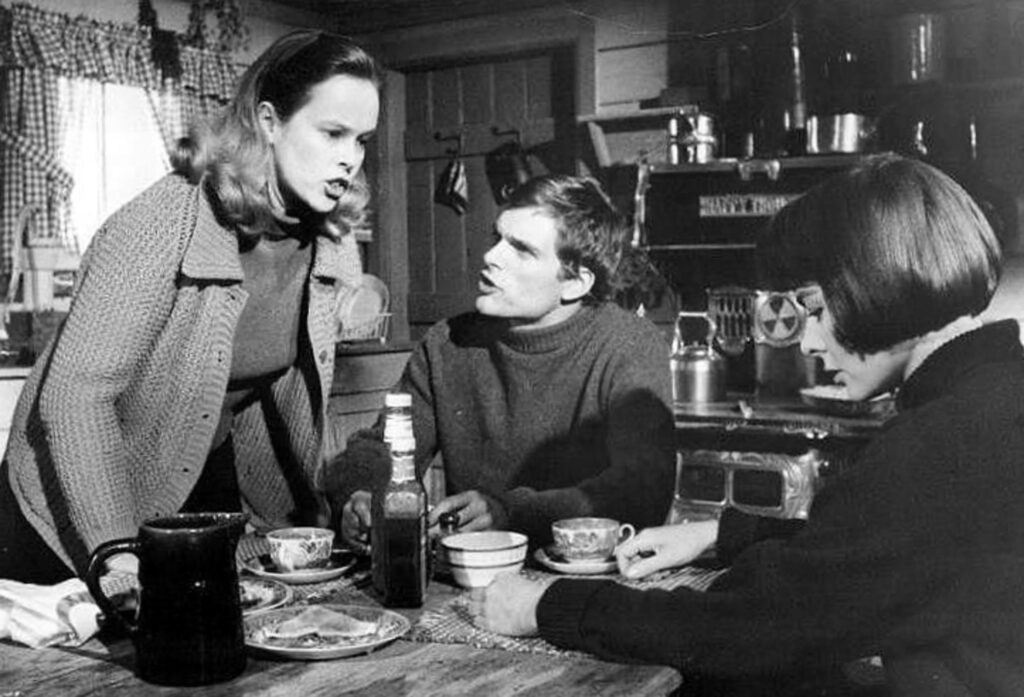
Sandy Dennis, Keir Dullea and Anne Heywood, in a scene from Just a Woman.
Finally, we transcribe what critic Roger Ebert said in the April 22, 1968 edition of the newspaper. Chicago Sun-Times, regarding Just a Woman:
“"A powerful masterpiece. The delicately constructed atmosphere of cold and snow, early sunsets and persistent chill sets the tone.". Miss Dennis has a difficult role, one that could have become ridiculous; but she handles it well. Dullea, in turn, delivers a more consistent performance than in some of her more recent films, where she played a series of insecure and weak characters. This time, portraying a domineering figure, she is entirely successful. And she finds her perfect match in... Miss "Heywood."”
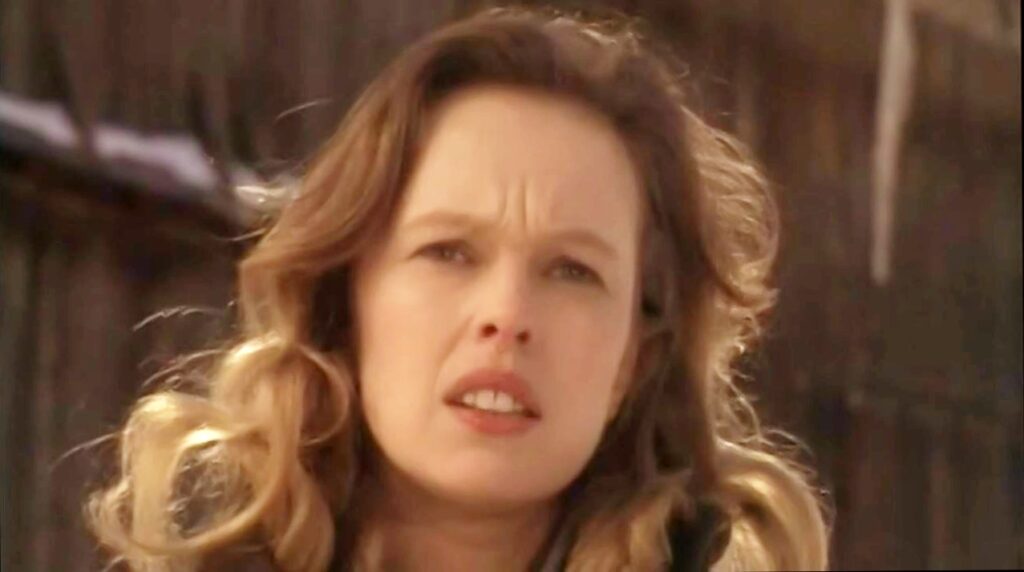
Sandy Dennis, in a scene from Just a Woman.
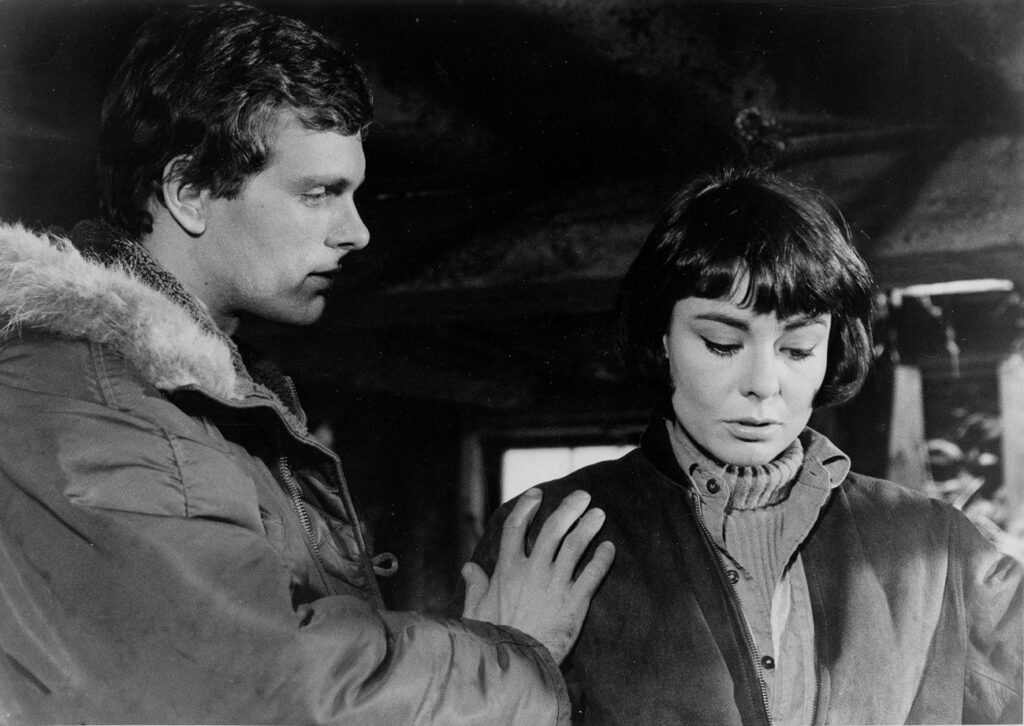
Keir Dullea and Anne Heywood, in a scene from Just a Woman.
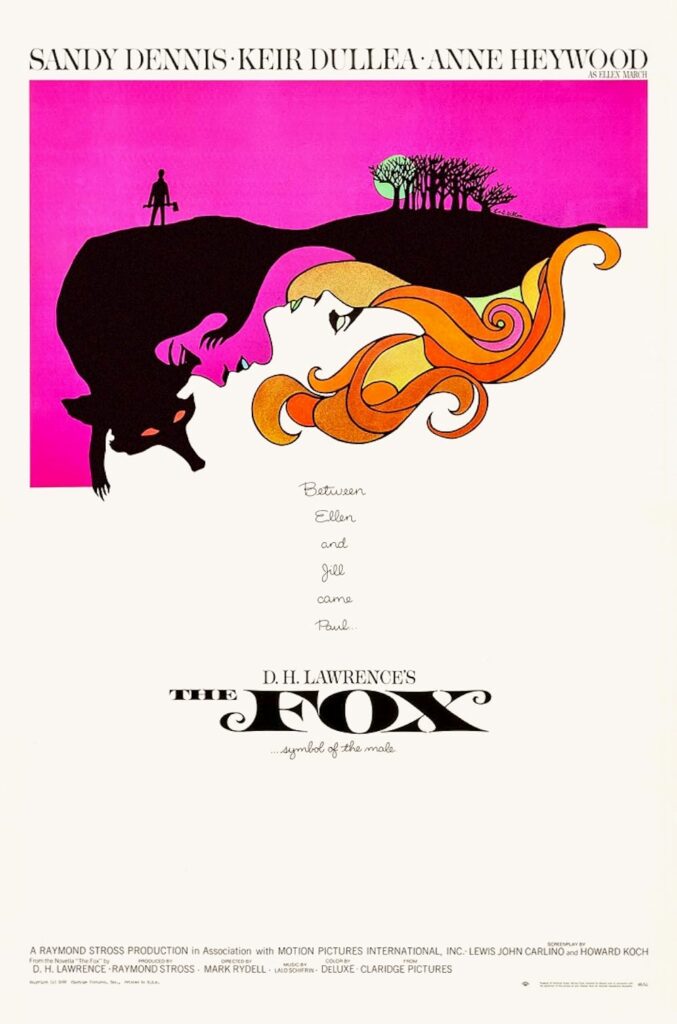
Original movie poster Just a Woman.
The poster was created by Leo Dillon (Lionel John Dillon Jr., 1933-2012) and his wife, Diane Dillon (née Diane Sorber), who are well known for illustrating children's books and creating cover illustrations for... paperbacks Science Fiction.
Just a Woman (The Fox, Canada, 1967, 110')
Direction: Mark Rydell
Production: Raymond Stross
Road map: Lewis John Carlino & Howard Koch, based on the novel of the same name by D.H. Lawrence
Photography: William Fraker
Assembly: Thomas Stanford
Music: Lalo Schifrin
Cast: Sandy Dennis (Jill Banford), Anne Heywood (Ellen March), Keir Dullea (Paul Grenfel), Glyn Morris (Overstreet)
Marco Aurélio Lucchetti is a university professor and researcher of Cinema, Comics and popular books.
RF Lucchetti (Rubens Francisco Lucchetti, 1930-2024) was a fiction writer and screenwriter for Cinema & Comics..
 Portuguese
  English
  Spanish
  French