ALICE OR THE LAST ESCAPE
Marco Aurélio Lucchetti
EEdition: Marco Aurélio Lucchetti
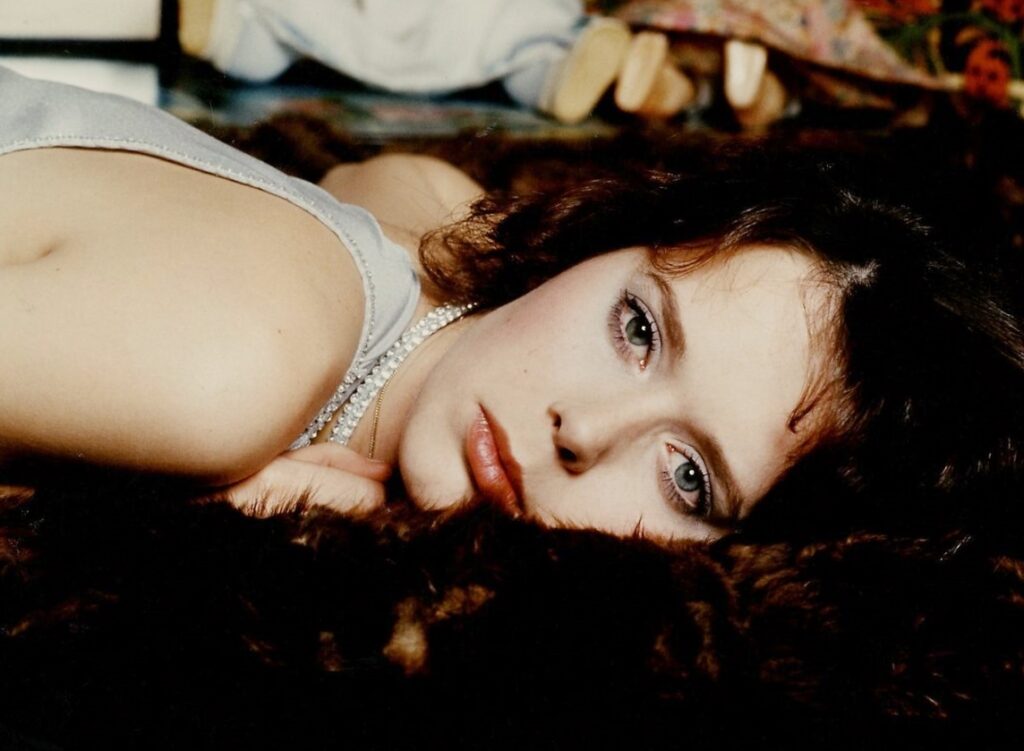
Sylvia Maria Kristel, or simply Sylvia Kristel, was born on September 28, 1952, in Utrecht, the fourth most populous city in the Netherlands, known for having one of the oldest Dutch universities.

Sylvia Kristel.
Although she was Dutch, Sylvia Kristel became a French symbol, as evidenced by the introductory paragraph of an interview she gave for issue number 11 (dated April 1977) of French Cinema (magazine published by Unifrance Film, an organization created to promote French cinema outside of France):
“"Despite being born in Utrecht, Sylvia Kristel has become, with nine films and above all with..." Emmanuelle, a pure Parisian product for export. For one hundred million viewers who watched the adventures of the heroine imagined by across five continents. madam "Arsan, Sylvia Kristel became as famous as the Folies Bergère or the Eiffel Tower."”
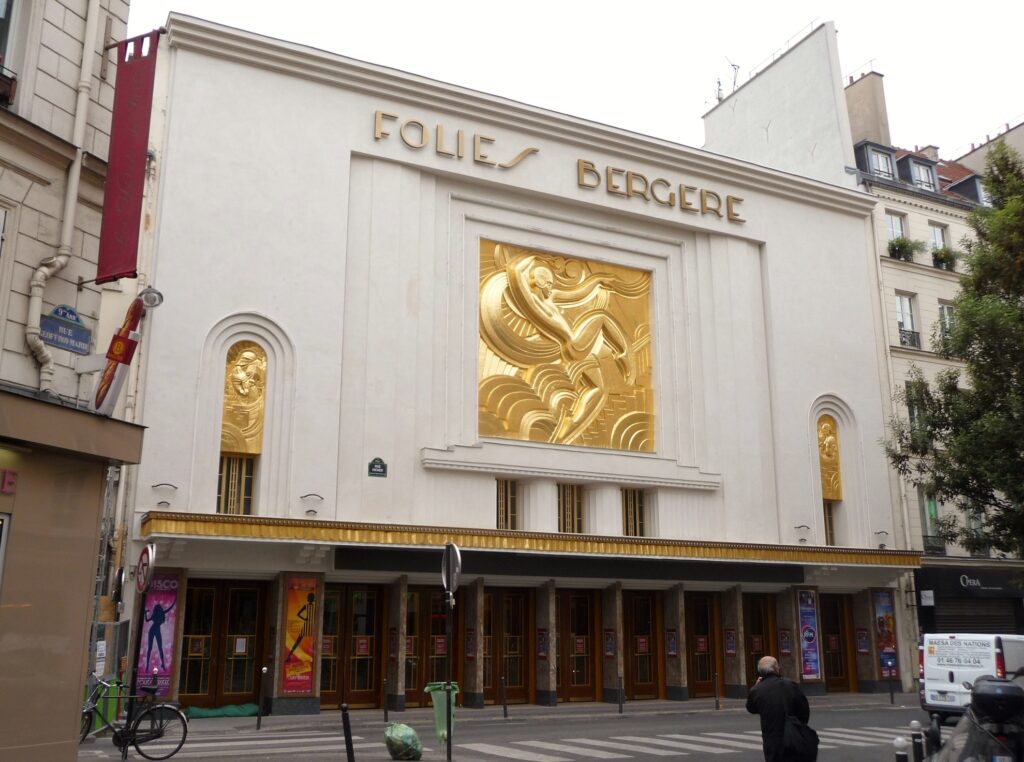
The facade, in style Art Deco, from the Folies Bergère, which reached the height of its fame and popularity as a cabaret between the 1890s and the 1920s.
In that interview, Ms. Kristel recounted the following regarding her adolescence and the beginning of her acting career:
“My parents owned a hotel across from the Utrecht train station. I have a younger sister. Her name is Marianne. As soon as I turned twelve, I was sent to a convent school. I stayed there for four years. The education was rigorous. I wanted to escape. I finished my studies and, since I had nothing to do, I decided to enroll in a teacher training college and get a degree in English. However, just like the previous one, this school was not at all pleasant. Its directors, all Calvinists, had certainly never heard of the word joy. I believe they didn't even laugh when their feet were scratched. I ran out of there and went to live my life alone, on my own. I was a waitress, a secretary… I got jobs easily. I also worked as a nurse, a salesperson, a demonstrator, a receptionist, and even as an attendant at a gas station in Amsterdam, the capital of the Netherlands. One day, someone advised me to do fashion photography. I followed the advice, and it was an immediate success. I was twenty years old. Then, I soon participated in…” Miss TV Europe, a contest to find a presenter who, speaking several languages, could host international programs of the type Eurovision. I won the contest, a Mercedes, a trip to Jamaica, and a thousand Dutch pounds. Then, they offered me a role in the film. Because of the Cats. The screenwriter's name was Hugo Clauss. I immediately fell in love with him. This film was followed by two others. Dutch productions. One of them, a musical comedy entitled Naakt Over de Schutting, I sing, dance, and act. Then, thanks to the actor Jacques Charrier, Just Jaeckin saw a picture of me. And voilà.”
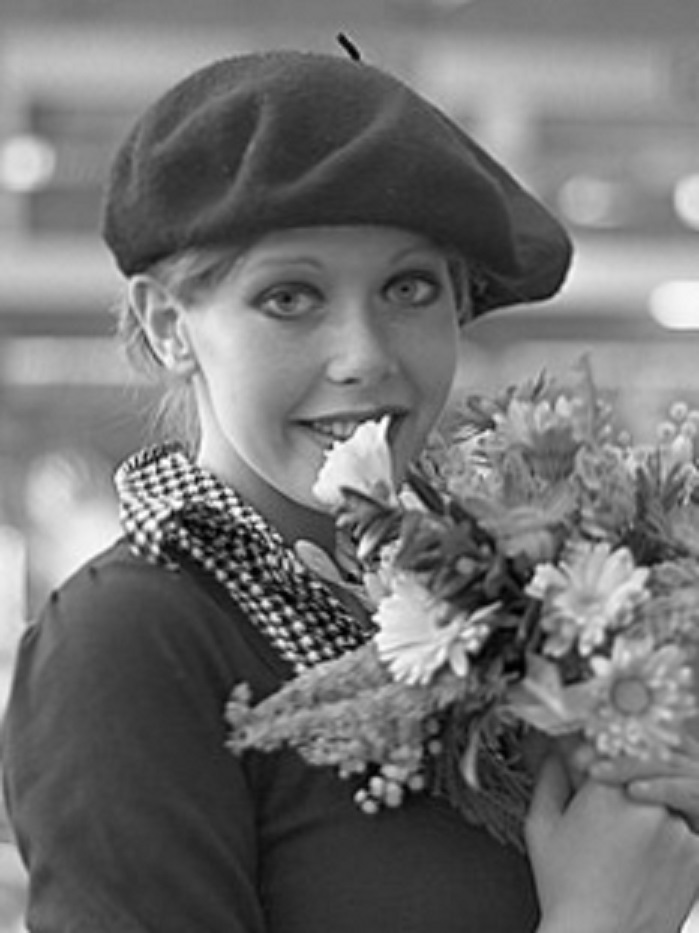
Sylvia Kristel, in a photo taken in 1973.
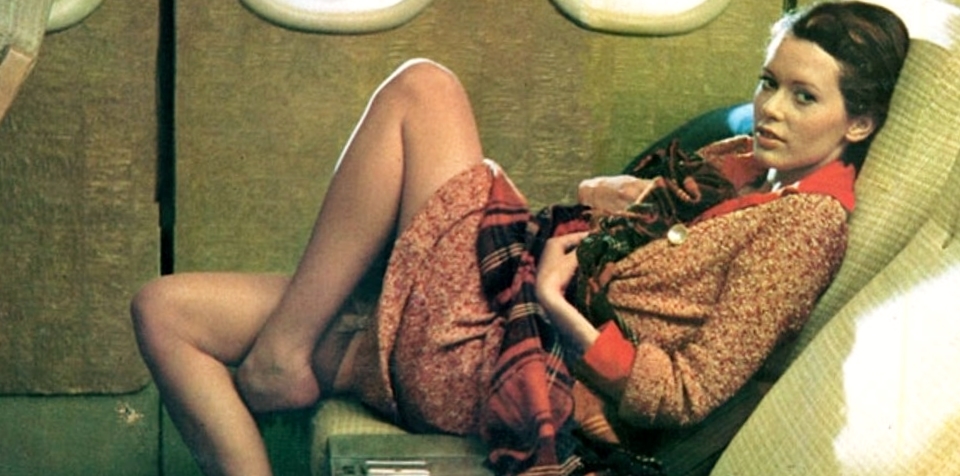
Sylvia Kristel, in a scene from Emmanuelle.
In 1974, Sylvie Kristel starred Emmanuelle/Emmanuelle, The Real One (Emmanuelle), a French erotic film directed by Just Jaeckin (1940-2022) and based on a novel by the writer Emmanuelle Arsan (pseudonym of Marayat Rollet-Andriane, born Marayat Bibidh, 1932-2005).
Narrating the sexual escapades of the wife of a French diplomat in Thailand, Emmanuelle Arsan's novel was published by Éric Losfeld (1922-1979) in a clandestine edition released in 1959. In 1967, the book was republished by Le Terrain Vague, a publishing house owned by Losfeld and specializing in publishing material. cult and/or controversial.

Cover of an English edition of the novel. Emmanuelle.
Emmanuelle, who is eternally in search of new sexual experiences and emotions, would forever mark Sylvia Kristel's career. She would play the character in about a dozen films, some of which were produced for cable television.
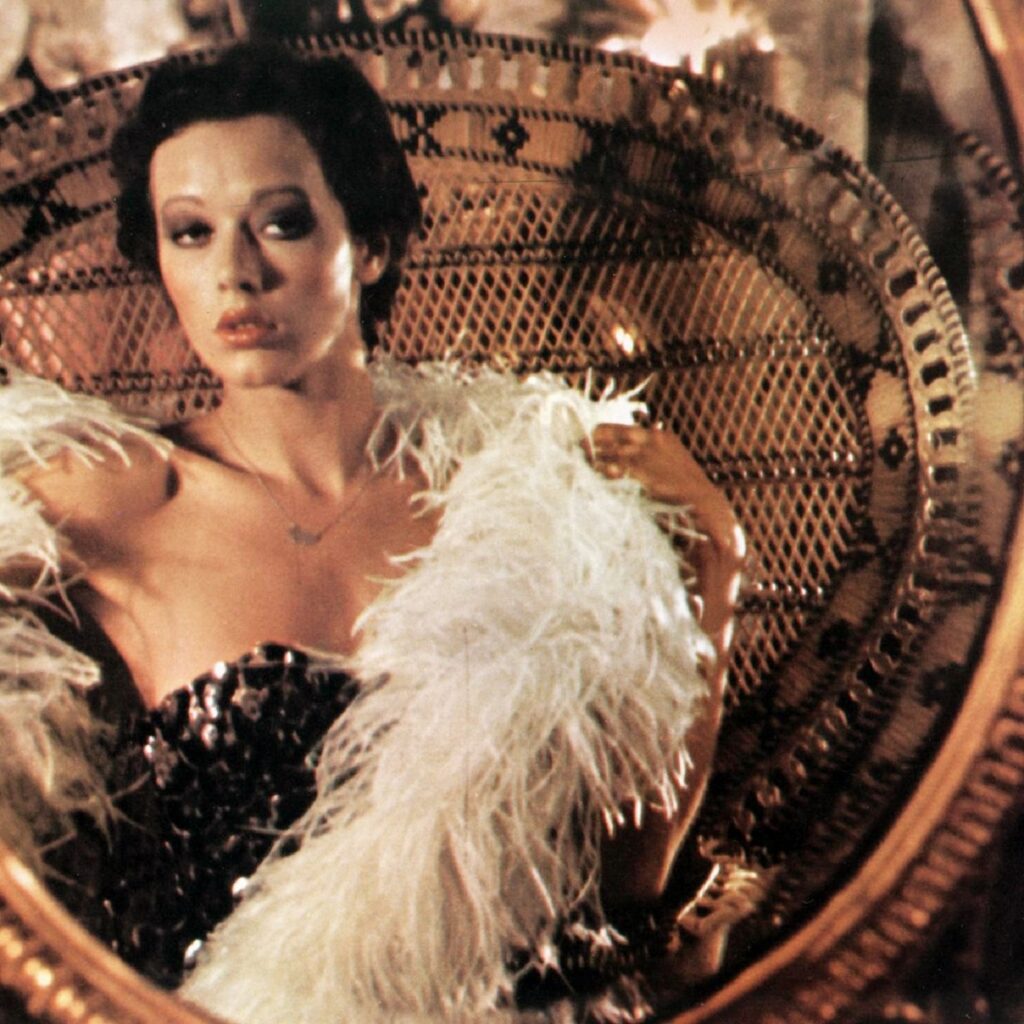
Sylvia Kristel, playing Emmanuelle.
And, with regard to Emmanuelle, Ms. Kristel, in the aforementioned interview, stated:
“"Just Jaeckin's film shows us how Emmanuelle transitioned from a certain innocence to the universe of pleasure. She enters this universe through an Italian, Mario, played by Alain Cuny. It is Mario who educates Emmanuelle's senses and makes her discover that, alongside love itself, there are strange delights that have nothing to do with a purely affective point of view. Well, Emmanuelle appeals to me insofar as she is genuine. Being interested in the sexual universe, she surrenders herself sincerely. But, personally, the character doesn't affect me. I only resemble her, if I so choose, because I feel her. And, for that, I don't need to identify with her in real life. If the artist had to identify with their character, we would need to ask, for example, Greta Garbo to be Marguerite Gautier, the Lady of the Camellias; Marlene Dietrich, the Red Empress; and Leonardo da Vinci to resemble the Mona Lisa. However, there are many people who consider actor and character one and the same." That's all. For these people, Peter Falk isn't the great actor he is. For them, he's simply Lieutenant Columbo from Homicide.”
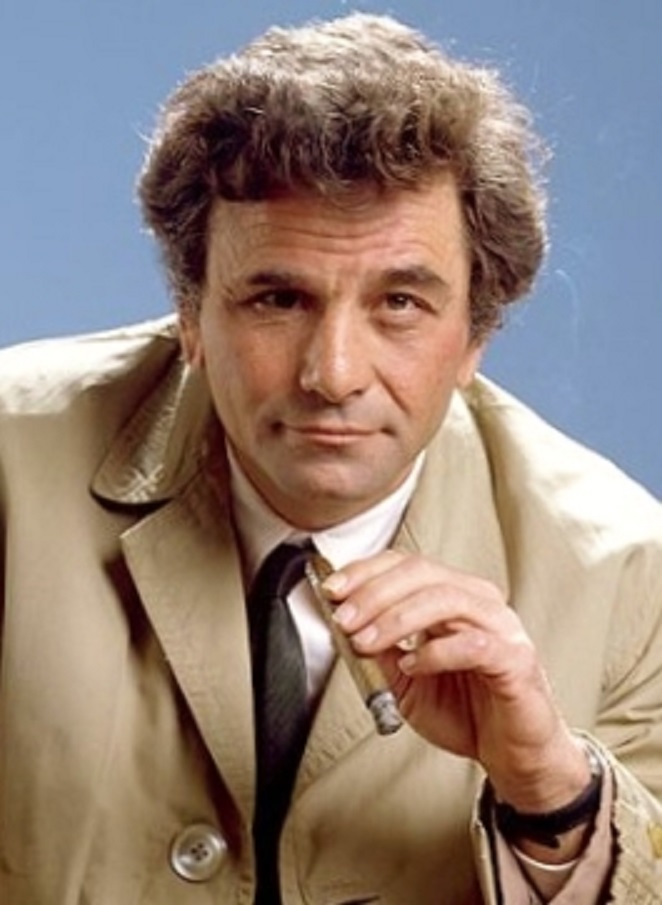
Peter Falk (1927-2011), portraying Lieutenant Columbo, a character created by William Link (1933-2020) & Richard Levinson (1934-1987).
Throughout her film career, Sylvia Kristel naturally didn't only play Emmanuelle. She portrayed other characters as well. One of the most memorable is Alice Carroll, the main character in... Alice or The Last Escape (Alice or there last flight, 1977), directed by one of the masters of Nouvelle Vague, Claude Chabrol (1930-2010).

Original (French) poster of Alice or The Last Escape.
To make the film, Chabrol sought inspiration in Alice's Adventures in Wonderland (Alice's Adventures in Wonderland, 1865) and Through the Looking-Glass, and What Alice Found There (Through the Looking-Glass and What Alice Found There, 1871), by the English writer Lewis Carroll (1832-1898), and placed his heroine in a parallel reality.
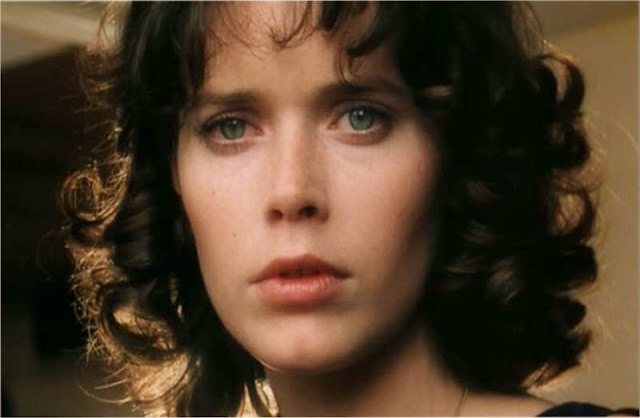
Sylvia Kristel, in a scene from Alice or The Last Escape.
Tired of living with a selfish husband, Alice, a young and beautiful bourgeois wife, decides to break the bonds that keep her imprisoned in the position of a sex object. On a stormy night, she gets into her car and speeds off aimlessly down some random road.
Interestingly, Alice's escape, leaving behind her comfortable – but boring – life, reminded me of Marion Crane's (Janet Leigh) escape in Psychosis (Psycho, 1960), by Alfred Hitchcock (1899-1980).
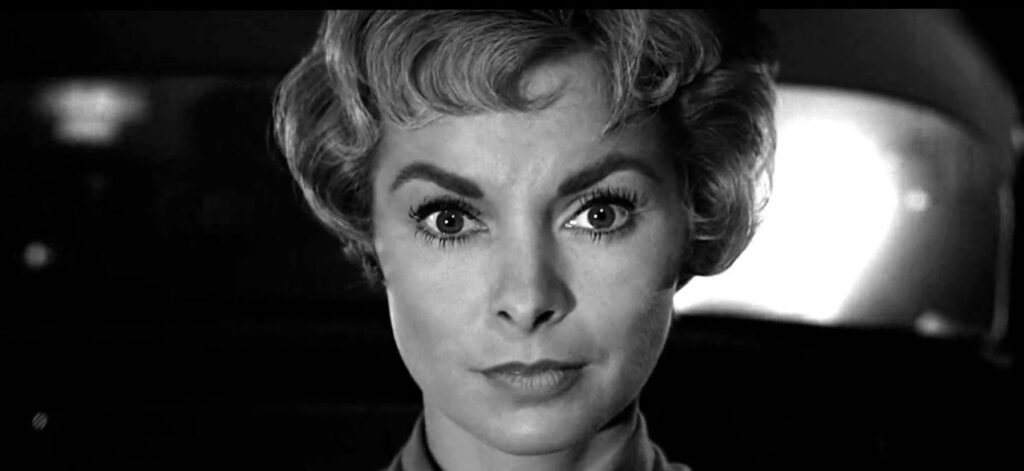
Janet Leigh (1927-2004), in a scene from Psychosis.
Alice's entry into the parallel and surreal universe created by Chabrol begins when, suddenly, the windshield of her car shatters (in Through the Looking Glass, the mirror in the living room of the house where the girl Alice lives is “"Completely soft, like gauze"”, and it begins “"slowly dissipating, like a luminous, silvery mist"”, (allowing the girl to pass to the other side).
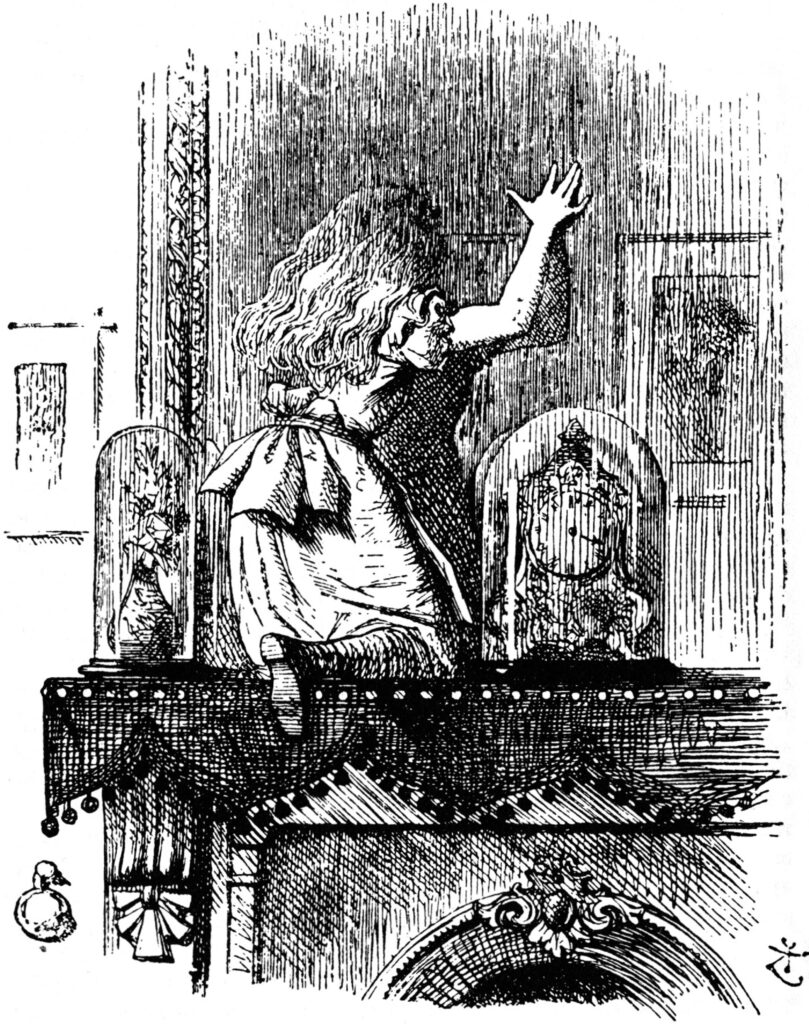
The mirror begins to dissolve, allowing the girl to pass to the other side.
IIllustration by John Tenniel (1820-1914) for the book Through the Looking-Glass and What Alice Found There.
From then on, a succession of unusual events unfolds, leaving Alice Carroll and us, the viewers, increasingly surprised, to say the least. However, the filmmaker does not use any of the usual devices that cinema employs to evoke anguish, fear, and suspense. There are no screams of terror or agonizing laments. There are no creaking doors. There are no ghosts, werewolves, mummies, vampires, women who transform into panthers, etc. Nor dense fogs. Nor do terrible monsters or psychopathic and cruel killers appear out of nowhere.
Unable to see properly due to the torrential rain, Alice manages to drive a little further until she sees ahead... “"open crack in the large park"” [as in] Alice's Adventures in Wonderland, when, “"burning with curiosity"”, The little girl Alice chases a White Rabbit across the meadow (who has pink eyes; he runs past her and says, after taking a watch from his waistcoat pocket and checking the time): “"Oh no! Oh no! I'm going to be too late!"”) and gets into a “"He touches him from behind, without thinking about how he'll manage to get out afterwards."”]: an aristocratic mansion, secluded and surrounded by leafy trees and a vast, well-kept garden.
In this large house, Alice is warmly welcomed by the owner of the property (it even seems as if he was already expecting her), Henri Vergennes (played by veteran actor Charles Vanel), a kind old man, and his faithful servant, Colas. Henri puts her at ease, offers her his hospitality, and asks her to have supper, sleep, and wait for the storm to pass. “"Tomorrow"”, he says, “"The windshield will be repaired. Then you can continue your trip."”
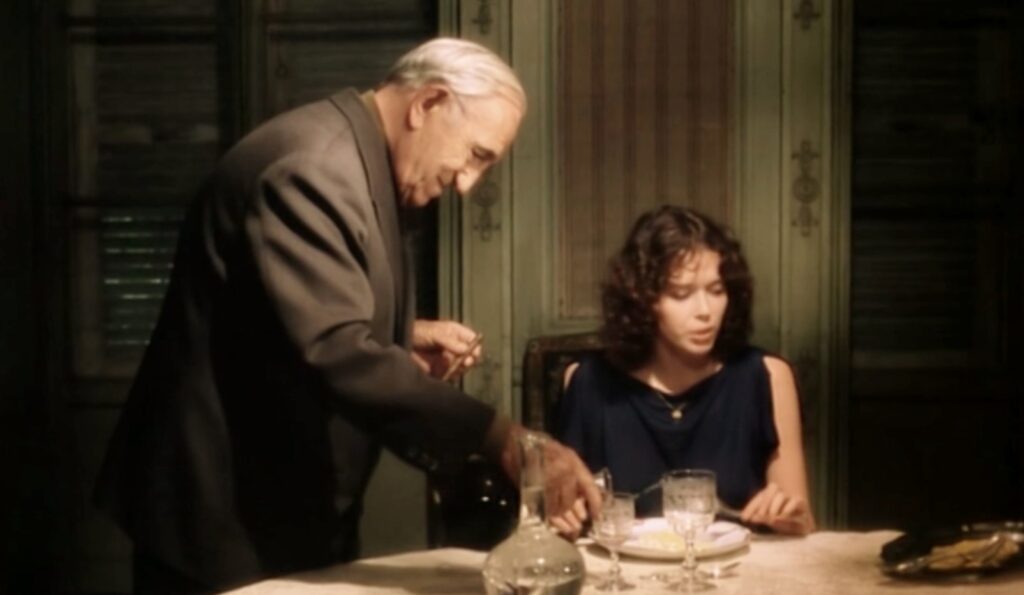
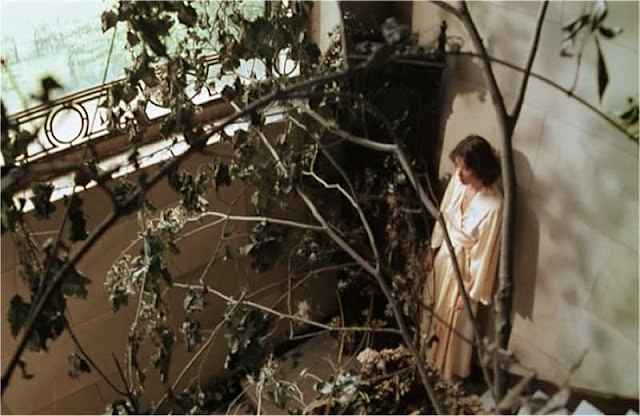
The next day, Alice realizes she is completely alone in the immense mansion. Henri and his servant have disappeared. Then, despite all her attempts to leave the place, Alice is unable to get away and resume her journey. There are no more exits – the park is closed off by a circular wall.
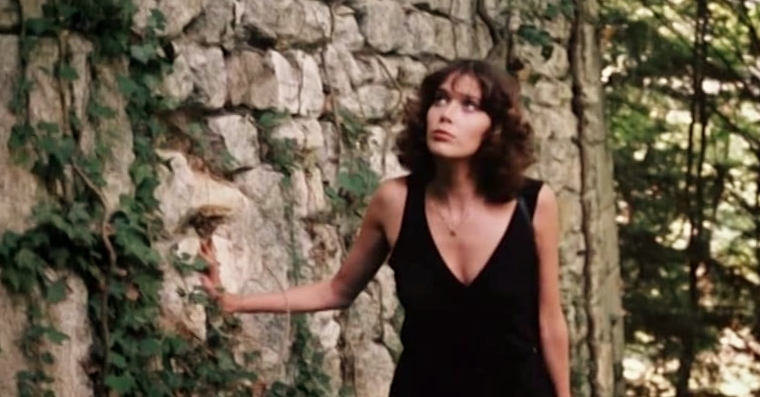
Like a lab rat, and sometimes resembling a sleepwalker, Alice wanders throughout the property, searching for a way out of that sort of labyrinth. However, in a typical game of cat and mouse, she constantly bumps into the walls of that unusual and unsettling space.
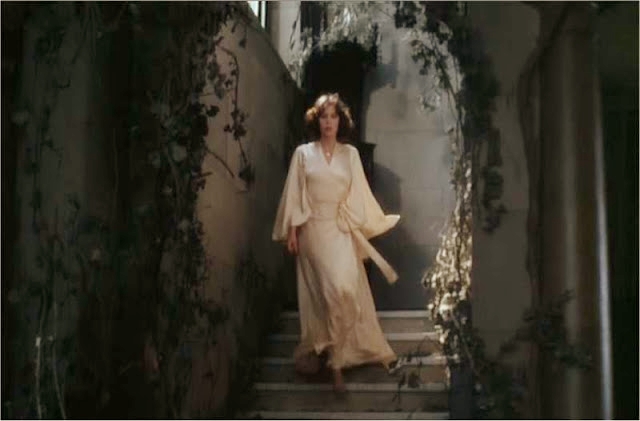
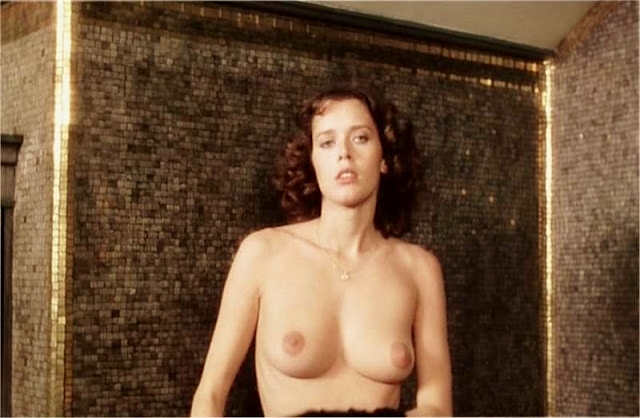
At a certain point in her wanderings, which always take place in broad daylight, Alice undresses. Completely. Her slender body with perfect curves appears splendid before us, as if it were a Renaissance or Pre-Raphaelite painting. However, at no point in this sequence do we remember that this body, with its beautiful and expressive face, pear-shaped breasts, and long legs, belongs to the actress Sylvia Kristel. Nor do we remember the character Emmanuelle and her sexual escapades. In short, Chabrol did not use his heroine's nudity as an erotic/sexual appeal. He used it, rather, to demonstrate Alice's fragility in the face of an increasingly illogical and terrifying environment.
Alice continues her journey, from surprise to surprise, through the parallel universe, until finally, the gates open again.
Then, strangely, the world outside proves unsettling for Alice. And she ends up returning to the mansion, where the same kind old man from the previous night welcomes her back.
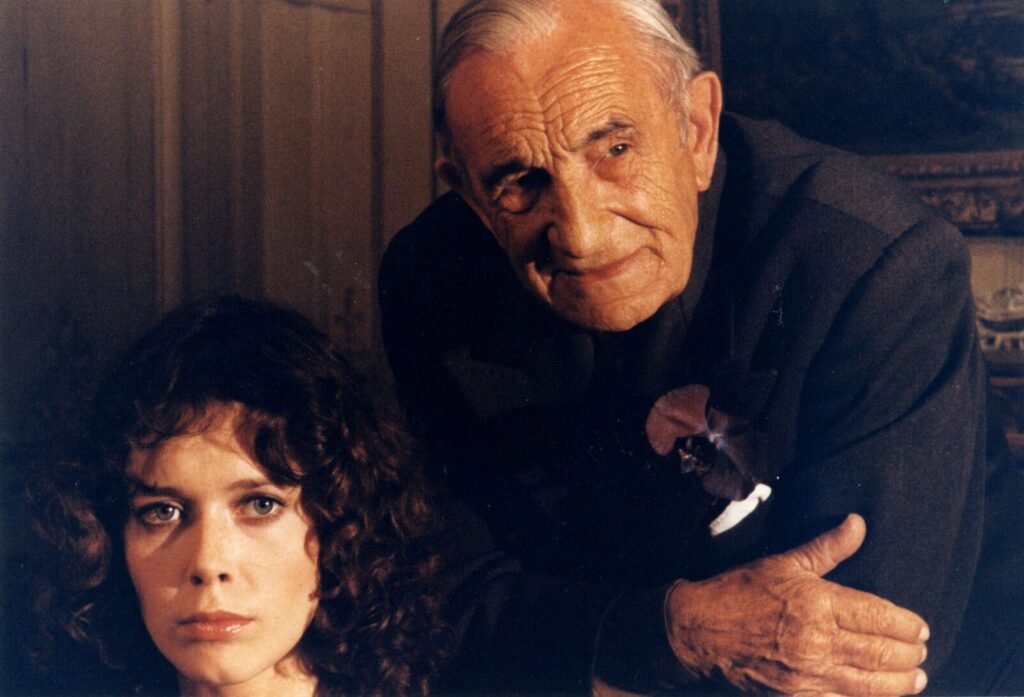
Sylvia Kristel and Charles Vanel, in a scene from Alice or The Last Escape.
According to Claude Chabrol, Alice or The Last Escape It is a tribute to one of the great masters of Fantastic Cinema: Fritz Lang (1890-1976). “I dedicated the "Lang's film"”, revealed Chabrol, “"because I decided to become a filmmaker after watching your incomparable The Testament of Dr. Mabuse, ", made in the 1930s. For me, Lang always was and continues to be the great model in my attempt to achieve absolute stripping away."”
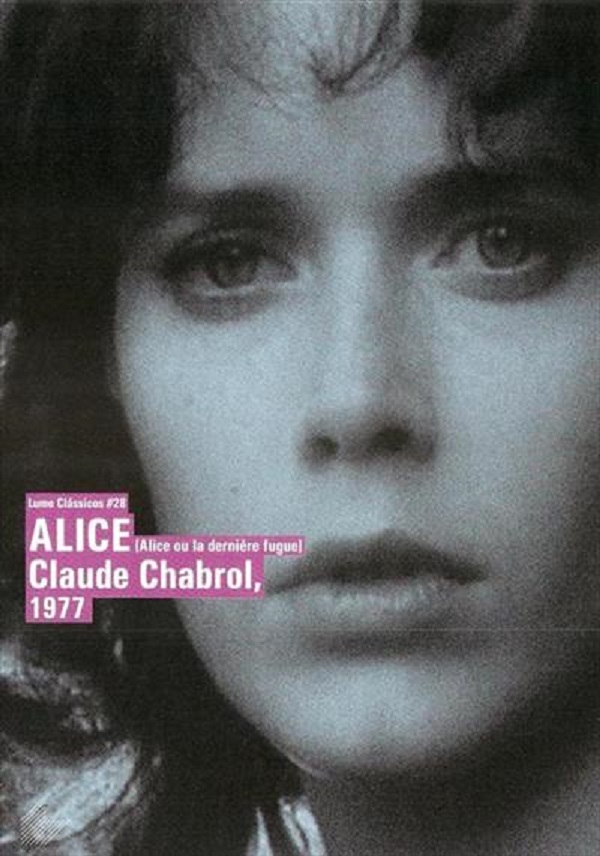
Cover of a Brazilian DVD of Alice or The Last Escape.
The DVD was released by Lume Filmes.
Alice or The Last Escape (Alice or the last flight, France, 1977, 93')
Ddirection: Claude Chabrol
Rscript: Claude Chabrol
Fphotography: Jean Rabier
MAssembly: Monique Fardoulis
Etissue: Sylvia Kristel (Alice Carroll), Charles Vanell (Henri Vergennes), Bernard Rousselet (Alice's husband), Jean Carmet (Colas), André Dussollier, Fernand Ledoux, François Perrot, Thomas Chabrol, Catherine Drusy, Katia Romanoff, Jean Cherlian, Jean Le Boulbar, Cécile Maistre, Louise Rioton, Noël Simsolo
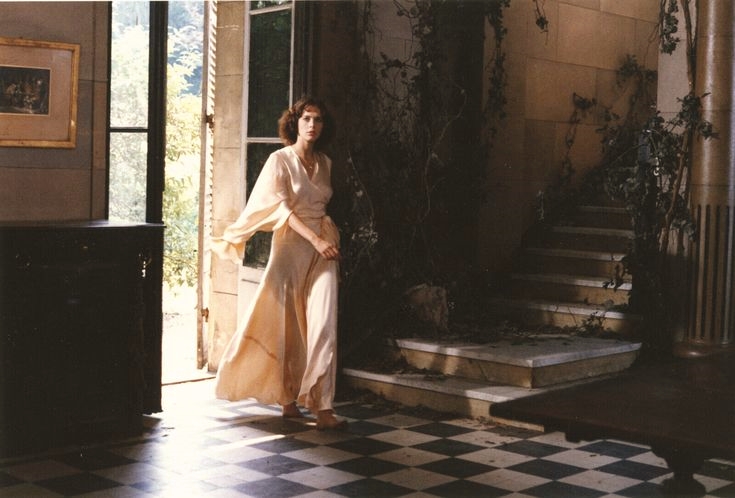
“For André Breton and the Surrealists, the girl Alice (created by Lewis Carroll) was a figure of rebellion, a challenge to the disguised oppressions of everyday life. Initially, Chabrol's film seems to be part of this Surrealist tradition, presenting Alice Carroll as a rebel. Her first words are…” “"no, merci"”, ...and her first action is to leave her husband. She gets caught in a storm while driving. She takes refuge in a country house (near the highway), apparently inhabited by the lord of the manor and his servant. Trapped in this... “"wonderland"”, She responds with silence, refusing to engage in a discourse that defines and limits her.
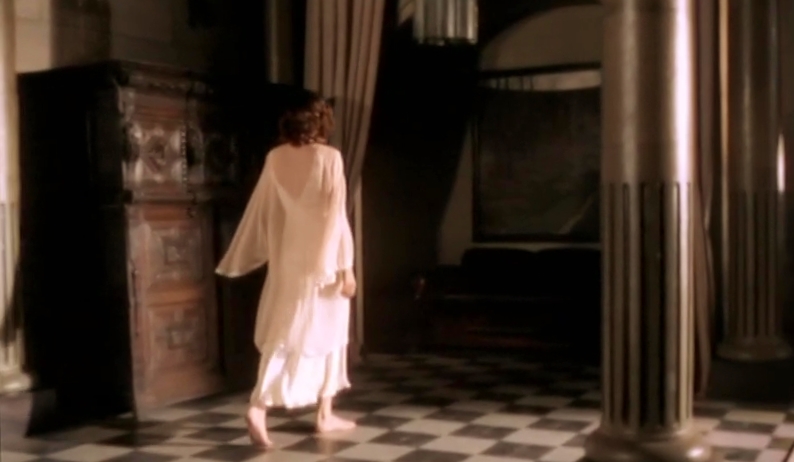
When we watched it for the second time Alice or The Last Escape, It becomes clear that Chabrol's Wonderland is not Lewis Carroll's place of play and experimentation, but an ideological testing ground, an existential portal. Here, Alice is a liminal figure. She is first seen at a doorway, positioned between her husband and her domestic environment and the exit through which she will leave. This is the first of many thresholds or portals that Alice crosses, or that block her progress, or through which she is framed by others. Alice herself is caught in that intermediate space between the old life she is leaving and the new one that is yet to materialize. Much of the film is shot in the silvery twilight of dawn or dusk, and the film's point of view shifts unnervingly from Alice's subjectivity to the unattributed gaze that subjects her.”
Darragh O'Donoghue
 Portuguese
  English
  Spanish
  French